
 Support ZN.ua








How the EU Is Trying to Contain Russia in the Black Sea



The European Union is asserting its ambitions—this time, in the Black Sea.
Last week, the EU unveiled a new strategy for the Black Sea region. Its declared aim is to deepen Europe’s ties with the South Caucasus and Central Asia, while also reinforcing the EU’s geopolitical presence as a reliable actor in the region.
A number of factors are driving the EU to consolidate its position in this area.

Firstly, Brussels acknowledges the strategic importance of the Black Sea as a bridge linking Europe with the South Caucasus and Central Asia—a corridor for logistics, energy transit and food exports. In addition, ongoing conflicts in the Black Sea region are contributing to new waves of refugees arriving in EU member states.
Secondly, there is a need to counter Russia, whose actions in the region pose a direct threat to the European Union, and a recognition that instability in the South Caucasus could undermine stability across Europe. As the EU’s High Representative for Foreign Affairs, Kaja Kallas stated, “Security in the Black Sea is critical for the security of Europe.” The strategy represents one of Brussels’ responses to Russia’s aggression against Ukraine and a means of diminishing Moscow’s influence in the region.
Thirdly, there is a need for a clear policy towards the countries in the region, two of which are EU members and four — Ukraine, Moldova, Türkiye, and Georgia — are candidates for accession.
The document is part of a broader series of EU initiatives. These include the Preparedness Union Strategy, the ProtectEU internal security strategy, the European Democracy Shield, the Global Gateway initiative to promote infrastructure development around the world, etc. According to Brussels, the new strategy will be implemented in close connection with the EU enlargement process.
The European Commission’s press release notes that EU cooperation with the Black Sea region will be based on three key pillars: enhancing security, stability and resilience; fostering sustainable economic growth and prosperity; and promoting environmental protection, climate change resilience and preparedness, including support for civil protection.
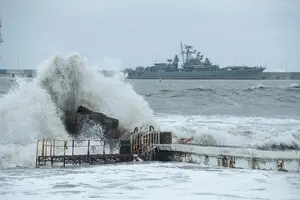
In addition, the European Union plans to implement three flagship initiatives together with its partners:
- establish a Black Sea Maritime Security Hub to strengthen maritime security, protect critical maritime infrastructure and the marine environment;
- develop a connectivity agenda, aligned with the extended Trans-European Networks, which will ensure the development of transport, energy and digital infrastructure in the Black Sea region;
- reinforce the resilience of coastal communities and blue economy sectors so that Black Sea countries can tackle war-related environmental damage, respond to climate-change related risks and seize opportunities for sustainable economic growth.
The strategy mentions the need for stability in the South Caucasus, normalization of relations between Armenia and Türkiye, as well as between Yerevan and Baku, the importance of Azerbaijan as an energy alternative to Russia, the relauch of relations between Brussels and Ankara, the resolution of issues related to Russia’s “shadow fleet,” and demining of the sea. However, the underlying theme permeating the entire document is Ukraine and support for its stability, security and recovery. For our country, this is an unequivocal advantage of the strategy.
One of the key areas in focus will be enhancing military mobility and developing dual-use infrastructure across EU member states bordering the Black Sea, as well as in neighboring countries, by land, sea, and air. As noted in the strategy, this will enhance the security of the EU and Ukraine, contributing to the latter’s recovery. At the same time, the EU considers the ability to quickly transfer military equipment and troops to Ukraine as an additional guarantee of our country’s security and a deterrent against future aggression.
Importantly, the document provides for the integration of the Black Sea region into EU transport projects. It consistently mentions investment projects in transport and energy corridors, as well as port and digital infrastructure. Finally, the document addresses the issues of demining the Black Sea and leveraging instruments from the European Defense Industry Support Program (EDIP) for investment in emerging defense technologies.

Another strong suit of the strategy is the creation of a Black Sea Maritime Security Hub. It will enable monitoring of the situation at sea, exchange of data and cooperation in the defense sector to devise projects aimed at protecting critical maritime infrastructure and responding to risks appropriately. Monitoring will be carried out in real time from space and on the seabed. According to Callas, the Hub could also join the overseeing of the ceasefire between Ukraine and Russia.
In his comment for ZN.UA, Oleksandr Khara, Director of the Center for Defense Strategies, noted that monitoring missions, such as the Black Sea Maritime Security Hub, need to be established around the entire perimeter of Russia, from the Arctic to the Mediterranean Sea and the Pacific Ocean. In general, according to Khara, the weak point of the strategy is that the Black Sea region is viewed in isolation from other peripheries of the Russian Federation: “The picture must be complete because Russia is acting against the EU and NATO in different directions. In this situation, it is absurd to create a center that focuses on only one region.”
Ivanna Klympush-Tsyntsadze, head of the parliamentary committee on Ukraine’s EU integration, noted in a comment to ZN.UA that the strategy is an important step forward. However, firstly, the strategy does not clearly state that Russia is the main threat to the Black Sea region. Secondly, the document does not specify how to resolve the unsettled conflicts in the region — Transnistria, South Ossetia and Abkhazia. Thirdly, there is no separate section on supporting democracy and the rule of law in the countries of the region. Fourthly, the document does not mention EU-NATO cooperation in the area, without which the implementation of the EU’s strategy cannot be successful.
Whether the document adopted by the EU will be another manifestation of intentions or an effective instrument depends on the political will of European leaders and the European Commission, as well as on the availability of financial, technical, and military resources. “I am not yet clear what financial resources will be allocated to implement this Black Sea strategy. It may be funded in the new financial period,” Klympush-Tsintsadze assumed.
At the same time, the EU will take some steps regardless of whether there is a strategy or not. For example, Europeans will develop energy corridors in an effort to minimize their dependence on Russia. They will monitor the situation, as Russia may threaten critical infrastructure and use the Black Sea to circumvent sanctions. The EU will also take measures to clear mines and seek to ensure freedom of navigation.
The strategy for the Black Sea region has demonstrated that the European Union aspires to be an active player, not an observer. One of the problems, however, is that Türkiye is not particularly keen to allow non-Black Sea EU and NATO countries into the region, while Romania and Bulgaria do not have sufficient capabilities to ensure the security of navigation on their own.
“The most interesting idea in the strategy is the creation of a Black Sea Maritime Security Hub. But will it function without Türkiye? Ankara has a unified approach: nothing in the Black Sea without Türkiye. Therefore, if the European Union wants a strategy that really works, it must get Türkiye on board. Perhaps it would even be more logical to create a maritime security hub within NATO rather than within the EU,” said Yevgeniya Gaber, senior analyst at the Atlantic Council, in a comment to ZN.UA.
In this situation, it is important to convince Ankara that the presence of non-Black Sea EU and NATO countries in the Black Sea will serve the interests of all of us. Otherwise, the document in which the EU outlined its strategic interest in the Black Sea region risks becoming nothing more than a declaration, with the Black Sea being a “black hole” in European security.
Please select it with the mouse and press Ctrl+Enter or Submit a bug
 Follow on Telegram
 Login with Facebook
 Login with Twitter
 Login with Google