
 Support ZN.ua









An Expensive Creditor: What Ukraine Really Gains—and Loses—Under the New IMF Programme
Sir Anthony Hooper on Judicial Reform: “Reasonable Doubt Changed Everything”

15 december, 2025, 11:31
Share
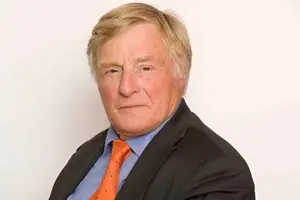

For nearly a decade, Sir Anthony Hooper was one of the most influential international experts involved in Ukraine’s judicial reform. As a retired judge of the Court of Appeal of England and Wales, he played a key role in shaping and implementing core judicial integrity-vetting procedures—first within the Public Council of International Experts and later within the Ethics Council. Few foreigners have had as close a view of the inner workings of Ukraine’s judicial reform as he has.
In this interview, Sir Anthony shares reflections on the ideas and decisions that shaped the reform from within: the reasonable doubt standard, the limits of integrity checks and the crucial role of civil society. He also addresses complicated issues—from the involvement of foreign experts in judicial selection to complex debates over assessing judges who issued rulings against participants in the Revolution of Dignity.
This conversation is the first installment of Halyna Chyzhyk’s project Reasonable Doubt, created in partnership with the Holka (Needle) civic initiative.
HC: Sir Anthony, in a 2020 interview with The Sunday Times you said that your greatest achievement after retirement had been your work with the Public Council of International Experts. Why did your work in Ukraine matter so much to you?
AH: A substantial part of my post-retirement work involved training judges—helping them better understand money laundering, corruption and illicit proceeds. But training rarely produces tangible results. You may hope that six months later a judge will issue a ruling that shows they absorbed what you explained. Most likely, however, you will never know.
The Public Council of International Experts [PCIE, established in 2018 to assess the integrity of candidates to the High Anti-Corruption Court], just as the Ethics Council [introduced in 2021 to evaluate the integrity and professional competence of candidates to the High Council of Justice—HC], was a completely different matter. There, I could see real, measurable outcomes. And above all, I want to emphasise the reasonable doubt test.
When I arrived in Ukraine, as far as I could tell, if it was impossible to prove that a candidate was corrupt, that candidate was appointed. The Public Integrity Council [a body introduced by the 2016 reform that participates in evaluating judges and judicial candidates —HC] could raise serious objections, but the High Qualification Commission of Judges (HQCJ) did not properly engage with them. There were no meaningful questions, no written communication with candidates, and, most importantly, no shared understanding of what standard of proof should be applied.
It was necessary—not only in Ukraine, but anywhere—to establish a very low threshold: if the selecting body has a reasonable doubt as to a candidate’s integrity or professional suitability, that candidate should not be appointed. This was my idea from the outset. It was accepted by my colleagues, by the HQCJ, by the parliament and even by the government of Moldova [which since 2022 has been implementing judicial reform drawing on Ukraine’s experience—HC]. For me, this was an enormous and tangible result—one that will benefit Ukraine for a very long time.
Written communication with candidates fundamentally changed the evaluation process. It helped eliminate secondary issues and focus attention on what truly required scrutiny. The prohibition on submitting documents on the eve of an interview prevented candidates from overwhelming us with paperwork. Taken together, these tools transformed the situation entirely.
I believe the High Anti-Corruption Court (HACC) has been a major success. Problems, of course, exist, but to this day I have seen no evidence that HACC judges are corrupt. It seems to me that many people in Ukraine have become convinced that the involvement of external experts genuinely helped change a system that needed change.
HC: Russia’s full-scale invasion began just days after the Ethics Council started interviews with candidates to the High Council of Justice (HCJ). In your view, how did the war affect the process? Would the results have been different had there been no war?
AH: Personally, I did not feel that we lost anything because of the war or the shift online. Covid had already taught us how to work via Zoom and Teams, and I conducted interviews from South Africa, England and the United States. Once we adapted, everything functioned properly.
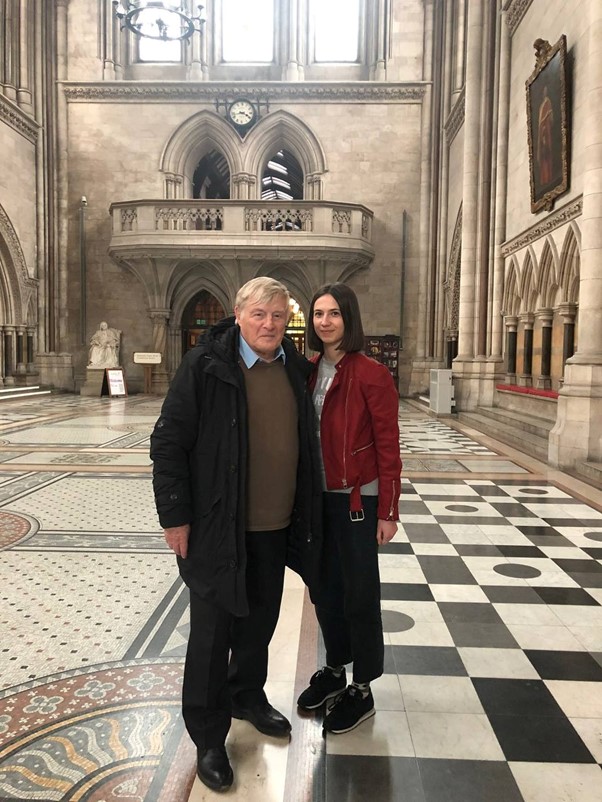
Sir Anthony Hooper and Halyna Chyzhyk, at the Court of Appeal of England and Wales (from personal archive)
Фото предоставлено автором
For example, I kept two screens open: on one, the interview; on the other, my email. If a candidate gave an answer that raised a legal question, I could immediately write to a lawyer assisting me and receive a prompt response. Overall, I believe the system remained effective even online.
HC: But as a foreigner who does not speak Ukrainian, you already rely on interpretation, whereas in-person interviews can help capture nuances or even assess credibility. Was this more difficult online?
AH: Interpretation is unavoidable. It is inevitable, and yes, sometimes something is lost. But interpretation also slows the pace, which can be useful: while the interpreter is speaking, you have time to think about the next question. So I did not consider this a serious obstacle.
ВАС ЗАИНТЕРЕСУЕТ

And I am not a great believer in the idea that one can simply look at a person and immediately know whether they are lying.
HC: Apart from the war, what other challenges did you encounter during your work on the Ethics Council?
AH: I believe that a weak point of the system—one that has still not been fully addressed—is the volume of information available to Ethics Council members when preparing for interviews. From a formal standpoint, the information was insufficient. But we did not need to demand more thanks to civil society. Without it, the process simply would not have worked. Ukraine has an extraordinarily active civil society that has monitored judges and candidates for years and knows a great deal about them. Combined with the work of the Secretariat, this provided us with all the information necessary to assess individuals properly.
Of course, we missed things. I am certain of that. But this is precisely why the reasonable doubt standard is so important. We never said, “This person is corrupt” or “He took money.” Not once. We said, “There is a reasonable doubt as to whether the candidate’s official income corresponds to their lifestyle.”

Privately, I might have suspected that someone bought an expensive apartment with illicit funds, but you would never hear me say that publicly. What I would say instead was: “You purchased this apartment. You registered it in your son’s name. You claim that your father paid for it. None of this makes sense.”
Another weak point concerns past judicial decisions. For an outside observer to read a ruling and conclude that no reasonable judge could possibly have issued it sets an extremely high bar.
HC: And some decisions had to be assessed in a broader context, particularly those related to the Revolution of Dignity. How did you approach their evaluation?
AH: Yes, context had to be taken into account. Civil society insisted that any judge who continued to work during those three months and issued decisions against protesters should have been automatically dismissed. For me, this was difficult. I watched a documentary that reconstructed those events and tried to understand the context. But I found it hard to say that a judge, in conditions of public unrest, should simply stop working and refuse to perform their duties.
Looking ahead, I would like to see a more systematic analysis of past decisions, with the involvement of civil society to identify cases that cast doubt on a judge’s integrity. The HCJ and the HQCJ already possess the necessary analytical tools, but creating a small unit specialising in the review of “egregiously wrong” decisions could be a useful addition.
Judicial independence means that a judge cannot be punished merely for making a mistake. But if a decision is so absurd that it raises suspicion of something improper, consequences must follow.
HC: The task of the Ethics Council was to assess all candidates to the HCJ and determine whether there was reasonable doubt regarding anyone’s integrity. The Selection Commission for HQCJ members applied a different approach: instead of “filtering out” those who failed to meet the criteria, it selected the best candidates, effectively conducting “positive selection.” If the design of the process had depended on you, which approach would you have chosen?
AH: I considered the HQCJ Selection Commission’s approach unlawful. It was not what we had been tasked to do. Our mandate was to review all candidates and determine whether reasonable doubt arose regarding their integrity, professional ethics and, in some cases, professional competence. I have heard the arguments in favour of positive selection presented very persuasively, but I still do not believe that this approach was lawful in this context.
At the same time, the HQCJ Selection Commission did face a serious problem: there were simply too many candidates. This issue must be addressed—it is impossible to conduct a thorough evaluation of hundreds of individuals.
HC: You come from a common law country with a strong democratic tradition. What surprised or struck you most about Ukraine’s judicial system?
AH: What always troubled me in Ukraine was that too many people simply disregard basic standards of honesty. Not everything we encountered amounted to corruption; some cases reflected a complete inability to adhere to elementary principles of integrity.
Take several cases involving the defence of dissertations. A candidate claimed to have written an academic article that had in fact been authored by someone else. Judges appear to receive an additional 15 percent salary supplement if they hold an academic degree, right? That strikes me as odd. How can a judge working full-time find the time to write a dissertation, often hundreds of kilometres away from where they live and work?
ВАС ЗАИНТЕРЕСУЕТ

During the PCIE’s work, we had a case where a judge had almost certainly committed a criminal offence. We could only conclude that there was reasonable doubt—which meant that he could not proceed further in the competition. But as a sitting judge, he faced no consequences whatsoever: there was neither an investigation nor disciplinary proceedings. The fact that he is probably still in office troubles me deeply.
When designing future reforms, the key question must be answered: what should happen when a commission concludes that there is reasonable doubt regarding a judge’s integrity? This should not lead to automatic dismissal. But if there are serious indications of a criminal offence, the case should automatically be referred to the HCJ.
HC: In your view, where does judicial independence come from? Can it be ensured solely through transparent selection procedures? And does the removal of political influence automatically make judges independent?
AH: I do not believe that any mechanisms—whether the Ethics Council, the reasonable doubt standard or interviews—can, by themselves, guarantee judicial independence. It has two dimensions. One is money received in exchange for decisions. When the leadership of the Supreme Court is arrested for accepting such money, it provokes shock and outrage.

The second dimension is far more complex: it is power. I refer to it as “power corruption” (an imperfect term, admittedly): when a judge does what the government wants in cases where the executive has an interest, particularly in criminal matters. And how does one ensure independence when the government applies direct or indirect pressure? Interviews will not help here. It is almost impossible.
That said, reducing political influence over judicial appointments is critically important. Ukraine has already come a long way in this respect. My ideal system is one in which politicians are removed from this process as much as possible.
HC: In a broader sense, can the judiciary truly be independent if the parliament is weak or under the influence of autocrats or oligarchs?
AH: Of course, this has an impact. One would like to believe that judges will remain independent, but the overall environment matters enormously. Judicial independence requires a strong civil society, a robust democracy, free media—transparency at every level. If these elements are lacking at the highest levels of power, this inevitably affects the courts as well.
HC: When you were invited to take part in the selection of HACC judges, did you accept the offer immediately or did you take time to consider?
AH: I had no hesitation. I reviewed the legislation—Ukrainian laws are never written in a way that makes them easy to understand. But I worked through it and thought: “This looks sound.” So I said “yes” straight away.

Later, as you may recall, I went through an interview myself. Some people claimed that I was chosen for the PCIE because they thought I was too old to cause trouble. But when I was nominated to the Ethics Council, everyone already knew they were getting someone who would not go with the flow. By then, my reputation was well established.
Had I known that I would eventually conduct more than 200 interviews, I might have paused to think—but at the outset, I had no doubts. And it was fascinating; I had never done anything like it before.
HC: Once the work truly began, did it turn out that the role of the Ethics Council was far broader and more complex than it initially appeared?
AH: Over my four years on the Ethics Council, my understanding of our task evolved. At first, I thought our role was simply to prevent judges for whom there was reasonable doubt as to integrity from advancing.
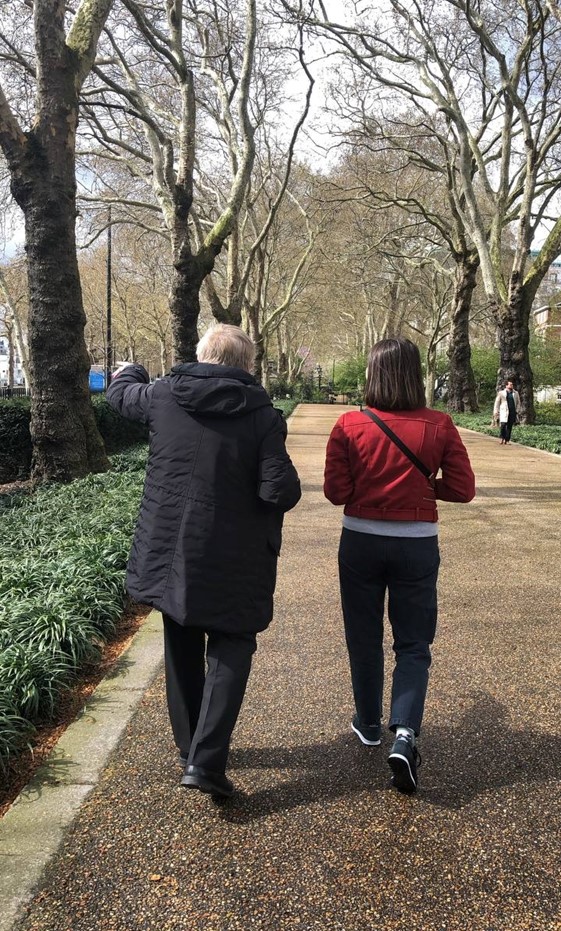
Фото предоставлено автором
Over time, however, I came to see another side of the work: we also had to ensure that good candidates were allowed to move forward. There were candidates who clearly demonstrated a reform-minded approach, and at times colleagues questioned their integrity. In my view, however, in many such cases there were no genuine doubts—these were worthy individuals who deserved a chance.
HC: Do you think you succeeded in achieving that?
AH: I do not know. You can look at the current composition of the HCJ—those whom you wanted to see there are, in fact, there.
But disagreements are inevitable. I recall this one candidate whom I considered the best I had ever encountered. He was filtered out, and civil society said, “This candidate is not good enough.” In this kind of work, there will always be half the people dissatisfied. It is like being a judge: one side will always be irritated or even furious with you.
HC: One of the first controversial decisions concerned Judge Larysa Holnyk, who had publicly criticised her colleagues. Following the interview, the Ethics Council concluded that her explanations gave rise to reasonable doubt as to her compliance with the integrity criteria. This decision surprised many Ukrainians at the time.
With the benefit of three years of interviews and decisions, do you believe the Ethics Council might reach a different conclusion today?
AH: I cannot say whether I would reach a different decision today. This is the reasonable doubt test. One of its advantages is that decisions can be revisited. We interviewed some candidates twice: sometimes doubt did not arise the first time but appeared the second; sometimes it was the other way around. Reasonable doubt is a very low threshold. The fact that it exists today does not mean it will exist tomorrow and vice versa.
HC: There is currently much discussion in Ukraine about extending the mandate of international experts on judicial selection commissions, as well as in the selection of heads of anti-corruption and law enforcement bodies. How do you view this? Do we really need another five, ten or even twenty years of international involvement? Or is Ukraine already capable of selecting honest professionals on its own?
ВАС ЗАИНТЕРЕСУЕТ

AH: This is a very difficult question. I hope that, following the reforms and with renewed HCJ and HQCJ bodies, Ukrainians will ultimately be able to carry out this work without foreign experts.
But I cannot say whether there is already sufficient public trust for the process to function properly without them. I simply do not know. What I do know for certain is that international experts played a very important role in what we have achieved. Of that I have no doubt whatsoever. And how long this involvement should continue is a matter for the Ukrainian people to decide.
As for the new HCJ, I can only hope that it is functioning well. If it is not, then I have wasted a great deal of time.
HC: I recall our meeting in London in April 2019, when we were walking and stopped near the tomb of William Marshal [the English knight who compelled King John to sign the Magna Carta—HC] at the Temple Church. At the time, you remarked, “There are too many King Johns in the world today.” What did you mean by that?
AH: There are far more such people now—leaders who believe they can do whatever they please. Too many people in positions of power still think they stand above the law.
ВАС ЗАИНТЕРЕСУЕТ

HC: Do you believe democracy is under threat globally?
AH: Yes, I do believe democracy is under threat. People often think that problems have simple solutions, and so they vote for those who promise radical change. Some, like Trump, have no intention of fulfilling their promises at all; others try—and discover how complex everything truly is. The rule of law is weakening across the world. Russia’s invasion of Ukraine has demonstrated just how fragile the international order has become. And yet, I believe democracy will survive. The real danger lies in the fact that many countries have transferred too much power to oligarchs and magnates—people like Elon Musk.
Noticed an error?
Please select it with the mouse and press Ctrl+Enter or Submit a bug
Stay up to date with the latest developments!
Subscribe to our channel in Telegram
 Follow on Telegram
Пожалуйста выберите один или несколько пунктов (до 3 шт.) которые по Вашему мнению определяет этот комментарий.
Пожалуйста выберите один или больше пунктов
Нецензурная лексика, ругань
Флуд
Нарушение действующего законодательства Украины
Оскорбление участников дискуссии
Реклама
Разжигание розни
Признаки троллинга и провокации
Другая причина
Отмена
Отправить жалобу
ОК
 Login with Facebook
 Login with Twitter
 Login with Google