
 Support ZN.ua








“Peace” as a Business: How Much the United States Earns from the War in Europe
Results of Ukraine’s Gas Year and Outlook for 2026

30 december, 2025, 11:30
Share
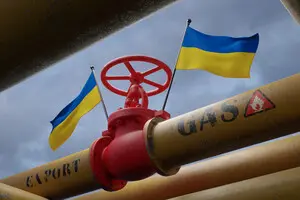
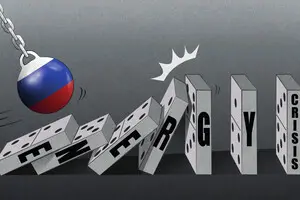
The year 2025 was difficult, but strictly speaking, not unique. The fourth year of the war has already made infrastructure destruction the “new normal,” while populism, a shortage of funds and political micromanagement have always been present in the gas market. The uniqueness of 2025 lies in the fact that Ukraine lived through a full year for the first time without the transit of Russian gas. And the year showed that the gas catastrophe, predicted by pro-Russian voices in Ukraine and some EU lobbyists, did not materialize. Ukraine did not freeze, and Europe did not collapse into an energy meltdown. The Kremlin, however, lost a significant revenue stream and, more importantly, part of its habitual levers of influence, which had been sustained by transit schemes and gas corruption for decades.
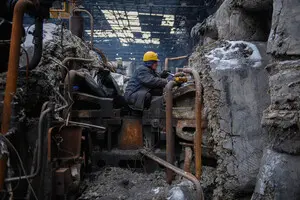
The second storyline of 2025 was the constant strikes on production and gas infrastructure. This became a real stress test, required enormous efforts from gas workers and noticeably shifted the country’s gas balance toward increased imports.
The third storyline was the continued strengthening of state intervention. Instead of moving toward a market-based architecture, the sector sank ever deeper into expanding price regulation through the imposition of public service obligations (PSO). Social stability is maintained through administered prices, but the cost of this is a growing quasi-fiscal gap within the Naftogaz group and, in the longer term, within the state budget.
Therefore, the results of 2025 are not about reforms or development; rather, they reflect an attempt to preserve social stability and the gas balance through administrative regulation.
End of transit: hysteria happened, collapse did not
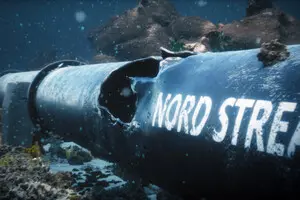
The key event of the year was the halt of Russian gas transit through Ukraine. For the sector, this was not merely a symbolic “end of an era,” but a practical turning point. The logic of the gas transmission system’s operation changed, the familiar financial flows around transit disappeared, and with them vanished the part of the political economy that for decades had been built on gas deals.
From a technical standpoint, the end of transit was not a problem. Ukraine had been preparing for this scenario in advance—since 2018—because Russia had planned to stop transit as early as 2020. Therefore, the conclusion of 2025 is straightforward: Ukraine proved that it can live without the transit “crutch,” and the European Union proved that it can do without Russian gas in the volumes and patterns to which it had become accustomed over previous decades. The Kremlin lost not only substantial annual revenues but also part of its influence over corrupt political networks that for many years had been bought with gas and transit money.
Production under fire: statistics are classified, but consequences are visible without reports
The second reality of 2025 was active attacks on production facilities, which had a direct effect on the level of domestic output and, accordingly, on the resilience of the gas balance.
For understandable reasons, there is almost no official public statistics. However, according to expert estimates, production in 2025 may have declined by approximately 1.2 billion cubic meters—a decline of about 6–7 percent compared to 2024—to nearly 16.9 billion cubic meters. A significant part of this contraction is directly linked to air strikes and forced shutdowns. But it would be a mistake to attribute everything to the war alone: at the depleted fields of the Ukrgasvydobuvannia (UGV) company, natural production decline is also evident, while data on drilling and the pace of well stock renewal are not publicly available.

This raises a question that the authorities have persistently avoided throughout the year. Given the current financial condition of Naftogaz, when resources are largely directed toward imports to get through the winter, and given the existing administered prices for UGV, do they have the financial capacity for active investment in drilling and production maintenance? This is directly linked to PSO and pricing policy, under which state-owned producers are obliged to sell gas at administratively set prices that are multiple times lower than market prices. In such a system, any talk of “increasing production” remains just talk.
There is, however, some positive news. Successful auctions for new acreage and discussions about preparing production sharing agreements for certain areas show that part of the business community believes in long-term prospects and is ready to invest in special permits even amid wartime risks. It is also important that the state-owned UGV continues to participate in the acquisition of new acreage despite its difficult financial position.
ВАС ЗАИНТЕРЕСУЕТ
Yet the distortion of incentives remains fundamental. Private companies sell gas at market prices, while state production under PSO sells at administered prices. With such a gap, the payback of new field development projects for private companies is many times better than for state-owned ones. If nothing changes, the investment center of gravity will shift toward areas with clear market signals, while the state segment will increasingly stagnate.
Imports as the key to stabilizing the gas balance: technically simple, financially painful
Ukraine has imported gas throughout its entire independence. After 2015, it abandoned direct imports from the Russian Federation and switched to imports from Europe. Therefore, purely from a technical standpoint, imports are neither complex nor heroic: gas is available in Europe, the technical capabilities of the gas transmission system have long been in place, and gas prices in the EU have generally stabilized and become more predictable than in 2021–2023.
The difficulty lies elsewhere—in money. According to sectoral reviews, in 2025 Ukraine imported around 6.4 billion cubic meters, with the bulk provided by the Naftogaz group—about 5.6 billion. The Gas Transmission System Operator of Ukraine and private traders contributed a much smaller share. The private sector was noticeably less active in imports, and this is also a symptom: in conditions of expanding PSO and regulatory uncertainty, the market has less incentive to take on import risks. And who would buy imported gas if many consumers can purchase cheaper gas from Naftogaz?
Technical capacity at the border allows imports to be increased several-fold: from the current 20–23 million cubic meters per day to around 60 million. In other words, there are no technical constraints. But there are financial ones: imports can be scaled up at any moment only to the extent that liquidity is available.
I would also note that the new management team at Naftogaz managed to secure financing for significant gas volumes, despite inheriting a catastrophic gas balance and empty underground gas storage facilities from their predecessors. Work is underway to organize gas purchases on the liquefied natural gas (LNG) market—so far through intermediaries, Poland’s Orlen and Greek companies. I hope that soon Naftogaz itself will be able to conclude long-term contracts with LNG producers, book LNG terminals and supply gas to Ukraine. But once again, everything hinges on the economic viability of such operations and the availability of financial resources.
Administrative price control: rollback of reforms and growth of the financial gap
The third reality of 2025 was the continued rollback of reforms and the strengthening of price micromanagement.
State regulation of the sector did not narrow but expanded. Naftogaz is obliged to sell gas below market prices not only to households and district heating companies but also to a number of other user categories, including power producers, regional gas distribution companies, budget-funded entities and gas-fired power plants. At the same time, the company imports gas at market prices, which are multiple times higher than those set by the state. The gap between fixed prices and the real cost of the resource turns into a chronic cash deficit for Naftogaz. If nothing is done about this problem, the gap will ultimately have to be covered from the budget—that is, at the expense of all taxpayers.
ВАС ЗАИНТЕРЕСУЕТ
Naftogaz is already struggling to deal with the government’s demands. And the government was forced to oblige even Ukrnafta, the largest producer of oil and gas in the country, to sell gas to Naftogaz at a price twice below the market level, in order to somehow balance the latter’s finances. Although it would have been more appropriate to look for ways to reduce the volumes of cheap gas sold under PSO.
A positive step of the year was partial movement toward more economically viable gas distribution tariffs. For the first time in a long while, the regulator acknowledged that gas distribution network operators simply have no funds to repair and maintain gas distribution networks. Yes, this decision does not apply to household consumers due to the moratorium. While it is segmented and politically cautious, the very recognition of the problem is an important signal: infrastructure cannot be maintained indefinitely at zero cost, without paying for depreciation.
Why we arrived here: concentration of power, lack of strategy, degradation of decision-making
The key reason linking all the points above is the abandonment of reforms in favor of simple populist solutions, the absence of professional debate and the concentration of power in a single set of hands.
At the beginning of the full-scale war, the centralization of governance in the gas sector was justified by the need for rapid decision-making. Yet the projects to add 1 GW of new generation capacity and to build protective structures for generation and transmission facilities never materialized. And 2025 demonstrated the classic finale of such models: unchecked power leads to large-scale corruption, staff degradation and institutional paralysis. The Mindichgate corruption scandal, investigated by NABU/SAPO, merely made public information about corruption in the sector that had quietly circulated informally since 2022, when the management vertical began to take shape.
As a result, an even more dangerous phenomenon emerged: the system stopped producing professional decisions because decisions were being made in back offices. Institutions do not discuss options or seek optimal solutions through dialogue; instead, they follow a “receive-the-order, execute-it” logic. This destroys feedback, kills accountability and pushes out strong professionals. Ultimately, society witnessed the complete degradation of institutions. When the post of Minister of Energy is handed down “by inheritance” to close and loyal individuals even without experience in the energy sector. And when interviews are conducted not by the relevant parliamentary committee but by people from Timur Mindich’s back office. And this is happening amid the most difficult situation in the energy sector, when the country spends 10–12 hours a day without electricity.
Outlook for 2026: inertia or crisis
Forecasting in wartime is fraught with uncertainty. But the baseline scenario crosses one’s mind without guesswork: inertia. The election agenda will intensify in 2026, so populism will grow, while reforms and the reduction of state regulation will become even less likely. Most likely, the status quo will persist: patching Naftogaz’s financial holes to finance imports and administrative micromanagement.
ВАС ЗАИНТЕРЕСУЕТ
There is essentially one event that could lead to radical change—a financial crisis at Naftogaz. If the cash gap becomes unmanageable, the state will have to choose between increasing budget injections into the company and raising prices, as has already happened recently in the electricity sector.
At the same time, Naftogaz faces an objectively extremely difficult task: finding money to inject gas for the next winter. The amount in question is $3–4 billion, and the funds are needed as early as spring. Will donors provide such sums without real reforms and movement toward market-based pricing? Will the budget find this money without cutting other critical expenditures? These questions concern not the “beauty of the market,” but the country’s physical resilience.
What can realistically be done in 2026
If we discard fantasies about rapid reforms, a minimum package remains that can deliver maximum effect even in a politically toxic year.
First, restore the agency of governance institutions and the system of checks and balances. Above all, through a full and swift relaunch of the National Energy and Utilities Regulatory Commission, the Ministry of Energy and the abandonment of the model of managing the sector through curators from the Office of the President and back offices.
Second, stop interference in the operational management of state-owned companies. Allow professional management and independent supervisory boards to do their work and assess their effectiveness based on transparent KPIs rather than degrees of loyalty. Many supervisory boards are currently being relaunched, but without a relaunch of officials’ understanding of the rules of proper corporate governance, these changes will not bring significant success. A minister should not see “their people” in the management of key state-owned companies if, under the charter, staffing falls within the responsibility of independent supervisory boards.
Third, begin narrowing the scope of PSO and returning to market pricing where possible, while simultaneously strengthening targeted subsidies. Not cheap gas that spreads to everyone, but targeted support for those who cannot afford market prices.
This does not sound attractive and does not boost approval ratings. But it is the only realistic path to ensure that 2026 does not repeat the stagnation of 2023–2025, and that gas security rests not on loans and budget financing but on rules and responsibility.
Noticed an error?
Please select it with the mouse and press Ctrl+Enter or Submit a bug
Stay up to date with the latest developments!
Subscribe to our channel in Telegram
 Follow on Telegram
Пожалуйста выберите один или несколько пунктов (до 3 шт.) которые по Вашему мнению определяет этот комментарий.
Пожалуйста выберите один или больше пунктов
Нецензурная лексика, ругань
Флуд
Нарушение действующего законодательства Украины
Оскорбление участников дискуссии
Реклама
Разжигание розни
Признаки троллинга и провокации
Другая причина
Отмена
Отправить жалобу
ОК
 Login with Facebook
 Login with Twitter
 Login with Google