
 Support ZN.ua








Across the Field

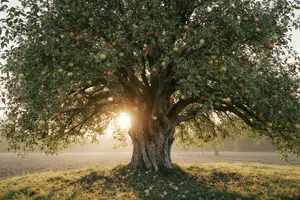

Editor’s note: Names have been changed. The true story is told in an unusual way, for the author has let all its pain, its light and darkness, pass through her. Like the old apple tree in her story—gathering sun, rain and human fates alike.
Grandma Kateryna was slowly fading away. She suddenly fell ill at the end of April and hardly rose from bed again. Her house stood at the very edge of the village, so her absence took time to ripen into worry. It was the shopkeeper who sounded the alarm—Kateryna used to stop by every two or three days. When nearly a week passed without her, the council was notified and the local paramedic, Olia, was also informed, just in case.
That’s how they found Kateryna—in her bed. Breathing, speaking, recognizing people—but unable to rise. The ambulance from the district could do little. It wasn’t a stroke, nor a heart attack, and Kateryna refused further examination at the hospital.
“Let me die,” she said quietly, turning to the wall.
“Oh, Aunt Katia, how can you say that?” the nurse protested. “You can’t talk like that. The doctor prescribed treatment—you’ll take your pills, get your shots, and you’ll feel better.”
“What kind of life is that?” sighed the old woman.
No matter what Olia said to comfort her, Kateryna fell silent and spoke no more that day. The ambulance left. The nurse lingered a while longer, then went too.
***
Kateryna was alone in the house, as she had always been. It was quiet, save for two stubborn flies buzzing under the ceiling. Her bed stood right by the window. And outside, the apple tree was in bloom—a Papirovka, as old as Kateryna herself. The trunk twisted, two hollows where branches had once been cut. Yet somewhere inside, the apple tree’s soul still clung on, blooming in a riot of white and pink. It made Kateryna feel strange—sad and joyful at once. She gazed at the rosy blizzard through the old pane, through the white lace curtain, squinting at the light. The sun played in the blossoms, weaving flickering lace across her checkered blanket. And somehow dying didn’t seem so urgent anymore. She wanted to get up and go outside. Fetch some water. Breathe in the apple scent deep into her lungs. Scoop a handful of cold well water and wash her burning face. Feel every drop, feel the dizzy spring air, feel life …
***
“Why did you get up for?” the nurse lamented.
Kateryna lay near the steps, by the doorway—disheveled, like a wounded bird that had tried to take flight but lost its strength. She stared ahead helplessly, moving her uncooperative arms like wings, but they obeyed no more. By some miracle, she hadn’t struck her head.
They lifted her together—Olia and a few neighbors from down the lane. Within minutes, Kateryna was back in her bed, dressed in clean clothes, resting on fresh sheets..
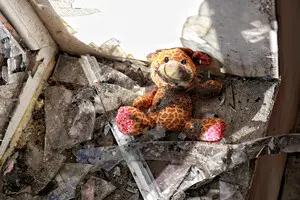
“Did anyone call her sons?” the women asked.
“They did, but no one answered. The elder’s in Russia, unreachable. The younger’s at war, not answering either.”
They spoke in whispers, but Kateryna heard them. She tried her best not to give herself away. Yet the old pain clenched her soul so tightly that she sighed—and the women fell silent, exchanging embarrassed glances. Then, as if nothing had happened, they discussed who would bring groceries the next day, and who would come to feed her and give he water.
***
Her sons… Kateryna had married late, after thirty. Tall, proud, with a long braid and dark eyes—when she looked at someone, it sent shivers down a man’s back. Many were too shy to approach her. But one man wasn’t. A man named Mykola Vasylovych came to the village to teach. Not exactly handsome, not one to promise stars from the sky—but before long, the whole village was buzzing: Kateryna and Mykola decided to get married. And so it was. Some were surprised, others glad, but the two knew what they were doing. In a year, their son Andrii was born; two years later came Roman. They were rocked in the same cradle, played in the same yard, ate the same borshch—yet grew into such different men. After military service, Andrii left for Russia to study mechanical engineering—he had a gift for numbers. Roman stayed, continued his service and began studying history on his own. Kateryna rejoiced at their successes, her heart melting when the daughters-in-law and grandchildren appeared. he could see there was no warmth between the brothers, but neither was there any strife.
***
Days flew by. Kateryna lay still. The apple tree outside had finished blooming. Strawberries ripened in the hollow beyond the garden. She had always loved that time of year—wandering down there for herbs to dry for tea. She would pick fragrant wild strawberries, not one by one but in clusters, tying them into bunches to dry in the attic. She hung wild mint there too—later chamomile, wild carrot, chicory, larkspur… The whole house filled with their scent.
Lord, she thought, that wasn’t life, it was paradise… She inhaled deeply, but instead of mint and chamomile, all she could smell was the synthetic sting of floor cleaner the neighbors had used. She sighed. Paradise was long gone.
***
“How’s the old lady doing?” the women asked the nurse at the shop.
“Alive,” Olia replied—and her tone betrayed how heavy that life had become for her. Visiting Kateryna day after day was no small burden. And still no word from the sons. They’d managed to learn that the elder one worked at a defense plant somewhere in Russia’s Moscow region—in Dubna, maybe. The younger was fighting in eastern Ukraine. Neither answered the phone.
“God forbid living to that—husband gone, children seem to exist, but it’s as if they don’t…” sighed one of the women.
“Roman’s an idealist, like his father. Kateryna said he and Andrii argued all the time on the phone. After ’22, they stopped talking altogether.”
“I heard Roman even forbade his mother to speak with the Russian relatives. But she’s a mother, she loved them both. She lived between two fires. Still, she called her son in Russia.”
“Andrii wouldn’t answer, so she spoke to her daughter-in-law instead.”
“And when Roman found out, he stopped talking to her too. They haven’t spoken in three years.”
“And they say Roman’s a bit… off since his injury and concussion. He looks the dead Russians in the face.”
“Oh, Lord…”
“Creepy, isn’t it? They say he never passes a corpse without looking.”
“Heaven help us.”
“Poor Kateryna.”

***
And Kateryna walked — across the field. The field seemed endless. She walked on and on, her feet sanking into the heavy earth. She stumbled, fell, and rose again. She had to reach the edge before sunset—only, where was that edge?
She peered into the distance. The sun dazzled her eyes. She walked on and on, never stopping. Then, to her left, she heard a voice. It was Andrii.
My God, my little Andrii, how are you here? Come to me, my child.
Kateryna reached her hands toward the sound, walking faster to see him. Then, from the other side, she heard footsteps—someone was limping. That was her Roman, favoring his wounded leg, breathing hard.
Wait, my little Roma, my dear, I’ll help you. I’m coming, my son, I’m coming. She turned right, almost running now. It was hard—the earth tangled her feet, her chest ached, she couldn’t catch her breath. Yet she rushed toward her wounded child. Then from the left, Andrii called again, softly:
“Maaamaaa…”
Lord, I’m coming to you too, Andriiko. I’m coming, my little boy…
But the soil clung to her legs, thick as clay; her mind grew hazy; the air itself turned viscous, impossible to breathe. She turned this way and that, her chest tight, and cried with all her strength—calling Andrii, then Roman, then Andrii again.
Someone, please—answer me, my children!
And suddenly it began to rain. Streams of water lashed her wrinkled face, ran down her cheeks, her chin, her chest—cold at first, then burning, reaching her heart. Kateryna spread her arms and cried out to the sky like a wounded bird. The rain kept falling and falling. She swallowed the salty trickles, looked around helplessly, hoping her sons would answer. But all she heard was the downpour.
***
“Aunt Katia, were you crying? Your eyes are wet,” Olia said, preparing a syringe. “Don’t worry, everything will be all right. You’ll see—everything will be fine.”
Kateryna smiled faintly.
“It will,” she whispered.
She tried to move, but her body wouldn’t obey, as if sunk in plowed earth. Her legs ached, her chest burned, her mouth tasted of salt. Was it a dream or not? But what difference did it make…
***
The apple tree outside the window was setting fruit. Kateryna loved the early Papirovka apples best—the ones that fell on their own and split a little on one side. Right where the crack ran, the tart juice somehow turned sweet as honey, and the flesh grew sugary and fragrant. She always took her first bite there—and savored it.
That tree always bore plenty—so many that the grass beneath was carpeted with apples. In the heat, the juice from the bruised ones would start to ferment, filling the air with a sharp, heady scent. Once they’d fed those apples to the pigs, and the animals fell into a drunken sleep, barely able to wake. They dried apples, made jam, pressed juice. Kateryna baked the first apple pies on simple dough—oh, what a treat that was… She would have baked some this summer too…
***
“Olia, dear, pick the apples,” Kateryna said—softly, but clearly. The nurse almost dropped her syringe in surprise.
“Of course, Aunt Katia. Thank you.”
A smile passed over Kateryna’s face, as if a warm peace had spread through her soul.
“I know your pies with Papirovkas were delicious. Will you give me the recipe?”
Olia said something more, but Kateryna didn’t answer. She closed her eyes. Her breathing grew deep and calm. She fell asleep.
***
Once again she was walking across the field. The weary sun, like an overripe apple, hung low on the horizon. Walking had never felt so light. And Kateryna walked. And walked. And walked…
***
That evening the wind rose, clouds rolled in, and the temperature dropped. When the rain began, Kateryna was gone. They buried her quietly, at the village’s expense. The neighbors took care of her, did everything properly. The women at the shop were already gossiping about something else. Life went on.
***
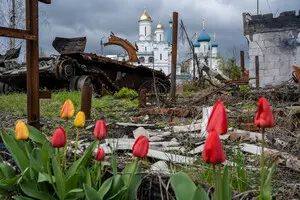
Roman came home a few months later only to see an empty house, his mother’s grave and the wild grasses along the roadside, stretching from the cemetery to the church, the shop, the council office, the clinic. Olia told him about his mother’s last days—how they’d looked for him, called Andrii in Russia. Roman smoked a lot. His red eyes betrayed exhaustion. When everything had been said, Olia couldn’t hold back:
“Listen, people say you look dead Russians in the face. That can’t be true, right? You’re normal—I know you.”
“It’s true,” Roman said quietly, with a sad smile.
Olia’s mouth dropped open.
“But… why?”
“Just in case one of them is Andrii.”
“He probably has a deferment. Works at a military plant. Makes rockets.”
The muscles in Roman’s jaw tightened.
“Good thing mother didn’t know that.”
“Good thing,” Olia agreed softly. “So… will you pick the apples? The Papirovkas in your orchard?”
“What for?” he shrugged. “I’m leaving tomorrow.”
“Then I’ll pick them. Your mother asked me to.”
***
Before leaving, Roman couldn’t sleep. He kept thinking about his mother, the war, the orphaned house, the old apple tree… Toward morning he finally drifted into a heavy, sticky sleep.
A field. The sun blinding his eyes. His boots sinking into the thick soil. And ahead of him walked a woman, her arms spread like wings. She walked on, without turning back.
Please select it with the mouse and press Ctrl+Enter or Submit a bug
 Follow on Telegram
 Login with Facebook
 Login with Twitter
 Login with Google