
 Support ZN.ua








“Ukraine Is Bound, the US Expects.” Details Of ‘Equal’ Partnership With United States



Life is hard? — Buy a goat!
Even harder? — Sell the goat!
It is easier without the goat, isn’t it?
So, as a result of the negotiations with the US on minerals we sold the goat in the form of $350 billion in fictitious debts and the slave-like conditions of the previous draft agreements. Is it easier for us without the goat? Definitely. Are we sure that instead of a goat, they won't force us to buy a flock of sheep?
Given the government communication about the signed agreements and the circus that their ratification in parliament is turning into, not really.

The negotiations on the minerals deal ended with the ceremonial signing of all three documents in the package: the framework intergovernmental agreement, the limited partnership agreement (which defines the terms of cooperation) and the charter of the fund through which this cooperation will be implemented. Clearly not seeking transparency and openness, the parties officially announced only the signing of the Intergovernmental Agreement, claiming that the other documents were still in the process of being finalized, and that it did not matter what was in them as long as we had achieved the best possible terms.
Without a doubt, progress is evident: the agreements do not convert the free aid already provided to Ukraine into debt to the United States. Here, we should thank not so much our negotiators as the lawyers whom the negotiators eventually brought into the process after making a mess of things on their own. The legal advisors at Hogan Lovells were really helpful, particularly in explaining to the Americans that, from a legal standpoint, converting aid into debt retroactively is impossible, with all the consequences that entails.
They also helped with the rest of the details, adding unexpected constructiveness to our usual chaos. Chief negotiator Yuliia Svyrydenko even managed to get a good night's sleep while her sidekick Taras Kachka and invited consultants fought for a better life for us in negotiations with Scott Bassent, US Secretary of the Treasury.
Something was indeed achieved, but it is early days to conclude that Ukraine finally has a royal flush in its hands. The planning horizon for this cooperation is so long that we may end up playing not poker but preference with this royal flush.
In this respect, it is no coincidence that we were only shown the cover of the agreement.
ZN.UA officially asked the government why the other two documents had not been made public, considering that, according to our sources and information from colleagues at Politico, the parties had signed everything at once. We are not the only ones waiting for an answer — members of parliament are also concerned. Any day now, they will be voting for a pig in a poke, or rather, for a poke, but is there a pig in it? Or is it something much larger? Only a framework intergovernmental agreement has been registered in parliament, while all the juicy details about the terms of cooperation are contained in a limited partnership agreement that none of them have seen.
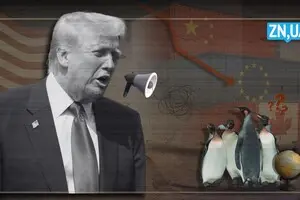
According to latest information, government officials have decided to tell MPs what is in it without showing them the documents. It makes sense to recall that President Zelenskyy not only publicly lied that MPs had the chance to familiarize themselves with the entire package signed in the United States but also publicly called on the US to cancel visas for those MPs who would not vote for the ratification of the intergovernmental agreement. It’s been a long time since we saw such an explosive cocktail of disrespect and arbitrariness from Volodymyr Zelenskyy. Everything was for export.
In another universe, the president’s steadfastness, perseverance and heroic willingness to sacrifice all those close to him who are threatened with US sanctions for the sake of Ukraine's interests would be worthy of praise.
Well, let's move on to the documents themselves.
The framework intergovernmental agreement is as close as it gets to other investment agreements concluded by Ukraine. It contains no unnecessary details and is couched in super-diplomatic language. This is probably why only this document was given to the MPs, in the hope that most of them would fall asleep on the second page out of twelve.
However, even in this watered-down version, an attentive reader will notice that the fact that they have decided not to chop off our heads does not mean that they will not twist our arms.
The text clearly shows who really holds the trump card: the US “expects” and Ukraine has “obligations”; the US Treasury “may” and the Ukrainian government is “bound”; the US government “affirms” and the Ukrainian government “shall ensure.”
The wording of the fifth point of the agreement brings us down to earth with a bump: “If, after the Effective Date, the Government of the United States of America delivers new military assistance to the Government of Ukraine in any form…” And what if it doesn't?
As for our obligations to fill the fund, there certainly are no “ifs.”
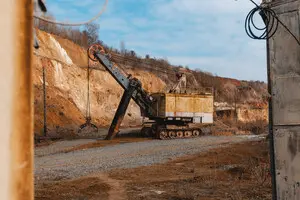
No matter what Ambassador Oksana Markarova says about a “50-50” partnership, that is definitely not what this is about. For example, the terms of the agreement take precedence over domestic law, and any subsequent legislative changes cannot limit its effect, and it will have precedence over our legislation. Suddenly, we will no longer be able to get out of it by hiding behind our own laws; we will head to the High Court of Justice in London and get stuck there for life.
American investors will receive similar super-priority at all stages: investment projects, licenses, special permits and rights to purchase mining. In fact, everything related to subsoil assets use and of commercial interest will first go to the newly created fund, and let the others wait.
The framework agreement mentions this in passing, but we took a peek at the mysterious Limited Partnership Agreement and now we understand exactly why it is “limited.”
American investors will be the first to receive all information that could potentially be of interest to them, evaluate their interest within three months, and only if they are not satisfied will everyone else get their turn. But even if they do wait, according to the agreement, they will not be able to obtain more favorable financial terms than those offered to American investors for six months. If it is a matter of purchasing products, the same applies: the Ukrainian side will not be able to offer anyone a better price than the one the Americans refuse (in case it does not suit them) for another six months.
It's not as if there's a line of investors waiting, but these conditions definitely make us less attractive to them. Life is long, the war will end someday, reconstruction will take place, but the agreement with the US is of indefinite duration.
The joint Ukrainian-American fund will be managed by a council with an equal number of representatives from Ukraine and the US, assisted by four committees. Here, parity again sags sharply:
- Investment Committee, responsible for investment decisions, with three US managers and two Ukrainian managers;
- Administrative Committee, responsible for management and administration, consisting of three US managers and two Ukrainian managers;
- Audit Committee, responsible for engaging external auditors and hiring and supervising a contribution assessment consultant, with two US managers and two Ukrainian managers;
- Project Search Committee, responsible for identifying investment opportunities — finally, with three managers from Ukraine and two managers from the US.
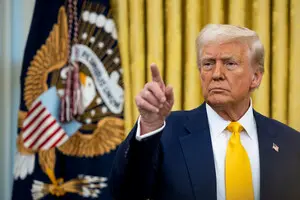
As we can see, we will only be entrusted with searching for projects; in all other matters, we are in minority and generally not very necessary. In addition, there are a number of issues that are decided exclusively by US managers, and there are quite a few of them. These include:
- making investment decisions;
- determining terms and amounts of any asset distributions;
- conducting audits of the Partnership, its investments and income;
- determining the estimated value of any US military contribution;
- approving any recommendations to the Investment Committee;
- approving any recommendations to the Administrative Committee;
- approving any recommendations of the Audit Committee.
It's kind of awkward, especially when you remember that the Ukrainian side that will join the Fund is the Agency for the Promotion of Public-Private Partnerships, which no one had even heard of a week ago and which currently consists of three people: Director N. Hachechyladze, Head of Project Support Y. Sukhoverha and lawyer M. Belova. On the other hand, there is no need to bring in a lot of extra chairs.
Finally, the most interesting part — money
It is well known that the US does not invest anything in the Fund but provides weapons to Ukraine. Hopefully, this will continue after the war is over because our threat will not disappear with the end of active fighting. Thanks for that, anyway. In turn, we invest 50 percent of all rental payments, license fees and amounts payable to the Ukrainian government under production sharing agreements relating to licenses issued after the entry into force of the document and so-called dormant licenses.
We have quite a few of the latter. A few years ago, the State Geological Service even launched a crusade against them, revoking the production rights of the “dormant” companies. But, firstly, there were more than 3,000 permits; secondly, dormant status can only be proven after ten years of inactivity; and thirdly, this is done by the court (which takes a long time). So the crusade has dragged on, and we are still talking about thousands of licenses.

Besides, according to the Agreement, certain existing licenses will be equated with dormant ones, particularly those that have had less than 1 percent of their balance sheet reserves extracted over the last ten years or those for which violations or non-compliance with the approved work program have been recorded for more than five years. Therefore, to be honest, our final contribution is currently unknown, as it will be preceded by a considerable audit of, let's be frank, a not very well-organized sector of the economy.
The funds earned by the Fund may be reinvested in infrastructure or mining projects, distributed among partners (but not earlier than in ten years) or spent on operating expenses (which is sacrosanct). There is no taxation, either in Ukraine or in the US. Oh, and again, a little bit of “equal rights”: if the “Ukrainian partner” violates anything, it will not get any distributions, and Ukrainian managers will lose all voting rights in the Council and relevant committees of the Fund. As for violations on the part of the American partner, there is no mention of them, even out of politeness.
So, in general, the cooperation will look as follows: the Americans give weapons (if they give them). We create a fund using the potential rent shortfall and select investment projects for the US. The US comes in (or it doesn’t), but for the first six months, no one else comes in. For the first ten years, all the money earned will be reinvested in Ukraine (and these will be very small amounts, since we are talking about new or “dormant” licenses, where there has been no exploration or extraction). Then the money will be divided and taken out of Ukraine by the US without taxation.
These are not the worst demands we have seen. But they are not the best either. This option needs to be discussed with both the parliament and the people. We are all aware that there are currently no alternatives to US military aid, and it is critically important to us. We understand perfectly well that no one has been modest about Ukraine's “rich natural resources,” and we could probably use some Western money and technology. We know we don't have any cards to play, which is why we shouldn't have started this whole minerals story in the first place. But now that we have, maybe we deserve a little honesty instead of a bucket of slop with “50/50 partnership,” “intergovernmental agreement only,” “ royal flush” and the rest? Equal agreements are concluded between equal parties, but here no one was ashamed to take advantage of our difficult situation.
So we just sold the goat...
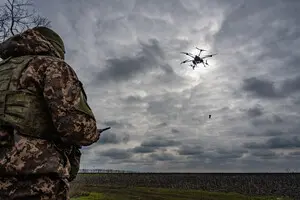
And we signed up to give another country a significant share of our natural resources and rent in exchange for weapons to end the war. How will the war end, when and where will it end? What kind of Ukraine will it be, from which untaxed profits will begin to be exported in ten years? No one knows. And most importantly, there are no security guarantees in the entire “minerals” package.
Please select it with the mouse and press Ctrl+Enter or Submit a bug
 Follow on Telegram
 Login with Facebook
 Login with Twitter
 Login with Google