
 Support ZN.ua








Trump's 100 Days That Shook America. What Should Ukraine Do Now?



Barely 100 days have passed since Donald Trump's inauguration. In this short timespan, he has managed to shake the foundations of American politics and social life and begin to change the configuration of international relations. Admittedly, no US president in modern history has demonstrated such intensive activity at the beginning of his term, except perhaps Franklin Roosevelt with his New Deal. According to The Economist, Donald Trump is “leading a revolutionary project that aspires to remake the economy, the bureaucracy, culture and foreign policy, even the idea of America itself.” In fact, Trump's first 100 days have been a durability test for American institutions, seemingly established policies and social principles.

Trump's actions clearly correspond to the main recommendations of Project 2025, developed by conservatives from The Heritage Foundation. Trump's political philosophy is premised on the idea of virtually unlimited presidential powers in line with Richard Nixon's concept of the “imperial presidency.” There is nothing unexpected in the new president's behavior: he announced virtually all of his intentions during the election campaign. One just had to listen to him carefully, rather than expecting that what he said should be taken with a grain of salt, including his foreign policy statements.
In the four years since his loss in the 2020 election, he has thought through the method of implementing his political project. This method consists of a tactic of “shock and awe,” a frontal attack and demoralization of his political opponents, and aggressive promotion of his own vision of America through the issuance of an unprecedented number of executive orders, combined with a willingness to ignore possible court judgments.
To achieve maximum political and communicative effect, Trump, after taking office, focused his efforts on issues that secured his election victory and resonated with the views of his electoral “fan base.” When selecting priorities, the possibility of quickly achieving practical results that the American public could be profitably sold on was also taken into account.
The presidential team was most active in the area of immigration. In particular, the president declared a state of emergency on the border with Mexico, ordered the deployment of US armed forces there and attempted to revoke the right of US-born children of non-US citizens to obtain citizenship. The practice of considering asylum requests from refugees at the US border was also effectively abolished, and the process of resettling them in the United States was suspended. Visa cancellations became widespread. The Trump administration's efforts to carry out mass deportations of immigrants became a distinctive feature of its policy: in order to fulfill his campaign promises to deport millions of illegal immigrants, Trump tasked the country's immigration service with arresting at least 1,200–1,500 illegal immigrants per day; to detain them, the US military base at Guantanamo Bay in Cuba was used. Reports of raids to apprehend illegal immigrants filled TV channels and sowed panic among immigrant communities.
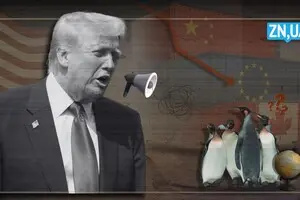
Thanks to the measures taken, the Trump administration managed to stabilize the situation on the southern border, where the number of attempts to cross illegally fell to its lowest level in decades (it should be noted that the downward trend began at the end of Joe Biden's presidency). Until recently, Trump's actions in this area had the support of the majority of Americans. However, the aggressiveness and, in some cases, disregard for legal norms and procedures on the part of law enforcement agencies have led to increased criticism. Currently, 53 percent of Americans are dissatisfied with the Trump administration's immigration control measures. The latter have been the subject of numerous lawsuits and court judgements at various levels not in favor of the president.
No less attention has been paid by American society to the president's intentions to reform the work of the state apparatus, including a significant reduction in the number of civil servants. This approach is in line with the Republican Party's traditional views on the adequacy of a small federal government and the minimization of its influence on the life of the country. However, Trump's ambitions do not stop there. He intends to “deconstruct” the administrative apparatus, literally undermine the modern system of administrative management in the US, radically change the rules of the game in politics and deal a crushing defeat to the deep state and the traditional elites, for whom the former New York construction tycoon has never been one of their own.
The “deconstruction” of the federal bureaucracy is part of a broader plan to fight political opponents and all those whom the current president considers responsible for his “persecution” in 2020–2024, relying on the highly politicized Department of Justice. This list is quite extensive, ranging from law firms to universities and the media. At the same time, it should be born in mind that Trump's intentions are in line with the anti-establishment sentiments of voters and are his response to public demand for real change in the country.
The role of strike force in purging the state apparatus was assigned to Elon Musk, who has become the face of the Trump administration's first 100 days. A Department of Government Efficiency (DOGE) with broad but legally undefined powers was even created by a presidential executive order. According to Musk, the department's mission is to end the “tyranny of bureaucracy,” save taxpayers' money and reduce the US national debt (his most optimistic promise is an annual reduction in government spending by $2 trillion). Despite the triumphant reports, it is unclear how effective Musk's department really is.
At the same time, his initiatives to shut down federal agencies, cut funding for programs, lay off employees alongside lack of transparency and potential conflicts of interest have made Musk the target of harsh criticism and caused discontent even among some Trump voters. Fifty-four percent of Americans have a negative opinion of Elon Musk. I believe his decision to focus on Tesla was welcomed by many members of Trump's team, who were annoyed by his “cavalry” methods and excessive closeness to the “boss,” who seems to have grown tired of his favorite.

Another target of Trump's fury since the presidential race has been the Diversity, Equity and Inclusion (DEI) programs, which aim to promote employment and career advancement for people belonging to groups that have experienced discrimination. The relevant departments in the executive branch have been eliminated. Pressure is being exerted in the same direction on private companies, educational institutions, hospitals and the media. It should be noted that this issue is one of those that testify to the extreme polarization of American society. A slight majority of voters and an absolute majority of Republicans believe that all DEI programs should be abolished because they “focus too much on race and other social factors compared to qualifications, skills and experience.”
Thus, it can be concluded that Trump is offering his own solutions to the problems that Americans are truly concerned about. He is doing so in an extremely aggressive and authoritarian manner, sometimes on the verge of breaking legal rules. He is clearly encouraged by the lack of serious opposition to his actions. The Democratic Party is in crisis, with no recognized leader and no clear strategy. Democrats have little time to reflect and make the necessary decisions if they are to seize the opportunity to win back the House of Representatives in next year's midterm elections.
The only center of resistance to the president's “offensive” is the judiciary: a number of executive orders have been blocked by court rulings, and the head of the Supreme Court, where conservatives have a majority, has warned the president in no uncertain terms against exerting pressure on the judiciary. On the other hand, Trump has already shown his willingness to act in circumvention of court injunctions. If the administration's disregard for court decisions becomes systematic, a constitutional crisis could erupt in the US, weakening the entire system of state institutions.
At the same time, the lion's share of Americans — 83 percent — believe that Trump should comply with court judgements with which he disagrees (this view is shared by 73 percent of Republican Party members). These figures are an alarming signal for the president, especially against the backdrop of his approval rates falling to 45 percent (compared to 52 percent in the first week after his inauguration). Only Trump himself had a lower rating in the same period in 2016. The decline was due to a significant drop in support for the current president among independent voters, 58 percent of whom express dissatisfaction with his performance as president.
The most negative consequences for Trump may stem from the growing number of Americans dissatisfied with his work on the economy, which has always been considered his advantage over his political rivals. The latest poll recorded his worst rating in this area: only 37 percent of Americans approve of Trump's economic performance. The number of those dissatisfied with his fight against inflation exceeds the number of those who gave Trump a positive assessment by 20 percent. For the first time in 25 years, a majority of Americans (53 percent) believe that their personal financial situation has worsened, including 23 percent of the president's fellow party members.

Trump's controversial tariff policy has done great damage to his reputation as an economic “wizard”: two out of three Americans are dissatisfied with his actions in this area. In their desire to show Americans and the whole world who is in charge, to transform the global economy to suit themselves and to obtain the resources necessary for the planned tax cuts, Trump and his advisers failed to calculate the disastrous impact that the tariff wars initiated by the president could have on the US economy and the pockets of ordinary Americans. The rise in import prices is expected to fuel inflation in the United States, while the volatility of financial markets triggered by Trump's tariff “salvo” has already caused a decline in stock prices (in which a significant portion of US citizens hold their retirement savings).
The situation on the stock and government bond markets, as well as the real threat of disrupting the supply chains for finished goods and raw materials in the US, have caused extreme concern among investors and big American businesses. Under their pressure, Trump was forced to back down and, among other things, try to alleviate tensions in trade relations with China. However, his recent interview with Time showed that he has no intention of abandoning tariffs as a weapon, hoping to conclude hundreds of tariff agreements that will improve commercial conditions for the US and promote the country's reindustrialization. Most experts view these statements with a great deal of skepticism.
In terms of security, the tariff story has once again demonstrated Trump's willingness to undermine the entire system of US international partnerships and alliances when he believes that such behavior is in his personal political interests. Instead of creating a united front against Chinese economic expansionism, he counts EU countries among America’s main economic competitors and is nearly pushing traditional Asian allies into the arms of Uncle Xi.
Even without tariff wars, we have experienced firsthand the peculiar attitude of the new US leader toward strategic partners (whom he does not consider as such). If we try to systematize the flow of statements, phrases and electronic messages on Ukraine from the White House and members of Trump’s foreign policy team over the past 100 days, the picture that emerges is generally bleak for Ukraine.
Trump's desire to end the war at any cost, including by violating Ukraine's national interests, has intensified and become more vocal. He needs this in order to concentrate on more pressing domestic and foreign policy issues, with the focus shifting from Europe to the Asia-Pacific. Thus, the war in Ukraine is seen as a purely European affair, largely irrelevant to US interests, and responsibility for supporting Ukraine is shifted exclusively to European states.
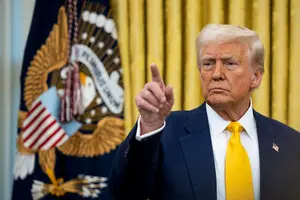
In his view of the causes of the war and the prospects for its end, Trump proceeds from his vision of world politics, where there are different rules of behavior for “big boys” and weaker countries, such as Ukraine. This objectively coincides with Putin's approach to international relations and international law. The war in Ukraine is seen by the US president (again, to Putin's delight) as just one element of a broader plan to reformat US-Russian relations. I am confident that the latest attempt by the US leadership to reset relations, as well as Trump's calculation to “pull” Russia away from China, is an illusion. An illusion with dangerous consequences for us.
Trump was counting on a faster implementation of his “peace plan” for Ukraine, but he is ready to put pressure on Kyiv and its leadership to speed up the process, demanding major concessions. The weight of his critical remarks about Putin and Russia should not be overestimated. We are increasingly hearing phrases from the president and his chief negotiator Steve Witkoff that seem to have been copied from Russian media, while statements about the possibility of imposing new sanctions against Russia remain up in the air. If Trump becomes seriously irritated by Putin's behavior, we can expect him to try to save his “Russian project,” in which he has invested a considerable amount of his personal political capital.
Even if the most positive scenario for us transpires, with Trump “tired” of Putin, continued assistance to Ukraine in the forms and scale of the previous period seems unlikely. A window of opportunity could be created by the purchase of necessary weapons and equipment, such as Ukraine's proposal to buy air defense systems. Our European partners should focus their efforts on this.
Please select it with the mouse and press Ctrl+Enter or Submit a bug
 Follow on Telegram

 Login with Facebook
 Login with Twitter
 Login with Google