
 Support ZN.ua








Regulating Crypto in Ukraine: Corruption, the Shadow Economy and $50 Billion Untaxed



The Ukrainian authorities have decided to “regulate” the cryptocurrency market. At stake is the circulation of capital worth billions of dollars. How this next saga of the ever-reaching, many-armed Shiva of state regulation will end remains an intrigue.
So let us begin by analyzing the “Tweedledum and Tweedledee” quarrel, or why the NBU and the Verkhovna Rada cannot divide the “digital millions.”
We will start with the parliament’s innovations. The Verkhovna Rada adopted in the first reading draft law No. 102325-d “On Amendments to the Tax Code of Ukraine and Certain Other Legislative Acts of Ukraine Regarding the Regulation of the Turnover of Virtual Assets in Ukraine.” This draft law defines the peculiarities of taxation of operations with virtual assets.
The goal of the draft law is obvious — to bring the assets under state ledgers and tax them. All operations with digital assets become subject to personal income tax (PIT) at a rate of 18 percent and the military levy at a rate of 5 percent. In other words, the total fiscal burden is the traditional 23 percent (if compared, for example, with deposits; PIT does not apply to operations with government bonds).
The profit from operations with virtual assets is defined traditionally—as the difference between income from sales and expenses for acquiring such virtual assets during the year. In addition, in case of loss, the negative result is carried forward into the formula for calculation during the following tax periods until this loss is fully repaid.
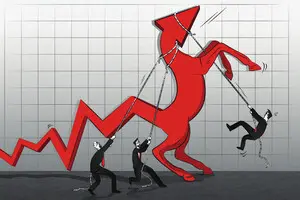
Here we immediately see yet another phantom of fiscal “Potemkin villages,” a familiar sight in the latest tax code innovations.
Let us begin with the fact that in the case of virtual assets there is no tax agent. If an individual in Ukraine places a deposit in a bank, it is the financial institution that withholds such tax and transfers it to the state. The same applies to operations with securities—here, the securities trader acts as the tax agent.
Naturally, cryptocurrency exchanges will not act as tax agents.
Thus, the question arises: how to regulate the market? For now, the state cannot even sort out the taxation of residential real estate owned by individuals. All the information about apartment sizes supposedly exists, the very purchase and sale agreements are certified by notaries, yet there is still a huge amount of real estate that has not been entered into electronic registers.
And “catching” profit from operations with virtual assets is like trying to chase a sparrow across a field on your knees.
Incidentally, it should be noted that to conduct operations with virtual assets, a professional intermediary in the form of a securities dealer is not always required, and therefore there is no “tax sentinel.”
The option of carrying losses forward into the next year makes the process of taxing crypto operations even more of a spectacle: at the end of the year the owner of, say, bitcoins can “park” their coins with losses into a shell crypto wallet somewhere in Indonesia and bring these assets back at the beginning of next year, forming the necessary loss.
The legislators fully understood all the said concerns, which is why the law includes provisions that the individual must keep a separate record of operations with virtual assets, independently declare income and pay taxes.
Otherwise, they might be caught—assuming the state can catch anyone at all. Quite a threat in times of war and its inherent risks.
All in all, imposing such complex taxation schemes on virtual asset transactions is a dubious project at best.
It’s like trying to shear a pig: plenty of squealing, but hardly any wool.
Still, true to form, the parliament steered clear of the easy route and passed the law in the first reading.

That said, the basic motivation of the deputies is clear. By various estimates, Ukrainians have invested a substantial amount in cryptocurrencies—nearly $50 billion, with a significant portion of it coming during the war. If we take an effective rate of at least 10 percent, that amounts up to $5 billion in tax revenues to the budget.
Perhaps some official dreamed of the laurels of US President Donald Trump, who also set out to “regulate” the market of digital virtual assets.
Let us recall that in the United States the following legislative acts are now being considered in Congress or have already been adopted:
- Anti-CBDC Act, which prohibits the Federal Reserve from issuing a digital currency;
- GENIUS Act, which describes the architecture of the private cryptocurrency market;
- CLARITY Act, which legalizes the issuance of private money for businesses and the public.
However, Trump’s approach was somewhat different: it was not regulation but deregulation, with the state subtly redefining the rules of the game. The only time Trump takes a hard line is when he moves to ban the Federal Reserve from issuing a digital dollar — a CBDC, that is, a central-bank-issued digital version of the national currency.
In other words, Trump is taking a tough stance toward a quasi-state monetary authority, limiting its influence on the virtual assets market, not toward market players.
Let us return to our own shores.
Most likely, the legislators’ goal is different. They understand perfectly well that they will not be able to catch anyone for failing to pay “virtual income” taxes (except selectively, on request).
On the other hand, this law creates a mechanism for legalizing our “crypto-corruption” at a rate of 23 percent. Officials have collected quite a haul in crypto, so they do not mind the 23 percent. Otherwise questions will arise regarding the legalization of these funds abroad.
Meanwhile, NBU Governor Andrii Pyshnyi also chimed in — though when it comes to virtual assets, he still can’t decide whether he belongs to the “beautiful” camp or the “smart” one.
What is meant by this bizarre dichotomy?
As the central bank and the country’s monetary authority, the NBU must make only one conceptual decision: is it in favor of issuing a digital hryvnia, i.e., joining the part of the world that bets on CBDC; or does it cede this right of emission “birthright” in favor of private companies that receive the right to issue their own digital money?
The US has embraced the CBDC model, and the Global South is gradually gravitating toward it as well, though most of these countries continue to allow private digital money. The notable exception is China, which has banned ICOs — that is, the issuance of private project cryptocurrencies.
All the more so since Pyshnyi’s distant “evolutionary ancestor” in the position of NBU head, Mr. Smolii, actively advocated for the issuance of a digital hryvnia and even ensured significant technical progress by the regulator in this direction.
However, Pyshnyi chose not to soar into lofty debates such as the CBDC dilemma, and instead boiled it all down to a simple stance: “Let them buy it — just don’t let them pay for potatoes with bitcoin.” (Not a direct quote, of course, but close enough in spirit.)

On the one hand, Andrii Pyshnyi acknowledged the significant volume of operations: in the six months of 2025, the turnover of companies in the field of virtual assets in Ukraine amounted to about $7 billion.
On the other hand, the head of the National Bank added: “The document adopted so far is not perfect, but we are ready to finalize it for the second reading together with the relevant committee of the Verkhovna Rada of Ukraine, international partners and market participants.”
For the NBU, the main red line in this draft law is clear: virtual assets must not be used as a means of payment for goods and services in Ukraine. “It is important,” Pyshnyi said, “that virtual assets do not become a tool for bypassing NBU restrictions, and their legalization must not fuel the shadow economy. The scope of tasks ahead is vast — but we are already working on it.”
I do not know what kind of scope that is, but here is some bad news for Mr. Pyshnyi: virtual assets are already being used to bypass the National Bank’s currency restrictions and are already being exchanged for other currencies, particularly US dollars. In fact, the availability of these options explains the enormous popularity of cryptocurrencies in Ukraine.
There is a clear pattern: the harder the NBU squeezes the hryvnia with regulations, the more Ukrainians shift into crypto.
To be fair, the regulator also has a point. Legalizing cryptocurrency as a means of payment means creating an additional monetary aggregate and expanding the quasi-money supply by about $50 billion in equivalent. And this monetary aggregate would not be regulated by the NBU, with corresponding inflationary consequences. Simply put, if the equivalent of $50 billion of quasi-money were “poured” into the money market right now, it would have the effect of a tsunami on price stability.
At the same time, there are purely utilitarian goals—Pyshnyi wants to know who will personally regulate this market in Ukraine: the NBU or the National Securities and Stock Market Commission (NSSMC)?
Based on the logic of financial market regulation in Ukraine in recent years, only one regulator survives here. The State Financial Services Commission was eliminated, and the insurance and collective investment markets have already been “divided” between the NBU and the NSSMC.
Right now, the NSSMC is in the amusing position of regulating a market that barely exists: the stock market. Since 90 percent of it is just government bond trades, there’s almost nothing left to regulate.
In essence, there is now only one real financial market regulator, the NBU, and it is unlikely to allow the adoption of a law that gives the Cabinet of Ministers the right to determine the regulator of the virtual assets market.
Meanwhile, Ukraine is plunging ever deeper into the world of cryptocurrencies, and the lack of state regulation—combined with extremely heavy regulation in other parts of the financial market—is undeniably one of the key drivers.

In particular, according to the Chainalysis global crypto asset market ranking, Ukraine ranks sixth in the world (by cryptocurrency transaction volume; use of DeFi, i.e. decentralized services; activity of retail users).
The top ten in the Chainalysis ranking is as follows:
- India
- Nigeria
- Indonesia
- United States
- Vietnam
- Ukraine
- Russia
- Philippines
- Pakistan
- Brazil
Notably, there are almost no advanced Western economies in the top 10 — especially European ones. Instead, the list is dominated by poorer countries, economies with high levels of labor migration, heavily restricted markets, and even sanctioned states. The only major exception is the United States.
In Ukraine, cryptocurrencies have become an instrument for the functioning of the shadow economy, which is increasingly shifting from dollars and cash hryvnia to cryptocurrencies. Ukrainians use crypto to circumvent the NBU’s caps on transaction amounts, including for cross-border transfers. This also concerns financial monitoring safeguards.
The glitter of “Ukrainian crypto” is also a mirror of our corruption. Nearly all corruption-related transactions have now moved into the realm of virtual assets.
Our crypto market stands on five whales:
- corruption;
- currency restrictions and transactional limits (financial monitoring);
- the shadow economy;
- war-related risks;
- the urge for quick passive income.
Under these conditions, the more logical position for officials would be: “Those who hinder us will help us.”
Taxing cryptocurrencies under current conditions is essentially the same as taxing a potential inflow of investment at the very “entry point” into the national economy.
Foreign direct investment, for obvious reasons, has already dropped to 0.5 percent of GDP, a critically low figure.
Therefore, Ukraine must bet on cryptocurrencies as an instrument of crowdfunding, i.e. “people’s economy” investment, through the creation of an ICO mechanism—the private issuance of project cryptocurrencies tied to the real production of goods and services.
For example, a project to produce military uniforms issues its own token called Uniform, and these coins can be purchased through the ICO mechanism, including for other virtual instruments.
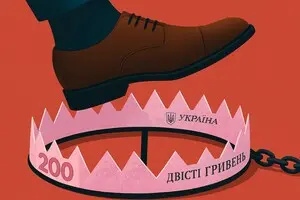
Simply put, it is necessary to tokenize all the main economic projects in Ukraine and give them the opportunity to form a puzzle of project “icons” on the smartphone screens of ordinary Ukrainians for one-click crypto investment.
This would allow Ukraine to attract tens of billions of dollars in virtual-asset investment to support the structural transformation of its wartime economy.
A system of Tokenized Private Investments (TPI) would emerge, standing alongside Foreign Direct Investment (FDI) and Capital Investment (CI).
However, this would require the ruling class to change not only its mindset but even its tastes—from feasting on “roast goose, gutted, plucked, aristocracy-style” to embracing a “self-renewing, cyclical, growing economy.”
Please select it with the mouse and press Ctrl+Enter or Submit a bug
 Follow on Telegram
 Login with Facebook
 Login with Twitter
 Login with Google