
 Support ZN.ua








From Resource Curse to Economic Miracle. How Ukraine Can Avoid Becoming the New Somalia

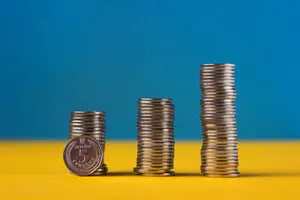

What is dead may never die, but rises again, harder and stronger.
—From the catechism of the Drowned God in Game of Thrones series
What is the future of the Ukrainian economy after the war?
“The Ukraine we lost” is an industrialized country with a population of 52 million people.
The Ukraine we have come to is a war-torn economy with a population of 27–28 million.
What will the Ukraine we build be like?
It will be exactly what the new model of economic development shapes it to be. It is sad to admit, but even in the 35th year of independence, we have never had such a model, and we still do not have one.
First, in the 1990s, the authorities carried out structural reforms designed to create the necessary conditions for the transition from a planned economy to a market economy. Issues of “large and small privatization” were being resolved, and a national currency and tax system were introduced.
In the early 2000s, society and the political elite reached a kind of consensus in the form of an informal social contract: “We (the elites) will not interfere with you (the people) earning your small fortunes, we will guarantee relatively low tariffs and certain social standards; and you (the people) will not interfere with us (the elites) dividing up the country’s main assets and financial flows.”
It was precisely as a result of this “social contract” that two antagonistic classes emerged in Ukraine: micro-entrepreneurs, who saw anarcho-capitalism as the ideal model of development, and oligarchs, who advocated a kind of quasi-state capitalism, which functioned through their moderation of political life in the country and control over the media and political parties.
Since 2014, our economy has been on a long, mostly senseless and ruthless, track of “reforms.”
Officials are developing a rather harmful belief that “the market will fix everything” and that their role is to act as a kind of hidden conductor at the crossroads of budgetary financial flows.
During the war, we have a 70 percent utilization rate of the economy's main production capacities and 15 percent unemployment among the economically active population. GDP growth in 2025 is expected to be 1–1.5 percent. All these indicators sound like a harsh verdict on the government, which is unable to form even a medium-term vision of economic development, ensure maximum employment with joblessness at a maximum of 2–3 percent and production capacity utilization at 85–90 percent. And with GDP growth rates of 7 percent and above.
So what could the post-war growth model look like?
Friedrich Hayek would say, “What is already dead may never die, and it is only worth burying, no matter how painful the farewell may be.”
But John Maynard Keynes would argue with him: “It's never too late to bury it, but maybe we should first remove the noose from its neck?”
The resource curse—that’s what they call the state of countries that hoped for rich mineral resources or monopoly goods in demand and lost the vitality of their national economies as a result.
At one time, Ukraine was called the “Eastern European tiger.” Unfortunately, the raw materials curse in our economy is perhaps the most evident among other European countries.
In 2005, agricultural raw materials accounted for 20 percent of national exports. This is comparable to exports of complex industrial products with high added value.
Before the full-scale war, agricultural raw material exports already accounted for 50 percent, and complex products for just 5 percent.
Now, exports of agricultural raw materials have reached 80 percent.
During the war, three “paper tigers” of the national economy were destroyed: the IT services sector (a significant part of which relocated to other countries); the export of labor resources, when Ukraine was receiving transfers from abroad (this indicator fell to less than $10 billion per year); and, oddly enough, the raw materials agricultural sector, despite its dominance in the export structure (due to logistical and transport problems, high prices for fertilizers and fuel, military risks, etc.).
In other words, our officials were betting on the export of raw materials (agricultural, digital and labor), but this bet did not work out during the war.
Why? Because during wartime, only bets on material production sectors (thanks to increased demand for specific material resources) and the service sector (to maintain employment) work.
Material production requires a properly calibrated state industrial policy (which we do not have).
The service sector represents economic freedom, which is also lacking in our country.
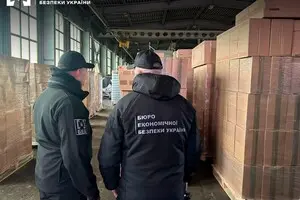
The primary reason for the failures is the focus on single-commodity production of raw materials with declining returns and the incorrect application of Adam Smith and David Ricardo's theories of absolute and comparative advantages.
These theories say that if Ukraine has a better set of absolute conditions or alternative costs in the production of agricultural raw materials, then it should specialize in the production of agricultural raw materials.
For Ukraine, this poverty trap looks like this: since we have favorable conditions for agriculture and we have absolute and comparative advantages in this sector compared to other countries, we should focus on the production of corn, grain, i.e., raw materials with diminishing returns.
However, unlike goods with high added value, agricultural production cannot benefit from economies of scale. Thus, in the production of passenger cars, an increase in production volumes will lead to a decrease in costs per unit of goods, while in the agricultural sector and mineral extraction, on the contrary, each additional ton of wheat or new ton of mined ore requires new costs: soil fertility is depleted, ore reserves run out.
As a result, we ended up with an economy in which only those industries developed that either had absolute advantages in the global market or relied on the production of agricultural commodities and raw materials with lower returns.
Sectors with growing returns, which could be based on the use of comparative advantages, such as processing, consumer goods production, machine building, etc., practically did not develop at all.
What could such imbalances in our development lead to?
Until 1960, Somalia's economy was ahead of South Korea in terms of quality parameters. But the latter, thanks to its focus on developing a creative and innovative economy (albeit preceded by the implementation of an independent industrial policy), managed to break out of the vicious circle of absolute and comparative advantages in the form of cheap labor and a focus on agriculture.
Somalia, on the other hand, found its competitive advantage in the exciting activity of “catching” foreign tankers.
That is why, instead of a raw materials and industry-based model, Ukraine needs to move to a cluster development model, which involves combining all productive forces: human, natural, infrastructural, competitive and energy-related.
These should be both targeted and technological clusters, as well as broad inter-industry clusters.
It is obvious that the biotechnology cluster should become the basis in Ukraine: not only food production, but also a leading position in the production of biofuels, vegetable protein, lecithins, isolates, and dietary supplements.
Maximum generation of added value by stimulating vertically integrated production systems.
Formation of regional development clusters in the form of territorial-economic regions and granting such clusters the right to implement their own tax and investment policies (while retaining the functions of national taxes).
Fiscal incentives should work exclusively to stimulate exports of products with high added value. That is, VAT refunds should only be provided for complex goods, not raw materials. Taxation of raw material exports with special duties and concentration of these resources in a special national reserve fund for investment in the structural rebuilding of the economy or for distribution of regular payments from such a fund among citizens.
Development of machine-building, electronic, energy, chemical and defense-industrial clusters.
Introduction of a belt of enhanced industrialization and urbanization around Ukrainian nuclear power plants through the creation of charter cities (“free cities”), with complete exemption of small and medium-sized businesses from taxes and regulatory procedures. This should also solve the problem of housing millions of internally displaced persons.
Utilization of the creative potential of Ukrainian megacities by stimulating the development of technology parks at the intersection of education, science and existing industrial platforms.
A real tax revolution—fiscal emancipation of the population, i.e., transferring to employees the right to independently pay personal income tax (and removing this transactional burden from businesses). At the same time, citizens would be granted the right to a generous tax credit for the amount of investments in their families.
A “zero group” of entrepreneurs—the creation of a special group for micro-entrepreneurship, where, up to a certain income threshold in the format of family businesses, such activities are generally exempt from the obligation to pay any taxes and fees, undergo inspections, obtain permits, etc.
Ten-year tax amnesty—legalization of capital by making a one-time deposit into the banking system without paying taxes.
The Harrod-Domar model, completed after World War II in 1946, speaks of the effect of a “big economic push.” Ukraine needs to achieve just such a synergistic effect.
In other words, Ukraine needs an “adrenaline shot” to its economic heart.
This should be a composite stimulus in the form of:
- monetary impulse from the NBU—refinancing by the National Bank of banks' investments in infrastructure bonds and industrial mortgages;
- a tax impulse in the form of a radical reduction in labor taxes with corresponding compensators (taxation of rent and raw material income), which should simultaneously and significantly increase the aggregate effective demand of the population and reduce the export of capital by raw material-based financial and industrial groups;
- budgetary stimulus in the form of spending on infrastructure and energy upgrades;
- investment stimulus through the creation of sustainable growth points and an increase in the growth multiplier.
Of course, the state must also protect the domestic market, otherwise all the momentum will go into the purchase of imported goods. It is also important to apply a wide range of incentives for export development, including in the SME segment.
Economic elevators for growing our own business champions—from zero taxation of family businesses to simple tax models for small businesses, then through the general taxation regime for medium-sized businesses and increased taxation of financial industrial groups, not vice versa.
In general, the new development model should be something like an Indian dance: with one hand we screw in a light bulb on the chandelier, and with the other we stroke the dog at our feet.
That is, a strong state at the macro level, capable of protecting the domestic market and supporting the exports of its companies abroad, and the complete elimination of the influence of state regulatory bodies at the micro level, where the initial impulse of entrepreneurial spirit is born, which only needs to be unleashed. And in that case, it will bring golden apples of youth to the national economy.
And then there will be a Ukrainian aliyah—the return of Ukrainians from abroad to a growing and free economy.
Please select it with the mouse and press Ctrl+Enter or Submit a bug
 Follow on Telegram
 Login with Facebook
 Login with Twitter
 Login with Google