
 Support ZN.ua








Why Hungary’s Orban Spies on Ukraine



While NATO focuses on deterring aggressive moves from Russia, one of its member states, Hungary, is reportedly conducting intelligence operations targeting Ukraine, a nation battling for its sovereignty and independence against a full-scale Russian invasion.
Ukraine’s Security Service (SBU) spokesperson Artem Dekhtiarenko said that counterintelligence operatives detained two former Ukrainian military servicemen accused of acting as assets for Hungarian intelligence. Their primary mission allegedly was to gather intelligence on the military preparedness of the westernmost region, Zakarpattia Oblast, specifically the disposition of air defense systems, troop deployments, and local attitudes towards potential foreign military deployments, including Hungarian units. They also acquired information related to the broader frontline situation.

Both suspects have been charged with high treason committed under martial law. On May 9, the district court in Kyiv remanded them in custody for 60 days without the option of bail. If convicted, they face life imprisonment and asset confiscation.
Allegations that NATO member Hungary is actively conducting intelligence operations against Ukraine, a country under full-scale Russian invasion, have escalated into a significant diplomatic rupture, revealing not only Budapest's distinct intelligence priorities but also Viktor Orban's strategy of leveraging the conflict for domestic gain, concessions from the EU, and continued ties with Russia, thereby complicating Ukraine's war effort and its path to European integration.
Hungarian intelligence services have long infiltrated Ukraine’s Zakarpattia Oblast, home to a significant Hungarian minority. According to the 2001 census, over 150,000 ethnic Hungarians resided in the region, approximately 12% of the local populace. Budapest has sought to expand the rights of this minority, using it as a strategic lever to maintain influence over the region.
Hungary was the only NATO member to redeploy military units to its border with Ukraine just days before Russia launched its full-scale invasion in February 2022. Andras Racz, a former analyst at Hungary’s Center for Strategic and Defense Studies, said that these deployments were not intended to be offensive. Instead, he claimed that the Hungarian government was not contemplating the occupation of Ukrainian territory but was preparing for a potential influx of refugees.
According to ZN.UA sources, Hungary has focused on gathering intelligence pertaining to border security and the combat readiness of Ukrainian units stationed in the region. Budapest is reportedly gathering information on the structure and functioning of the local and governmental bodies, regional elite vulnerabilities, security of electricity hubs and power plants in western Ukraine, and the protection of critical infrastructure, including information and communications facilities.
“This is not news, Hungary has been spying on Ukraine for some time. Our NATO allies have known about it for years, including from us,” Hungarian investigative journalist Szabolcs Panyi said on Facebook.
He noted that, as early as the second half of 2023, two national security officers in EU/NATO countries told him that, while most NATO members were actively exchanging intelligence on Russia, Hungary was notably absent from this collaboration.
“Leaks from Hungarian intelligence made it clear to NATO allies that Hungary’s civilian and military intelligence priorities diverged significantly from theirs,” said Panyi.
“While most member states were focused on gathering intelligence on the Russian aggressor and sharing it with partners, the Hungarians were disproportionately surveilling Ukraine, despite it being under attack and partial occupation.”
It is exceptionally rare for any government to publicly expose foreign agents or an intelligence network. However, Kyiv likely intended to send a clear warning to Budapest: interference in Ukraine’s domestic affairs wouldn’t be tolerated. In response, Viktor Orban’s government appears to have chosen escalation.
Amid the war, this fresh rupture in Ukrainian-Hungarian relations is deepening into yet another spiral of crisis.
How far will the crisis go? So far, the crisis currently remains a diplomatic ping-pong match within strained Ukrainian-Hungarian relations.
After SBU publicly disclosed the arrest of alleged agents working for Hungarian intelligence, Hungary’s Foreign Minister Peter Szijjarto dismissed the report as “propaganda” and retaliated by expelling two diplomats from the Ukrainian embassy in Budapest. Kyiv responded in kind, expelling two Hungarian diplomats.
Soon after, Hungarian security forces forcefully detained former Ukrainian diplomat Serhii Aleksandrov in downtown Budapest, accused him of espionage, and deported him to Ukraine. Ukraine’s Foreign Ministry described such move as “anti-Ukrainian hysteria.”
Hungary also postponed bilateral consultations on national minorities that had been scheduled for May 12. Hungarian Deputy Foreign Minister Levente Magyar stated that the talks were delayed due to Kyiv’s “unfriendly actions.”
It’s worth recalling that in late April, the Ukrainian government announced an agreement with Budapest to form expert groups to examine Hungary’s 11 recommendations. Kyiv expected preliminary results by May 12 and hoped that progress would help unblock Ukraine’s stalled EU accession negotiations, which Hungary is currently obstructing.
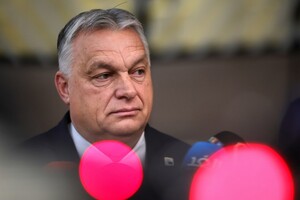
Moreover, Hungarian authorities claim that Ukraine’s announcement about exposing a Hungarian intelligence network on its territory is evidence of coordination between Kyiv and the opposition party Tisza. Budapest claims that the fact that Ukraine’s statement was quickly amplified by the opposition and escalated into “a full-fledged international discreditation campaign” points to a concerted effort.
The Orban government's hysterical response to Ukraine exposing its espionage in Zakarpattia Oblast stems not only from frustration over this public intelligence failure. It also reflects a deeper geopolitical conflict between Budapest on one side, and Kyiv and Brussels on the other. At its core, this conflict centers on Orban’s use of the “Ukraine file” as a political tool: to strengthen his grip on power domestically, extract financial concessions from the EU, and ensure continued access to discounted Russian gas supplies.
It’s worth recalling that Budapest refuses to supply weapons to Ukraine and consistently blocks EU declarations in support of Ukraine. Hungary also obstructs the disbursement of EU military assistance to Kyiv and has stalled the opening of the first negotiation cluster for Ukraine’s EU accession. The Orban cabinet even held a referendum on Hungarian public support for Ukraine’s EU membership, and Foreign Minister Szijjarto has made it clear that Hungary will maintain its veto unless the rights of the Hungarian minority in Zakarpattia Oblast, which it claims were stripped by Ukrainian authorities, are fully restored..
Statements from EU foreign policy chief Kaja Kallas suggest a clear EU strategy for dealing with the situation should Hungary’s veto on Ukraine’s accession remain unbroken.
"We have a Plan B and a Plan C. But our focus is on Plan A," she said, adding that the EU is engaging in dialogue with Hungary to lift the veto.
"If that doesn’t work, we are already working on Plan B, but I won’t disclose it. We are still in the process," said Kallas.

ZN.UA reported earlier that there are several possible courses of action to neutralize Hungary’s position. The first option is to invoke Article 7 of the Treaty on European Union, which allows for the suspension of Hungary's voting rights. The second option is to apply sanctions against Hungary to indirectly pressure Budapest into voting in solidarity with the other EU member states. The third option involves ignoring Hungary when making key EU decisions on critical issues.
But while the EU searches for Plan B, Ukraine is already living under the plan being implemented by Orban, where Budapest's policies align more with Russia's interests than with peace and security in Europe. Kyiv must be prepared for the fact that Budapest will continue to attempt to engage in dialogue from a position of strength, obstructing the EU’s decision-making in support of Ukraine, blocking the allocation of financial resources through the European Peace Facility, banning the import of Ukrainian agricultural products, demanding permission for the transit of Russian gas through Ukrainian territory, and pushing for the expansion of rights for the Hungarian minority in Zakarpattia Oblast.
Please select it with the mouse and press Ctrl+Enter or Submit a bug
 Follow on Telegram
 Login with Facebook
 Login with Twitter
 Login with Google