
 Support ZN.ua








When Aid Hurts: The Truth About Unwanted Humanitarian Donations

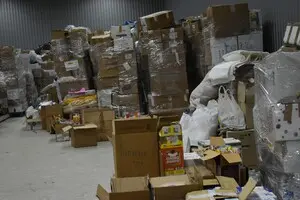

About a third of our warehouse is filled with junk—items that will likely stay with us for the rest of our lives, quietly accumulating monthly storage fees.
Just a few days ago, I had yet another conversation with a potential donor offering to send medical equipment from a European country. I politely asked him to submit the full inventory list in advance, explaining that we cannot accept incomplete, broken or repair-needing items. That was the end of the conversation—his interest in cooperation vanished almost instantly. Let me quote his response: “We collect used items too. And since the truck leaves nearly every week, we simply don’t have time to sort through everything carefully, let alone find people willing to work or volunteer for free. I don’t have time to test each item. Sometimes I switch something on—it works. But when they receive it, they say it beeps but won’t lift.
So maybe it’s best we stop. I’m worried that instead of enjoying the project, I’ll just end up dealing with problems.”
Let me explain a bit about the kind of “enjoyment” we experience here on the ground…
I doubt I’m revealing any great secret when I say that recycling is an expensive process across the world. That’s why a wonderful practice has emerged: donating obsolete or broken equipment to charity. It’s free of charge, comes with certain perks like tax deductions, and even earns you a symbolic “medal” for doing good. In many countries, there are massive humanitarian warehouses stocked with such donations, ready to be shipped off to wherever there’s demand.

Until 2014, African countries were the primary recipients of this equipment. But when the war began, those first hesitant trickles of aid turned into uncontrolled floods pouring into Ukraine. Why uncontrolled? Because when registering humanitarian cargo, all you needed was the legal information of the organization receiving the shipment. And just like that—surprise! A shipment arrived that no one had asked for. But according to customs records, you’re listed as the recipient. Which means you alone are now responsible to the regulatory authorities.
Those who organize such convoys are often unfamiliar with the equipment, unable to test it, and unaware of what should be included in the package. Instead, they operate on assumptions like: “It’s a real mechanical ventilation machine! Hospitals must need it,” or “Better broken than nothing—they’ll figure it out over there,” or “It’s big, it looks fancy, it has electronics—it must be useful,” or “People put in effort to collect it—just send it.”
Foundations that systematically receive humanitarian aid are frequently confronted with a stark mismatch between what’s listed on the cargo manifest and what actually arrives. Or they receive perfectly functional equipment—but there are no spare parts or consumables for it in the country, let alone service centers. So even if the device technically works, there’s no way to verify its performance beyond “it powers on”—you simply can’t assess any of its functional parameters.
Or, conversely, you receive outrageously expensive consumables for equipment that no hospital in the country even owns. Because the equipment was made for a specific internal market and never reached us in the first place. And there you are, sitting like a fool with boxes worth hundreds of thousands of euros — in virtual currency — and there’s absolutely nothing you can do with them.
In every corner, there are wheelchairs missing footrests, handles or entire wheels. Some are rusted, some have no seats, others have snapped brake cables. But that’s fine, right? We’ll figure something out. It’s better than having nothing at all. The only problem is that each model has its own unique fittings—and its own spare parts. We’re incredibly lucky if, out of a hundred units, we find two that are identical but broken in different ways. Then there’s a chance to make one functional chair out of two. That is, if there’s someone to do it—and time to spare.


In a separate room, I have nearly a hundred oxygen concentrators that are beyond repair. The zeolite inside them is depleted, so instead of producing oxygen, they blow plain air. That’s not something you can fix. Ever. They’re simply written off and sent for disposal.

But we’ll return to the issue of write-offs and disposal a bit later. Right next to them are fully functional patient monitors that went out of production twenty years ago. Naturally, there are no peripherals available for them—neither in this country, nor in the country that manufactured them. Perhaps somewhere on virtual European flea markets, you might stumble upon used spare parts. But that would require individuals dedicated to searching for them, figuring out how to pay for them (surprise: a legal entity can’t transfer money to a private foreign bank card) and arranging shipping. And whether the parts will arrive in working condition is a matter of pure luck.
Massive bags are filled with expired urine and feces collectors, adhesive bandages that expired in 2020, medical nutrition past its use-by date since 2021, gauze and wipes from the World War II era that crumble in your hands and diagnostic tests with reagents long past expiration. All of this gets thrown in “on the side,” simply because it was within reach and too much of a pity to toss—and because the expiration dates don’t appear in the paperwork. So what arrives, on paper, is half a truckload of consumables, which, the moment it crosses the border, is added to your balance sheet. And from that moment on, it becomes your personal headache.

Every shipment is sorted on site. Naturally, it’s “easier” for us — after all, we’re specially trained, and we have plenty of people to help (cue nervous laughter). And then begins the usual question: What are we supposed to do with all this? Let me remind you—the cargo arrived based on documentation. And we can pass it on only the same way—based on paperwork. But no one here is naive. And more importantly, our conscience doesn’t allow us to hand over items that are not only unusable but sometimes outright dangerous. That leaves us with one option: to write it off and dispose of it.
Do you know what the law has been telling us about it all this time?
“The destruction of poor-quality or unsuitable humanitarian aid goods must be carried out under the supervision of a commission formed from representatives of the territorial bodies of the State Customs Service, the State Environmental Inspection, the Ministry of Internal Affairs, the State Veterinary Medicine Service, the Quarantine Service, and local executive authorities.”

However, the procedure for establishing such a commission was not specified. Where to find these officials? No one knows… As a result, disposal became virtually impossible. To avoid breaking the law, recipients of humanitarian aid simply stored everything in warehouses for years.
Since October 2023, at the initiative of the SVOI and KRYLA NADII charitable foundations, work has been ongoing to amend regulations so that disposal becomes at least somewhat realistic. Finally, on May 21 this year, changes were made to the relevant government resolutions, which temporarily, for the duration of the martial law, provide a real opportunity to dispose of some poor-quality aid.
The procedure is clear but not easy:
- The Kyiv city and regional state (military) administrations are required to establish commissions to decide on the destruction of poor-quality or unsuitable humanitarian aid goods and approve their membership and regulations governing their activities.
- Legal entities that have poor-quality or unsuitable humanitarian aid on their balance sheet must also form their own commission and prepare an inventory report with a list of goods proposed for destruction.
- The inventory report prepared by the commission of the legal entity shall be sent to the local executive authority in the territory of the relevant administrative-territorial unit where the recipient is registered for a decision on destruction.
- Within 10 days of receipt, the local authority shall either approve the inventory report or forward it to the Disposal Commission, which has the right to visit the location of the poor-quality/unsuitable humanitarian aid (in particular, for example, documentary evidence of non-working or unusable condition). Based on the results of the verification, the Commission shall draw up a report in any form, on the basis of which the local executive authority shall, within 15 working days of the date of receipt of the inventory report, notify the recipient of its consent to destruction or a reasoned refusal to grant such consent.
- Disposal shall be carried out on the basis of contracts concluded with business entities that have a permit for waste treatment and, in the case of operations involving hazardous waste, a license for the relevant activity.
- Expenses related to the destruction of poor-quality/unsuitable humanitarian aid shall be financed by the recipients of humanitarian aid or donors thereof.
It’s difficult, but we’ll be able to dispose of part of the substandard humanitarian aid—at our own expense. And unfortunately, that expense won’t be small. In other words, money was spent to bring it here, to store it here, and now to get rid of it. Wouldn’t it have made more sense to use those funds to buy something genuinely useful instead? Not three truckloads, but a single van of actual, meaningful aid. Real help—not help on paper. Sadly, that’s a rhetorical question. A tremendous amount of effort, invaluable time, and money—all down the drain.
But even that won't solve the problem completely. Because the equipment remains. It’s not completely defunct, but it can’t be used for its intended purpose either. In theory, a certified service center should issue a report on its condition. And here we face several problems at once. The vast majority of this equipment was purchased by hospitals, and they were serviced somewhere in the world. Once it was decommissioned by the hospital that used it, it was also removed from service. Even if we stretch our imagination and find ways to access these services, they are all abroad. This means that the legal route is to contact the officials, prove our right to use equipment that we did not purchase, find a way to transfer this equipment to Europe, China or the United States, wait for a conclusion, ship the equipment back and ceremoniously dispose of it here. All of this, naturally, at our own expense.
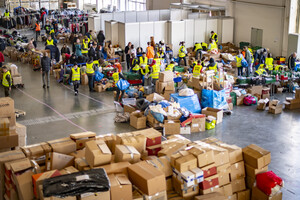
Another option is to look for a service in the country that is willing to evaluate equipment from all over the world, find out if there really are no spare parts for it and take responsibility for issuing an official conclusion. Is this a more realistic option? Not at all. Because those who undertake to repair museum pieces from New Zealand with duct tape and harsh language write their conclusions on scraps of paper that will not be taken into account. Official representatives of exotic manufacturers have never been, nor will they ever be, present here in Ukraine.
The only real chance to get rid of all this is a warehouse fire, a missile strike, or an occupation. But that is far too high a price to pay for some 200 square meters filled with junk. So the foundations go on lamenting their situation to one another, paying rent and expanding their warehouses.
Donors who approve the list meticulously check every item being transferred and, even at the stage of approving the cargo, warn in advance about problems with certain items and clarify whether these issues can realistically be addressed. They become almost like family. Because in communicating with them, you feel their genuine desire to help—not to “enjoy the project.” Despite the difficult and at times catastrophic situation in the country, we remain human beings, not objects of someone else’s activity. And certainly not a free dumping ground for the civilized world.
“I have two great lifts, but their batteries are dead,” writes a donor from the UK. “I couldn’t find the matching ones. Please check if you can repackage them. If not, I won’t send them.”
Within a day, I find someone who can do it, and we confirm the shipment. And that—that is real satisfaction.
“We’re being given 100 brand-new mechanical ventilators that were purchased during the Covid period and have been sitting in storage ever since. Here are the models. Is there anywhere they could be sent?”
The devices are distributed among hospitals before they even leave the warehouse. Each hospital receives the exact model that its anesthesiologists will be working with because we have checked with them too.

“We have two trucks of functional beds. Most of them are electric (all tested, all working), 11 are mechanical. We don’t have mattresses for all of them. Do you have mattresses to complete the set? Should we send them?”
We will find mattresses locally. But thank you for letting us know.
Donors like this are invaluable. And not because they donate in bulk. Sometimes something small but useful is sent from a faraway country, found and sent by a private individual. It is because you feel that they really want to help, not just formally. And sometimes a pack of diapers is more valuable than a truckload of expensive but unusable junk. Because despite the dire situation the country is in, they don’t see it as a beggar grateful for leftovers that even stray dogs wouldn’t touch. They stand behind us and hold us up—not for photo ops, tax deductions or moral self-congratulation, but for the sake of real, tangible results.
Please select it with the mouse and press Ctrl+Enter or Submit a bug
 Follow on Telegram
 Login with Facebook
 Login with Twitter
 Login with Google