
 Support ZN.ua








Drones Out of the Jungle: Why Colombia Should Turn to Ukraine



For Colombia, drones are not a new technology. Paramilitary groups and drug cartels have been using them for nearly a decade for reconnaissance, cargo delivery, and attacks on government forces. The Colombian authorities have several counter-drone initiatives, but their understanding of exactly what systems are needed remains relatively vague. Colombian military officials are interested in studying Ukraine’s experience in counter-drone warfare. And now, with the country’s political leadership having changed, Ukraine has an excellent opportunity to strengthen its presence in South America.
The use of unmanned technologies has become a revolutionary factor in conventional warfare, including the war Russia is waging against Ukraine. At the same time, drones have also been used systematically for nearly a decade in “quiet wars” between organized criminal groups and state security forces across the Latin American region.
In August 2026, Colombian media reported the first documented attack by a criminal group using kamikaze drones. This is seen as a new technological stage for local armed groups, which had previously relied mainly on drones adapted to drop munitions. During searches of the detained, police also found fiber-optic spools and components produced with 3D printers.
This shows that cartels and guerrilla groups in Colombia and other countries of the region are closely following developments in drone technology and are actively seeking to integrate them into their operations.
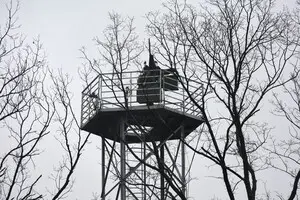
Drones in the Hands of Cartels
Armed conflict in Colombia has continued for decades. Its modern stage began in 1964 with the emergence of the FARC and ELN guerrilla groups. Despite the 2016 peace agreement, some of the organizations now using drones have never disarmed.
In 2025, Colombia’s illegal armed groups had more than 27,000 members. They are involved in drug trafficking and the illegal extraction of valuable metals and minerals, including gold and emeralds, and have used these activities to finance themselves throughout more than six decades of conflict that have claimed over 450,000 lives.
The use of drones by these groups has increased sharply over the past year. They are used both for attacks and surveillance: monitoring territory, identifying targets ahead of attacks with improvised explosive devices, and dropping 60 mm munitions. Colombia’s mountainous and forested terrain provides armed groups with concealed drone-launch positions.
Drones are acquired through ordinary online marketplaces such as Amazon and Temu, local intermediaries, and smuggling networks before being modified for combat use. According to Colombia’s Ministry of Defense, 8,395 armed-drone attacks were recorded in 2025, 333 of which were considered “successful”—a 445% increase compared with 2024. The most prominent incident occurred on August 21, 2025, when an FPV drone struck a Colombian National Police helicopter, killing 12 police officers.
Since 2019, Colombian security forces have acquired at least nine counter-drone systems. In January 2026, Colombia launched a National Counter-Drone Shield with a budget of almost $1.7 billion. According to local reports, the Counter-Drone Shield never became operational, despite the government conducting at least 12 international missions across three continents to assess technologies and potential suppliers. None of these missions visited Ukraine, while some involved visits to countries, such as Qatar, Poland and Lithuania, that are now themselves drawing on Ukraine’s air defence expertise.

Armed groups are adapting much faster. According to technical assessments, electronic warfare systems are only 30–50% effective even against relatively simple drones, while armed groups are already shifting toward fibre-optic-controlled drones, drawing lessons from the Russia-Ukraine war. Between January and May 2026, drone-related attacks rose by 146%, with 121 incidents resulting in 21 deaths and 145 injuries.
How Ukraine Can Help
On August 7, Abelardo de la Espriella was inaugurated as Colombia’s new president. The new government’s political alignment with the United States and the broader Western bloc creates an opportunity to revive cooperation between Colombia and Ukraine, which is currently very limited.
In June 2026, President Volodymyr Zelensky expressed interest in strengthening bilateral relations with Colombia, while the president-elect signaled his readiness to expand cooperation with Ukraine.
Colombia’s new president has promised la mano dura — a “hard-line” approach — in dealing with armed groups. Unlike his predecessor, who had himself belonged to a guerrilla group, de la Espriella has pledged to bring peace to Colombian society, but his path to peace is expected to rely heavily on confronting criminal and armed groups.
Despite Russia’s official congratulations following de la Espriella’s victory, dissatisfaction with the election result is already visible across several pro-Kremlin information channels. For example, the pro-government Russian Telegram channel Rybar has been criticizing his counterterrorism agenda almost daily. That is a positive sign.
Russia has long maintained a systematic presence in the region, giving it opportunities to spread its narratives and influence local audiences. Professor Carlos Patiño of the National University of Colombia told me that Russia has maintained a structured intelligence network in the country since 2017. Of the twenty-three identified intelligence officers, only two were expelled from the country in 2020, while the remaining twenty-one continued their activities there.
In the context of drone warfare, Russia promotes a number of disinformation narratives, claiming that Ukraine allegedly allows cartels and paramilitary groups to gain combat experience with drones or even supplies UAVs to Latin America. These claims have been repeatedly debunked, but they can still resonate with audiences that lack sufficient background knowledge.
Ukraine, which does not have an embassy in Colombia, has relatively limited relations with this South American country. However, there is now an opportunity to reinvigorate them, with a particular focus on security cooperation. In this context, the priority should be not so much the export of ready-made systems as the transfer of expertise, assistance in building counter-drone protection for the police, armed forces, and critical infrastructure, as well as the sharing of knowledge on how to counter emerging drone technologies.
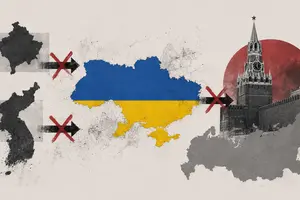
Ukraine already has experience helping other countries develop counter-drone capabilities, and this expertise could also be valuable to Colombia. A week before the inauguration, I gave a presentation on Ukrainian innovations in drone and counter-drone warfare at a conference organized by the Naval Academy of Strategic Studies of the Colombian Navy, where I saw considerable interest in learning from Ukraine’s experience.
But which Ukrainian technologies and lessons are actually relevant to Colombia?
Colombian authorities have to respond to fast-moving and adaptive armed groups with substantial resources and few constraints on how they operate. Fighting guerrillas equipped with drones presents a distinct challenge for any state. Ukrainian military personnel and veterans could contribute to developing a strategy for countering illegal armed formations in Colombia, including appropriate technological solutions and offensive measures aimed at regaining the initiative. Why are guerrilla groups so difficult to fight? Because they usually retain the initiative and determine when and where to attack.
There are several areas in which Ukraine’s experience could prove particularly valuable to Colombia:
Priority: early warning and the human factor. Detecting a drone is only part of the challenge. More important is identifying operators, training locations, assembly workshops, logistics networks, and procurement patterns before drones are deployed. According to the Ukrainian pilot, who spoke with me on the condition of anonymity, this requires a proactive approach based on intelligence, HUMINT, and OSINT, including attention to seemingly minor indicators. A sudden increase in purchases of propellers from hobby shops, for example, could indicate that new drone pilots are being trained.
Layered counter-drone protection. BlueBird Tech, the Ukrainian manufacturer of the Chuika drone detector, told me that the most realistic approach for Colombia would be a multi-layered counter-drone system combining passive RF detectors, electro-optical cameras, tools for locating drone operators, and localized jamming capabilities. Such a system should be relatively affordable, energy-efficient, and suitable for deployment around military bases, prisons, critical infrastructure, border areas, and mobile convoys. Within this architecture, drone detectors could play a central role by providing early warning and situational awareness.
Electronic warfare is not a silver bullet. Colombian political scientist Carlos Augusto Chacón commented that jamming will not work against every threat. The new government inherited the existing counter-drone program, which now requires an assessment of its effectiveness, an evaluation of interoperability between the military and police, realistic testing, and an effort to eliminate duplicative procurement.
The Ukrainian pilot added that if a cartel is using conventional radio communications, the police must have a way to jam them. If activating electronic warfare also disrupts their own communications, they need pre-established alternative frequencies and specialized devices that criminal groups cannot access.
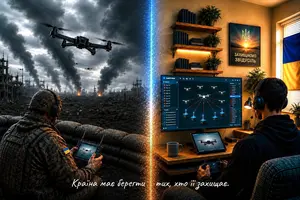
HIMERA, a Ukrainian manufacturer of tactical radios, recently tested its communications system in the Amazon jungle, under conditions of tropical rainfall and challenging terrain. The company told me that countering hybrid threats and transnational organized crime requires secure communications resilient to electronic warfare.
Strengthening intelligence capabilities. The international intelligence community InformNapalm, which has conducted a number of successful OSINT, CYBINT, and HUMINT investigations, sees two interconnected priorities in a complex security environment like one in Colombia. The first is expanding the number and diversity of relevant sensors where gaps in observation exist. The second, equally important, is improving the sharing, correlation, processing, and timely dissemination of information already available across different institutions. Even high-quality intelligence has limited value if it remains isolated within one agency or reaches decision-makers too late.
Priorities for Cooperation
The most obvious areas for Ukraine-Colombia cooperation are limiting cartels’ and paramilitary groups’ access to knowledge and experience acquired on the Ukrainian battlefield, while strengthening the Colombian authorities’ ability to respond to novel security threats.
At present, the success of a drone mission still depends on the crew by roughly 80%. Armed groups will look for ways to train their people—if not in Ukraine, then in Russia. And if neither is possible, they may seek to recruit Colombians and other Latin Americans returning from the war, or even Ukrainian and Russian veterans.
This is why regular cooperation and stronger diplomatic ties between Ukraine and Colombia are particularly timely, especially as the political climate in Bogotá becomes more favorable. Ukraine seeks to expand its presence in the Global South, and Colombia could become an important partner in this effort—particularly because Colombia’s police and armed forces themselves are eager to learn from Ukraine’s experience in drone and counter-drone warfare.
Ukraine is already helping several Middle Eastern countries develop layered air-defense architectures adapted to their specific requirements. A similar approach could be applied in Colombia, with Ukrainian specialists contributing to the development of a strategy for countering emerging threats.
Such an approach would support Ukraine’s ambition to become part of the global security architecture and open further opportunities for cooperation with other Latin American countries facing similar challenges.
Please select it with the mouse and press Ctrl+Enter or Submit a bug
 Follow on Telegram
 Login with Facebook
 Login with Twitter
 Login with Google