
 Support ZN.ua


Fair Deal: Do Plea Agreements in High-level Corruption Cases Really Work?

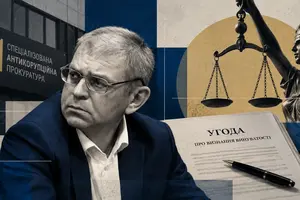

Debate still rages around the plea agreement in Serhii Pashynskyi’s case, raising wave after wave of new questions about judgments of this kind. Let us try to answer some of them.
On 23 September 2026, the High Anti-Corruption Court (HACC) approved a plea agreement with Serhii Pashynskyi, the former acting head of the Presidential Administration, in the case concerning the misappropriation of seized “Kurchenko oil products.” The judgment shows that Pashynskyi fully admitted his guilt of abuse of office and participation in a criminal organization and agreed to give incriminating testimony. The total amount he is to pay or direct to the state and the Defence Forces is around UAH 1.1 billion.
The public’s reaction to the first reports of this deal was almost unanimous: he had “bought his way out.” Nor is this the first such response to plea-agreement judgments.
In recent years, plea-agreement judgments in high-level corruption cases have become more frequent. According to the HACC, from 2019 to the end of the first half of 2026, the court handed down a total of 201 judgments based on plea agreements. In the first four years, these were isolated cases, from one to ten judgments a year. Later, however, came rapid growth: 27 judgments in 2023, 38 in 2024 and as many as 72 in 2025.
The latest jump does not surprise us, as it coincided with the first full year in force of the law that streamlined the conclusion of plea agreements in cases involving corruption and corruption-related offences. And the figures for the first half of 2026 (35 judgments) suggest that plea bargaining has settled at a relatively stable level. But does it actually work?
How plea agreements are concluded in Ukraine
Let us recall at the outset that a plea agreement is a criminal-law compromise. The state agrees to a milder sentence, and in return the accused admits guilt and takes on a number of obligations: to expose accomplices, compensate for damages and accept the agreed sentence. In other words, a plea agreement is about convicting a person and finding them guilty.
The content of the agreement is determined by the parties: the prosecutor and the accused together with defence counsel. The agreement is approved by the court—in high-level corruption cases, the HACC—which does so by issuing a guilty verdict. A person who has concluded a plea agreement is therefore convicted, not “released from liability.”
Having received the indictment together with the agreement, the court checks whether the agreement’s terms comply with the law and the public interest and do not violate the rights of others. The court cannot rewrite the agreement or reallocate the payments it provides for; it can only approve the document or refuse to approve it, explaining why it is contrary to the law.
Refusals to approve agreements reached during pre-trial investigation are rare; as of mid-September, the HACC reports only four cases in which agreements were not approved and the case was sent back for pre-trial investigation. In the “Kurchenko oil products” case, for example, the court had already refused to approve an agreement with Serhii Pashynskyi, finding that it provided for penalties not permitted by law, did not ensure full compensation for damages and placed responsibility for its performance on an indeterminate circle of third parties.
From the outset, there were reservations about plea agreements in corruption cases. The main one was the risk that an agreement would become a way to “cut a deal” with those organizers of schemes who bear the greatest responsibility for the crimes committed. The law therefore restricted the range of persons and grounds for agreements. A new law on plea agreements adopted in October 2024 expanded the grounds: an agreement can now be concluded if the accused exposes another person’s involvement in any corruption or corruption-related offence, as well as on condition of compensating for damages and exposing other defendants.
At the same time, the law considerably sweetened the “carrot” for the accused. It introduced Article 69-2 of the Criminal Code of Ukraine, which allows sentences below the statutory minimum to be imposed if the accused exposes others. If the court imposes such a sentence, the person can no longer be released from serving it on probation.
The maximum term of imprisonment for which release on probation is possible under an agreement was raised from five to eight years. It also became possible to impose an additional fine even where the relevant article does not provide for one. The procedure changed as well: agreements are now approved by higher-ranking prosecutors, depending on the gravity of the offence. A second application to the court for an agreement with the same person may be made only once, and only after the grounds on which the court refused have been eliminated. This is exactly what we saw with the repeat plea agreement with Serhii Pashynskyi.

But are these changes enough to produce genuinely sound agreements, and how have they worked so far?
On the one hand, judgments with sentences below the statutory minimum under Article 69-2 of the Criminal Code have appeared for the first time. In at least three such cases, those convicted are nonetheless serving real, albeit shorter, prison terms. They are the former chief justice of the Supreme Court, Vsevolod Kniaziev; a former prosecutor at the Prosecutor General’s Office of Ukraine, Volodymyr Derhunov; and a former official at the Ministry of Defense, Oleksii Stasiuk. On the other hand, additional fines under Article 53(3) of the Criminal Code are being applied, if not consistently, as is special confiscation.
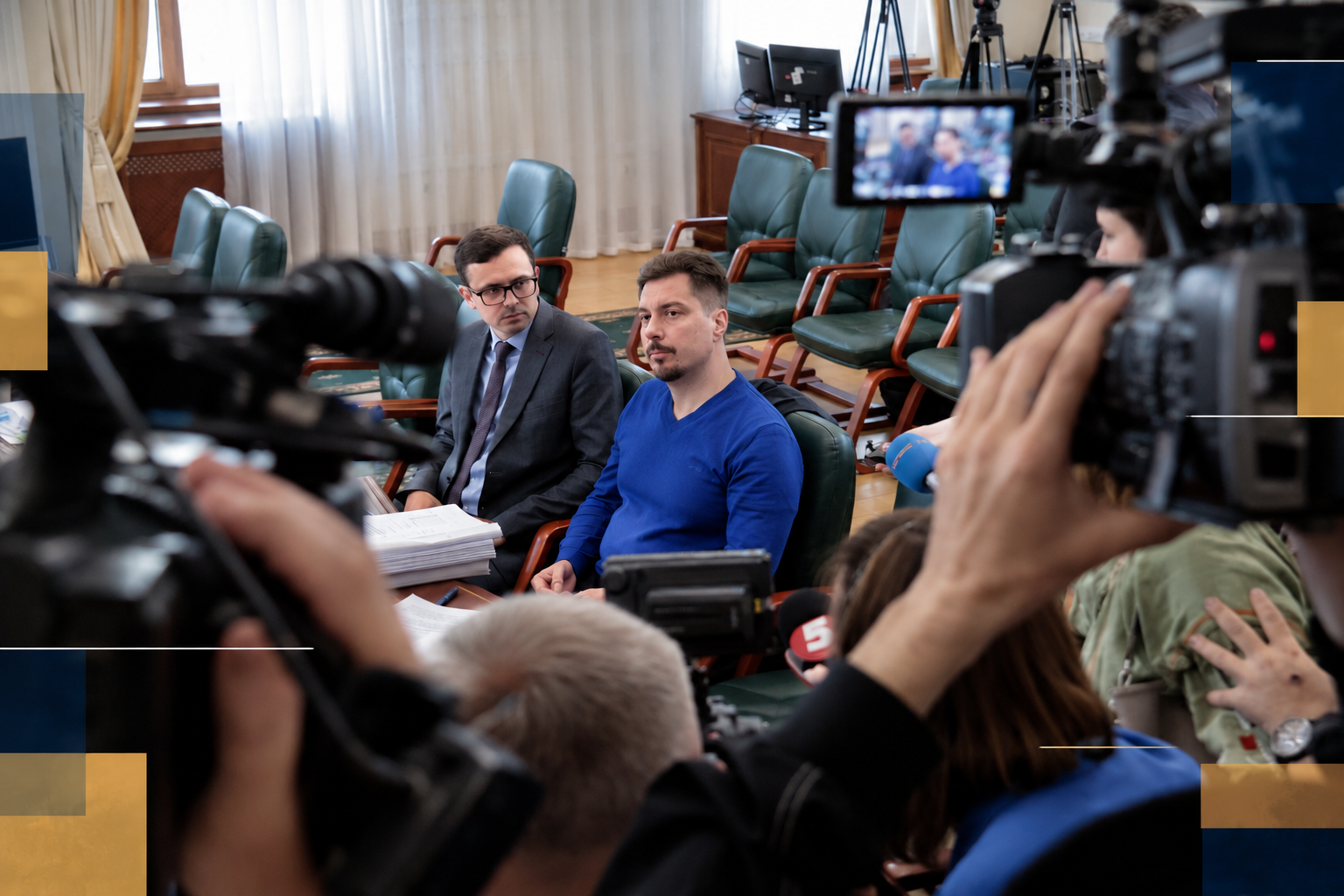
The cooperation mechanism is also yielding results. According to SAPO, 15 people have already been convicted on the basis of testimony from convicts who agreed to cooperate, and in most proceedings where such testimony has been or will be given, trials are still under way.
As for special confiscation, the law still does not explicitly require this instrument to be applied when agreements are concluded, although we recommended such a change. In our view, this is a gap that must be closed: if there are grounds for special confiscation, the court should approve an agreement only if it provides for it. That way the state is guaranteed to receive the property obtained through crime.
This position is shared and expanded on by the authors of an analysis of 2024–2025 case law prepared by the Center of Policy and Legal Reform together with the National Agency on Corruption Prevention (NACP). They specifically note that courts often lifted the seizure of land plots, vehicles and funds precisely because the agreement contained no confiscation requirement. In other words, property the state had already frozen was returned to convicts because of the way agreements were worded.
At the same time, the court’s refusal to approve an agreement with the former MP Oleksandr Kachnyi in an illicit enrichment case is telling. The agreement provided for special confiscation of a flat, a house and land formally owned by the husband of the deceased sham owner. Although the husband had acted under a power of attorney when the flat was purchased, inherited the property free of charge and expressly confirmed in court that he was merely the nominal owner, the court refused to approve the agreement. Its reasoning was that the third party’s awareness of the illegal origin of the funds had supposedly not been proven. In our view, these circumstances gave no grounds for such doubts.
The main problems with current plea agreements
For all the benefits of plea agreements, the public does not always view them favourably, because the state does not always explain such judgments well. Here are what we see as the main reasons.
The first reason: sealed judgments.
The texts of some plea-agreement judgments, including those concerning Pashynskyi, the former head of the Western Commercial Court of Appeal Borys Plotnitskyi and other defendants, are fully sealed. As a result, the public communications of the court and SAPO make it impossible to learn what exactly the state received in exchange for the reduced sentence. And since such cases quite often involve well-known figures, public outrage becomes the predictable response to this secrecy.

One of the first, and still the most high-profile, cases of a sealed judgment is the plea agreement with the former ecology minister Mykola Zlochevskyi, who tried to have the criminal proceedings against him closed by offering the heads of NABU and SAPO a $5 million “super-bribe.” Under the plea agreement concluded in August 2023, the HACC fined Zlochevskyi UAH 68,000. In addition, under the terms of the agreement, he donated UAH 660 million to the Armed Forces of Ukraine. That was all. And since the judgment was sealed in its entirety, the public never learned whether the “public interest” rules had been observed or whether the state had truly gained from the deal.
In fact, this agreement became one of the main reasons the legislation on such judgments came up for revision at all. Since then, we at TI Ukraine have consistently stressed the need to publish as much information about an agreement as the law permits, so that Ukrainians would not be left with such questions.
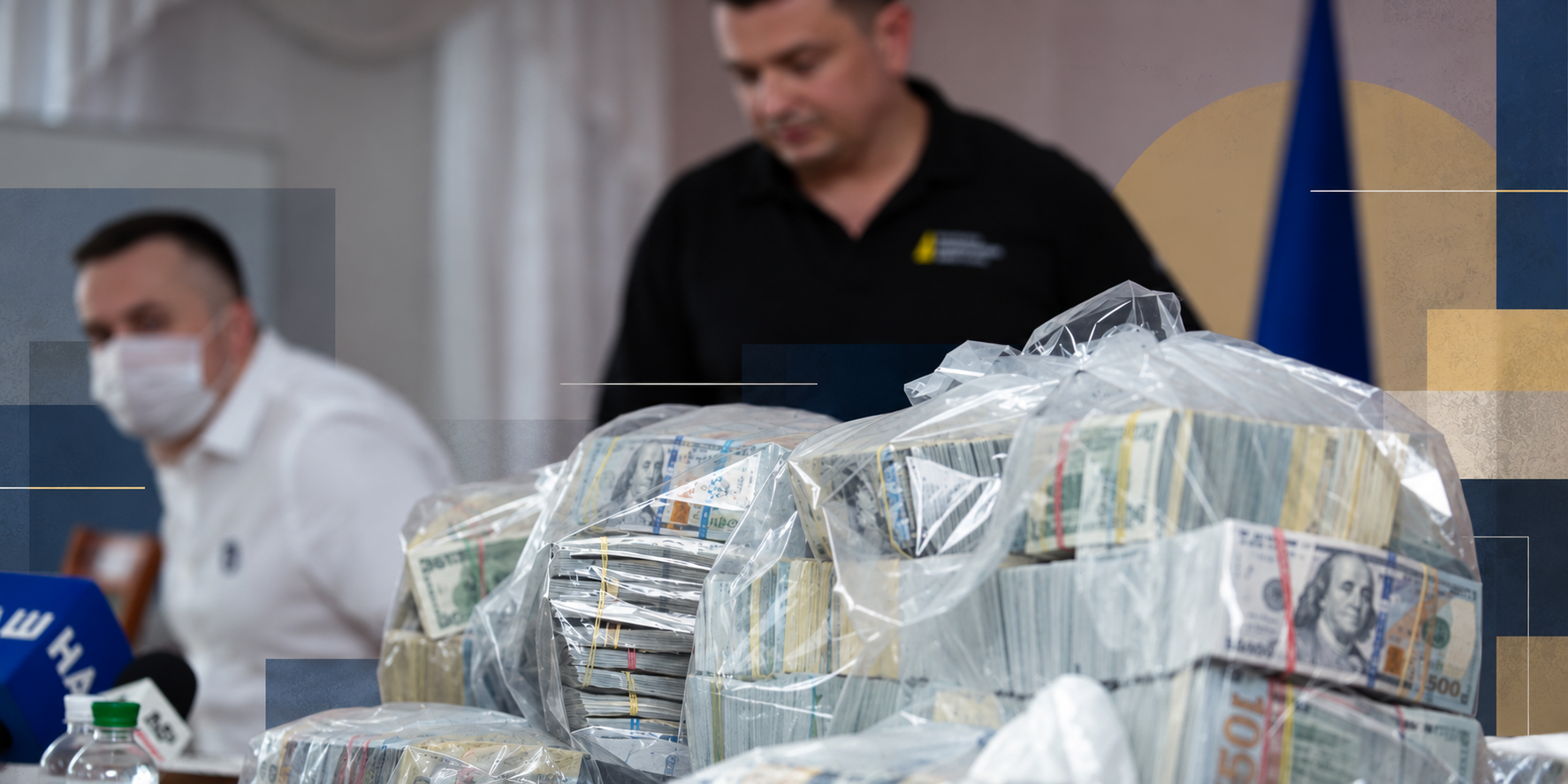
Full sealing often fails even in its immediate purpose: concealing cooperation with the investigation. After all, if the law obliges the convict to testify against accomplices, they will learn about the agreement anyway from the very fact that the proceedings against him have been severed.
It is worth recalling that the HACC already knows how to seal individual parts of a judgment without classifying the entire text. For example, in the case concerning the head of the Poltava Regional Local Roads Agency, the court kept the public-interest reasoning and other parts of the judgment public. And the judgment on Pashynskyi’s plea agreement was also initially classified, which we immediately flagged as a rather bad precedent. The HACC responded quickly to our criticism and published a partially redacted judgment that made the details of the agreement clear.
The second reason: the lack of clear rules for concluding plea agreements.
In its reply to our request, SAPO confirmed that it has no separate internal methodology for assessing whether a plea agreement can be concluded. At the same time, the office’s Development Strategy for 2026–2028 envisages developing uniform approaches, and the prosecutors plan to involve judges, defence lawyers and civil society organizations in this work.
The HACC also told us that it has not produced a review of its case law on plea agreements. However, a debate on striking a balance between the effectiveness of criminal justice, the inevitability of liability, the fairness of punishment and public trust in the anti-corruption system is already under way. And the groundwork has been laid for developing clear policies on concluding agreements.
The Pashynskyi agreement illustrates this process well. In its announcement, SAPO listed the fines and compensation amounts, but there was no explanation of why these terms benefit the state. The necessary explanation came only with the publication of the judgment. It showed that under the agreement the prosecutor had obtained testimony concerning other participants and that the overall number of defendants in the case had fallen, which gives a chance to try the case against the remaining defendants before the limitation period expires.
However, this information appeared almost a week after the news of the agreement, by which time the public had already spent several days discussing, and fuming about, “a billion for freedom.”
The fact that compensation to the budget (UAH 600m) is less than the established damage (UAH 817 million) also turned out not to be accidental. The Pashynskyi case concerns a criminal organization rather than a single defendant, and the damage was caused by the actions of seven people, not one. The parties therefore agreed to release Pashynskyi partially from civil liability, taking into account the obligations of others convicted under plea agreements (UAH 111 million in compensation and UAH 40 million for the Armed Forces) and his own UAH 500 million for the army’s needs. Overall, compensation to the budget from all those convicted in this case does not yet match the established damage. Whether future judgments against the remaining defendants will cover it is a question for SAPO.

The third reason: public expectations. And the public wants fair punishment.
Last year, a TI Ukraine sociological survey showed that 60 percent of Ukrainians consider the number of corrupt officials actually punished to be the most telling indicator of an effective fight against corruption, and that such punishment should involve imprisonment or confiscation.
Plea agreements with fines and charitable contributions do not meet this expectation. SAPO must therefore explain them especially carefully, and the rules under which prosecutors agree to conclude plea agreements must be clear before the next high-profile case comes along.
Is the money clean?
In almost half of the plea-agreement judgments we analysed, concluded between 1 July 2025 and 30 June 2026, the accused undertook to make a charitable contribution to the needs of the Armed Forces of Ukraine. This practice emerged after Russia’s full-scale invasion of Ukraine, that is, even before the updated law on plea agreements in high-level corruption cases was adopted, but today it can be considered all but mandatory for judgments of this kind.
Charitable contributions range from UAH 10,000 to UAH 20 million. According to the HACC, more than UAH 321 million was directed to the needs of the Armed Forces of Ukraine in 2025 alone. And according to the latest figures from SAPO, plea agreements in high-level corruption cases have so far channelled more than UAH 1.6 billion to the needs of the Defence Forces. Of this, more than UAH 1.1 billion came through the state fundraising platform United24, more than UAH 272 million through the Come Back Alive foundation and more than UAH 50 million through the Sternenko Community.
The Serhii Pashynskyi agreement set one of the records for the sums it mentions: UAH 600 million in compensation to the state budget, payable in instalments over two and a half years; UAH 400 million, or weapons to that value, to the Come Back Alive foundation within six months of the judgment being announced; UAH 100 million to the Sternenko Community foundation for weapons within 30 days; a UAH 850,000 fine as the principal penalty; and a UAH 17,000 fine and a one-year ban on holding public office as additional penalties.

These sums raise three questions that in fact apply to the amounts specified in all other plea-agreement judgments as well.
1. Has inflation “eaten up” the compensation?
One of the most common arguments made by critics of the Pashynskyi agreement is that damage caused in 2014 is being compensated today with a nominal sum that has lost much of its value over twelve years. In other words, UAH 600 million in 2026 is nowhere near the money Ukraine lost in 2014 through the machinations of the former acting head of the Presidential Administration.
The argument has merit, but it is directed not at plea agreements as an institution but at how the state protects its property interests in criminal proceedings generally.
On the whole, the law does not leave the state defenceless against inflation. Under Article 625(2) of the Civil Code of Ukraine, a debtor who is late in fulfilling a monetary obligation must, at the creditor’s request, pay the debt adjusted for inflation plus 3 percent a year. As early as 2018, the Grand Chamber of the Supreme Court held that this rule applies to all types of monetary obligations regardless of how they arose, meaning that it should also cover damage caused in criminal cases. In addition, Article 1192 of the Civil Code provides that losses resulting from the loss of property are calculated at its actual value at the time the case is heard.
For a case concerning misappropriated petroleum products, such as Pashynskyi’s, this may be of practical significance, since it involves property whose price has moved with the market rather than a fixed sum of money. However, recovering the difference would most likely have required another expert examination, which would also have taken time and might not have produced any result.
Claims for inflation losses can also be brought in criminal proceedings by filing a civil claim, and case law offers examples. In a misappropriation case (Article 191(4) of the Criminal Code), the Kamianets-Podilskyi City and District Court ordered the defendant to pay inflation losses and 3 percent a year. However, because the limitation period was applied at the defendant’s request, only the last three years were covered, so instead of the more than UAH 419,000 in inflation losses claimed, the defendant had to pay the state about UAH 30,000.

The HACC has had such a case too. In the case of Oleh Halushka, head of a department of the Armed Forces of Ukraine, the Ministry of Defense sought to recover almost UAH 8 million in inflation losses on top of more than UAH 21.5 million in principal damage. However, the court handed down a verdict of acquittal and left the claim unconsidered. The review of this judgment is still under way: in June 2026, the Supreme Court overturned the ruling of the HACC Appeals Chamber upholding the acquittal, so the question of compensation including inflation losses may also be revisited.
To recover inflation losses, the obligation must be monetary, that is, clearly defined as a specific sum. In criminal cases this is mostly possible only where funds have been embezzled or misappropriated, not for other types of damage. In Pashynskyi’s case, no specific sum of money was misappropriated: the subject was petroleum products.
So the problem is not that the law prohibits taking inflation into account, but that no mechanism does so automatically. The court cannot index the amount of damage on its own initiative or go beyond the claims made. And if the injured state body, or the prosecutor acting in the state’s interests, has not claimed compensation for inflation losses, they will not be recovered either under a guilty verdict in ordinary proceedings or in plea-agreement proceedings.
No civil claim at all was filed in the Pashynskyi case. A claim for inflation losses could therefore be neither granted by the judgment nor taken into account in the agreement, and the amount of damage was fixed at its nominal 2014 value of UAH 600 million. Moreover, even a claim for such compensation, if filed, runs up against the limitation period, which in cases concerning events a decade old can reduce it to token sums.
Hence our recommendation. The question of inflation losses should be addressed first and foremost to the prosecution (in this case, SAPO) and to the bodies representing the state as the injured party. A claim for their recovery should become a standard part of civil claims in cases involving the embezzlement of state property, and taking it into account should be one of the criteria by which a prosecutor assesses the amount of compensation in an agreement.
A separate question worth discussing is whether the requirement of “full compensation for damages” as a precondition for an agreement covers only the nominal amount of damage or also its real value at the time the agreement is concluded. The law currently gives no direct answer.
Moreover, some of the public’s complaints about the “leniency” of the punishment concern issues that a plea agreement does not resolve. The court did not order confiscation of property in the Pashynskyi case: SAPO explained that the relevant additional penalty under Article 255 of the Criminal Code was introduced in June 2020, after the events in the case. The principle prohibiting the retroactive application of a law that worsens a person’s position therefore applies.
2. Why does the money go to foundations rather than the budget?
As Vira Mykhailenko, the former head of the HACC, once explained, the prosecution and the defence agree where charitable payments are to go and in what amount, and the court merely checks whether the agreement complies with the law. So the question “Why these particular foundations?” should be put to the parties to the agreement, not the court.
Yet it is worth asking honestly. Are there well-founded complaints about the transparency of the foundations named in the agreement? And if there are none, what difference does it make to the state whether the money goes to the budget or to a foundation that procures weapons for the army professionally and accountably?
In wartime, a large share of the budget goes to defense anyway. A foundation—Come Back Alive, the Sternenko Community or any other—can be a faster and more targeted channel in this chain. What is more, Come Back Alive states explicitly that it takes no percentage of donations for administrative costs.
The real risks lie elsewhere. The first is that the foundation must have no links to the accused or their associates. The second is that performance of the condition must be verifiable.
Failure to comply with a plea agreement carries separate criminal liability, and SAPO can ask the HACC to set aside the judgment and try the case under the ordinary procedure. Tellingly, in all the years the court has been operating, prosecutors have never once filed such a motion.
According to SAPO, no cases of deliberate non-compliance with plea agreements have so far been identified, and no convict has been held liable for breaching the terms of an agreement. Compliance is confirmed by payment documents, which are submitted to the court and the prosecutor and added to the case file. In other words, the transfer of funds is checked, but only by SAPO. Beyond that, one can rely on the public reporting of the foundations concerned, which should be open to everyone. If there is demand for reporting specifically on HACC plea-agreement judgments, it would make sense for the foundations to publish itemized information on exactly what the funds received under such judgments were spent on. This would help people understand which specific needs of the army are being met through these donations.
At the same time, the public reaction to the fact that, under his agreement, Pashynskyi is to make donations to the Come Back Alive and Sternenko Community foundations has also had unexpected consequences. On 28 September, the HACC refused to approve the plea agreement of MP Oleksandr Kachnyi in a case of illicit enrichment worth more than UAH 12.7 million. Kachnyi had admitted guilt and agreed to transfer UAH 3 million to a Come Back Alive project. In her refusal, however, the judge stated that the use of these funds would be beyond the control of the parties and the court, and that the court therefore could not be satisfied that these provisions served the public interest.
3. Whose money is it?
This is the third, and perhaps the most important, risk. A formally positive outcome, such as compensation paid or a donation to the army, may be secured with money of opaque origin. The origin of the funds used to fulfil the terms of an agreement should be checked no less carefully than, say, the origin of money posted as bail.
SAPO confirmed that in practice damages are compensated and charitable contributions paid not only by convicts but also by third parties, which the law does not prohibit. At the same time, the Criminal Procedure Code of Ukraine provides no separate procedure for a prosecutor to check the origin of such funds. The office relies on banks, which, as primary financial monitoring entities, are required to scrutinize transactions under anti-money-laundering legislation.
(2).png "SAPO Director Oleksandr Klymenko")
Here, however, we should be consistent and point out something uncomfortable for critics, namely the existence of special confiscation. This mechanism involves seizing precisely those funds and assets whose criminal origin has been expressly established by a court judgment. When it is applied, the state knowingly fills the budget with money obtained through crime.
From a purely pragmatic standpoint, then, it is hard to explain why the same logic becomes unacceptable when funds arrive not through special confiscation but in fulfilment of the damages or charitable conditions of an agreement. In the end, the money ends up in the budget or with the army either way, and either way it does not stay with the convict. The outrage that “the money didn’t go to the budget” is therefore about form, not substance.
Why plea agreements are good after all, and why they need improving
The main argument in favour of the Pashynskyi agreement lies not in its amount but in the alternative. The events in the case took place in spring 2014, yet notices of suspicion were served only in February 2024. The limitation period for abuse of office in this case expires as early as 2028, so the parties explicitly linked the agreement to the fact that it makes it possible to try the case against the other defendants within that period.
A full trial with several defendants, a large body of evidence and procedural tactics by the defence could have lasted years. Had the limitation period expired in the meantime, the person would have been released from liability altogether, and the state would have received nothing: no judgment and no compensation, not even partial. Despite the European Commission’s demands, Ukraine’s rules on limitation periods have still not been reformed. So in cases investigated a decade or more after the events, a plea agreement is often an alternative not to a harsh sentence but to impunity.

Criminal proceedings always have a probabilistic outcome. The prosecution considers guilt proven, the defence does not, and the court has the final word. A plea agreement turns probability into certainty: there is a guilty verdict, the status of a convicted person, real money and testimony against other participants. A fine is a type of principal penalty under the Criminal Code of Ukraine. So it is wrong to speak of “buying one’s way out” of punishment when the fine is itself a punishment.
By way of comparison, another defendant in the Pashynskyi case, Serhii Tyshchenko, received an eight-year prison sentence under a plea agreement with release on probation, transferred UAH 40 million to the Defense Forces and is to pay a further UAH 110 million to the budget over three years. The “Kurchenko oil products” case is not over: there were other suspects, and not all of them took plea deals.
At the same time, precisely because plea agreements have become the main way of concluding high-level corruption cases, their quality needs continued work. The HACC should generalize its approaches to assessing the public interest and make partial rather than full sealing of judgments standard practice wherever full sealing is not strictly necessary to protect a person or other proceedings. SAPO should implement the measures in its Strategy on uniform approaches to plea agreements and explain publicly in every high-profile case where the benefit to the state lies.
Parliament needs to make special confiscation a mandatory condition for approving an agreement where there are legal grounds for it. Wider use of real but shorter prison terms and additional fines would also improve public perception of such judgments.
Finally, the two problems that most fuel the outrage over plea agreements lie outside them altogether. They are the unreformed limitation periods, which force prosecutors to negotiate, and the fact that the state does not always use the existing mechanisms for recovering inflation losses, so that nominal compensation loses its value, whether under a plea agreement or an ordinary judgment. After all, hundreds of millions of hryvnias of damage caused in 2014 are not the same as the same hundreds of millions in 2026.
These problems need to be solved by lawmakers and practitioners alike. Until they are, a fair deal remains a better outcome than a case that ends in nothing.
Please select it with the mouse and press Ctrl+Enter or Submit a bug
 Follow on Telegram
 Login with Facebook
 Login with Twitter
 Login with Google