
 Support ZN.ua








Without Ukraine, Cost Will Rise: Why NATO’s New Defense Model Needs Kyiv

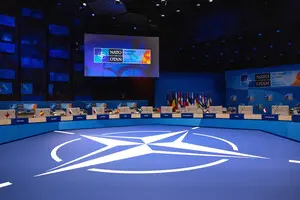

In the Alliance’s new “seating arrangement,” some allies are being given new opportunities, others new anxieties, and some risk ending up closer to the edge of the table than to its center. What matters is not only what the Americans are giving up, but also what Europeans want—and are prepared—to take on beyond the level of declarations. For Ukraine, this could open a window of its own: European allies will not be able to shoulder everything in the new division of responsibilities without it.
Set against other developments in transatlantic relations, the transfer of several important NATO command posts from Americans to Europeans may signify more than mere staff changes. The roles of allies are being redistributed. Europeans are being offered primary responsibility for defending the continent by conventional means, while the United States retains the strategic level of command, high-end military technology and the leading role in nuclear deterrence against external threats.
New roles for allies
At the beginning of February 2026, a new distribution of senior command posts in NATO’s command structure was officially announced. All three operational commands are to pass to Europeans: the command in Norfolk in the United States to the British, Naples to the Italians, and Brunssum in the Netherlands to the Germans and Poles on a rotating basis. These countries will determine the leadership and bear primary responsibility for the functioning of the commands. At the same time, the US is retaining the post of Supreme Allied Commander Europe, to whom these three commands report, and remains primarily responsible for NATO’s air, land and maritime commands, which provide the operational commands with forces and capabilities.
The command structure in which roles are now being redistributed took shape after several major overhauls following the Prague summit decision of 2002, when the Cold War defense system finally gave way to the idea of a more flexible and mobile defence built around response forces. That was when two strategic commands—operations and transformation—appeared, along with two operational commands and the service commands. Since then, there have also been significant changes in the command system and force structure caused by the creation of the eastern flank defense system after Russia’s aggression against Ukraine began in 2014. NATO’s eastern flank had not possessed substantial collective military infrastructure, as was envisaged by the Alliance’s relationship with Russia at the time. But then came rotational land presense, enhanced air-policing missions and staff elements to support the eastern flank’s national defense forces with collective forces. Later, in 2018, a decision was taken to create the Atlantic command in Norfolk and the support and logistics command in Ulm.

The most recently declared changes took place in December 2025. The areas of responsibility of the operational commands were altered. Denmark, Sweden and Finland moved from the command in Brunssum—soon to be German-Polish—to the command in Norfolk, soon to be run by the UK.
Other changes are taking place in parallel, without which this redistribution of commands would have no practical meaning. If Europe is to take on a larger share of conventional defence, it needs new weapons, new production capacity and new supply chains. The US neither intended nor intends to hand that over entirely to Europeans. It wants Europe to bear primary responsibility for its own security in a conventional war, but largely with American weapons in European hands, bought with European money. In that sense, the change in the mechanisms for supplying weapons to Ukraine is part of broader changes in the US approach to European security. And in weapons supply chains, the situation looks more strained than in command chains.
Is a larger operational role in fighting a conventional war what Europeans want when they talk about strategic autonomy and consider options for a broader European role for French nuclear deterrence? Clearly, those are different things. We are seeing two developments at once. France has updated the public foundations of its nuclear deterrent, announced an increase in the number of warheads and launched an institutionalized deterrence dialogue with Germany, including Germany’s participation in French nuclear exercises in a conventional format and coordination of strategic cooperation. At the same time, France, together with its allies, has accepted in the new NATO role distribution that the US should retain strategic command, within which American extended nuclear deterrence remains the central element of Alliance security.
Europeans, including France, may no longer trust the US fully at the strategic nuclear level, but they are prepared to begin with lower-level conventional roles. That means they are not nearly as close to strategic autonomy as they say they are.
Money for weapons
Whereas earlier arguments inside NATO used to revolve largely around who spent how much on defense, another thing is now coming into view: Europe either has the money for rearmament or can raise it, including through the EU’s financial instruments. The main transatlantic source of friction therefore has less and less to do with the scale of spending itself and more and more with who exactly will produce the new weapons for Europe’s security.
The stumbling block here is SAFE, Security Action for Europe. In essence, it is a large European credit instrument for rearmament. In May 2025, the EU approved it as a €150bn mechanism in the form of long-term loans for joint defense procurement. At the same time, the logic of the instrument has been built in such a way that the main share of value and production remains in the EU, associated European countries or Ukraine, while the external component is limited.
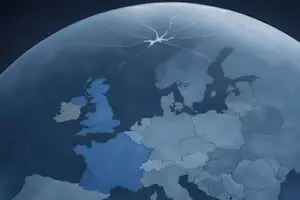
This is where the tension begins to sharpen. The US wants as much of Europe’s new defense money as possible to remain accessible to American manufacturers. Washington has made it clear to Europeans that a sharp increase in defense spending must not turn into a nearly closed internal market under the slogan “buy European.” At the end of 2025, US Deputy Secretary of State Christopher Landau told allies that Europeans should take responsibility for Europe’s defense, while the broader American message was that a larger share of conventional defense should be handed over to them. Europe insists on stronger preferences for its own industry, while the US signals that excessive closure of the European market will become a problem for transatlantic defense cooperation.
This contradiction is most clearly visible in the case of Poland. It is seeking the largest SAFE package—about €43.7 billion. For Warsaw, that is a huge resource for military modernization. But it could also mean a drift from the American defense ecosystem towards the European one. Hence the rows around specific procurement decisions—for example, when choosing between the European Airbus A330 MRTT tanker and the American Boeing KC-46. On the surface, this looks like a technical choice. In reality, it is about whose weapons, technologies and manufacturers will shape the new European wing of NATO—and at whose expense. The US wants this to be a NATO that would fight with American weapons bought with European money. Just as in Ukraine’s case.
NATO is redistributing not only command posts, but also responsibility for readiness, weapons and money. The nuclear and high-tech tier remains at the top in American hands. Responsibility for fighting a conventional war is increasingly being shifted to Europeans. Procurement is becoming a new battleground for influence.
The geography of change
In the new distribution of responsibilities, not all European allies are moving into the front ranks to the same extent, but those whom the US sees as pillars of continental defense. The UK is taking command in Norfolk—that is, the northern and Atlantic direction. After the change in areas of responsibility at the end of 2025, this command came to include Denmark, Finland, Iceland, Norway, Sweden and the UK, but not the Baltic states, so it is more accurate to speak not of a Baltic center of gravity but of a northern one. Italy is taking command in Naples, meaning the southern theater. Germany, together with Poland, is sharing command in Brunssum, which is responsible for a large part of the northern and eastern space of Europe. The Netherlands matters here not so much as a separate military leader but as the country hosting the headquarters itself. Belgium, in this scheme, is likewise not becoming a frontline centre, but it retains systemic significance as the location of NATO headquarters and SHAPE, the strategic command near Mons. The Baltic states remain at the center of attention on the eastern flank, but more as the forward edge of deterrence than as a new level of command power. In Latvia, Canada leads a multinational NATO brigade, while in Lithuania, Germany is forming its first permanently deployed foreign brigade since World War II. Romania, meanwhile, retains a systemic and almost unchanged role: the Deveselu base is part of NATO’s missile defense, while Mihail Kogălniceanu air base is one of the key nodes of allied presence in the Black Sea direction and one of the multimodal hubs for American operations in Eurasia. Greece likewise does not move to the front of the command hierarchy, but remains critically important for American logistics and naval presence through Souda Bay and Alexandroupolis.
In the second tier are those allies whose role is significant but not defining for the new architecture. Bulgaria has become more visible as part of the south-eastern flank: a NATO multinational battlegroup is deployed there, and the country matters for allied presence in the Black Sea region. Croatia looks more modest still: it participates in eastern flank and Balkan missions, but is not a hub of the new command or industrial system; its importance is more regional, through the western Balkans and its contribution to multinational formats. Hungary and Slovakia likewise do not gain new military weight, although they formally retain the ability to block decisions through NATO’s consensus principle, meaning that no decision is possible without common agreement.
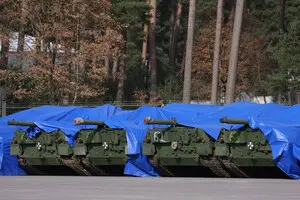
As for France, it is not moving into the leading positions in commanding a conventional war because it has taken up something else: the upper strategic tier that the US, for now, does not plan to give up.
The role distribution itself shows that the US is betting not on the outer edges, but on the European mainstream — that is, states prepared to provide troops, headquarters, logistics, industry and political predictability.
The new ranking inside NATO can formally function even without integrating Ukraine, but in that case it will be more expensive, more cumbersome and less resilient. The US can retain the strategic summit of the Alliance, Europe can take on a larger share of conventional defence, and Poland, Germany, the UK and Italy can play their new roles. But without Ukraine, Europeans will have to build NATO’s defense system with greater force, deeper reserves and more expensive logistics. In other words, the system will function, but with a lack of strategic depth, combat experience and military mass precisely in the direction where Europe’s main threat is concentrated: Russia.
Ukraine is too large and too important to remain outside the common European defense system without consequences for Europe’s security. Bringing Ukraine into the common system would not replace American strategic leadership, but it could drastically strengthen the European part of the new model by providing frontline experience, land force power, the technologies of modern war, while also reducing the overall cost of deterring Russia—whether through American or French nuclear weapons.
Please select it with the mouse and press Ctrl+Enter or Submit a bug
 Follow on Telegram
 Login with Facebook
 Login with Twitter
 Login with Google