
 Support ZN.ua


Off the Grid: Could Substation Strikes Cause a Nuclear Accident in Ukraine?

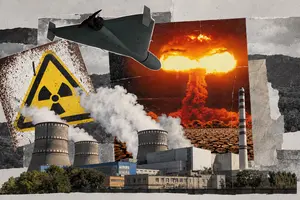

In trying to deprive Ukrainians of electricity, heat and water before winter, the aggressor has not only stepped up strikes on heat and power generation facilities across the country, above all in large cities, but is also actively targeting distribution equipment and networks in an attempt to fragment our power system and isolate the nuclear power plants. Depending on the month, nuclear plants account for anywhere from 53–55 to 60–67 percent of electricity generation (and up to 70% at certain hours).
The tactic is not new, but Russia’s mass use of jet-powered drones has made the strikes more damaging. Moreover, according to intelligence from Ukraine and its partners, the Russians are stockpiling ballistic missiles and other heavy weaponry specifically for their campaign of energy terror.
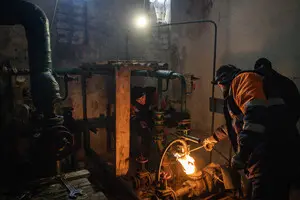
For now, the Kremlin is refraining from direct strikes on nuclear power plants, apparently realizing that a radiation accident would threaten not only Ukraine but also much of Europe and Russia itself. However, the aggressor keeps trying to damage the equipment and power lines that connect nuclear generation to consumers. This threatens not only the energy supply during the cold season but also radiation safety in the event of abnormal situations and incidents at nuclear plants. Is Ukraine prepared?
Putin’s dreams of a massive blackout: should we be afraid?
In early October, the media, citing intelligence data, published some details of Russia’s plan to “freeze” Ukraine.
The first stage—damaging cross-border power lines and destroying substations near the western border, which link our power system to the European grid and make it possible to import and export electricity.
The next step—knocking out hydroelectric power plants, some of which have already been seriously damaged. After that, shutting down the Rivne, Khmelnytskyi and South Ukraine nuclear power plants. In the enemy’s design, this would deprive us of about 15 GW of capacity—as much as Ukraine had at the end of the summer, including cogeneration and imports. The result would be a massive blackout and the inability to piece the unbalanced power system back together quickly.
Olha Kosharna, an independent expert on nuclear energy and nuclear safety who holds a PhD in chemistry, recalls that the only blackout of the full-scale war occurred on 23 November 2022, when Ukraine was not yet prepared for the enemy to attack our civilian critical infrastructure so deliberately, methodically and intensively. “Scheduled power cuts or emergency outages are not a blackout,” she explains in a comment to ZN.UA.
On that occasion, the enemy simultaneously hit the power output substations around all three nuclear plants under Ukrainian control (the Zaporizhzhia plant, then in its ninth month of occupation, also shut down), and the emergency protection systems automatically shut down the reactor units. The integrated power system lost more than 7 GW of capacity at once and split into separate “energy islands.” But within 14 hours, specialists at the national grid operator, Ukrenergo, had restored its integrity and resynchronized it with the European grid.
The Russians subsequently tried to trigger a blackout several more times, but without success: after the first incident, nuclear experts, together with Ukrenergo and the Defense Intelligence of Ukraine, developed a procedure for preparing nuclear plants and the integrated power system for missile attacks.
“When there is no connection with the substations, the units’ output has to be reduced or they have to be brought into hot or cold shutdown. This is considered a normal design mode, not an emergency one,” Hryhorii Plachkov, head of the State Nuclear Regulatory Inspectorate in 2017–2021, explains in a comment to ZN.UA. Over the years of full-scale war, nuclear operators have learned to run their units more or less safely in such extreme conditions. A further problem, however, is that when distribution substations are knocked out, nuclear plants may be left without off-site power.
“Such a situation is not a good operating mode for nuclear units either. But it does not threaten to put them out of action. The protection systems will kick in and the plants will automatically ‘drop to zero’—that is how they are designed,” the former head of the nuclear regulator continues.
Olha Kosharna points out that, for this eventuality, all nuclear power plants have backup diesel generators, and after the Fukushima Daiichi accident they were also equipped with mobile generators. Safety systems therefore keep working even after a plant is disconnected from the grid.

There are also clear procedures for returning power units to operation after they have been shut down by emergency protection systems. However, bringing a nuclear plant back to full capacity takes time. This is the period when the integrated power system is especially vulnerable and when Ukrainian consumers will have a very hard time indeed. How long it lasts depends on the intensity of the shelling and on whether Ukrenergo has spare equipment to restore damaged substations, but this is sensitive information that is not disclosed publicly.
Protecting power distribution equipment: what has been done so far
According to Ukrenergo, work is now under way to build and strengthen engineering protection for key substations across the country. Construction and installation work has been completed at almost 120 sites and is continuing at the rest.
Experts acknowledge that, compared with 2022, the protection of critical energy facilities has indeed improved. But the aggressor is also building up its ability to hit them.
According to Plachkov, enemy attacks cause considerable damage not only to equipment at the epicenter of explosions: much transformer and other energy equipment is put out of action by flying shrapnel, with which the enemy generously packs its missiles and drones.
“It’s important that second-level protection has been built for Ukrenergo’s substations. It’s another matter that there are outdoor switchyards belonging to Energoatom, although they are located outside the plants’ perimeters. Their protection is worse,” Kosharna admits.
She recalls that on 2 August 2024, at an off-the-record meeting between industry experts and the then energy minister, Herman Halushchenko, and the head of the Office of the President, Andrii Yermak, she asked how well such switchyards were protected against attacks, and was told that the Ukrainian side had supposedly reached an agreement with the Russians and that they would not attack such facilities.
“We left that meeting deeply shocked. After all, we understood what agreements with Russia are worth. The enemy would resume the strikes at the first opportunity,” the expert says indignantly.
And that is exactly what happened. Russia resumed attacks on the substations around nuclear plants, using the start of Ukraine’s offensive in the Kursk region as a formal pretext. There was no blackout then, and Olha Kosharna hopes that one can be avoided now too, although it will not be easy.
“Because of damaged wires and equipment components, and because power cannot be transmitted, nuclear units may have to reduce output. But the integrated power system falling apart—that won’t happen again, I’m sure,” the specialist says reassuringly.
Hryhorii Plachkov shares this hope. He acknowledges that in the event of massive attacks the situation could indeed become critical for consumers, but there is no threat to nuclear and radiation safety and no risk of nuclear units being destroyed or suffering critical failures.
“Everyone keeps asking: are we facing another Chornobyl, Fukushima or Three Mile Island (a US nuclear plant where one of the worst accidents in the history of nuclear power occurred in 1979.—Editor’s note.)? I think our well-trained and experienced nuclear operators will not allow that,” the expert says. Although this cannot be guaranteed 100%, Plachkov points out that those three major accidents occurred under different scenarios in which the protection systems failed.
Most analysts are convinced that this autumn and winter the enemy will primarily try to affect the operation of nuclear plants indirectly, by isolating them from the integrated power system. But if this fails, or if the occupiers’ position at the front deteriorates, the Russian leadership may also authorize direct attacks on nuclear plants. It is therefore vital that the world continue to signal to the aggressor that such attacks, which threaten not only Ukraine but at the very least all of Europe, are unacceptable.
New IAEA missions: Trojan horse or safety guarantee?
This week, Ukraine’s foreign minister, Andrii Sybiha, announced an agreement with Rafael Grossi, director general of the International Atomic Energy Agency (IAEA), for special Agency missions to visit 19 electrical substations critical to the safe operation of Ukraine’s nuclear power plants. According to Sybiha, this will be the largest deployment of such missions to date and “a timely step to ensure nuclear safety and security amid Russian attacks on Ukraine’s energy system.”
Many experts, however, do not share this optimism: in their view, bringing foreign inspectors to Ukrenergo’s substations is unlikely to help and may even do harm.
“First, the mission’s experts are nuclear safety specialists, not electrical engineers. How can they help? Second, such missions are outside the IAEA’s mandate. There is a separate procedure for documenting war crimes, involving representatives of the Security Service, the police and the Office of the Prosecutor General. An international prosecutor is brought in, and the crime is documented and recorded in line with international standards for the International Criminal Court,” Kosharna explains.
IAEA representatives have neither the relevant powers nor any confidentiality obligations to Ukraine. During missions, they photograph facilities and write reports for the IAEA secretariat, which employs many Russians, a good number of whom are agents of Russia’s Foreign Intelligence Service.
“I remember that when Agency representatives visited the first substation on 12 September 2024, Ukrenergo was building protective structures there at that very moment. And that is secret stuff. So are the equipment reserves on site and the restoration procedure. By design, the concrete structure over a large 750 kV transformer has an opening under the roof for air exchange. And soon afterwards Russian drones began flying straight into that opening,” the expert recalls.

She believes that information must have leaked from the inspectors, as the current change in tactics in the attacks on the 750 kV Kyivska substation and other substations of the Kyiv power ring also suggests.
Plachkov, too, considers admitting IAEA representatives a mistake: by visiting substations, they will obtain detailed information about how these facilities are physically protected. At the same time, in his view, the International Atomic Energy Agency will be unable to exert any real influence on Russia’s actions, however many missions it organizes and of whatever kind.
Read this article in Ukrainian and russian.
Please select it with the mouse and press Ctrl+Enter or Submit a bug
 Follow on Telegram
 Login with Facebook
 Login with Twitter
 Login with Google