
 Support ZN.ua








Storing Ukraine’s Fuel Abroad Is Doomed to Fail: Why the Law Does Not Work

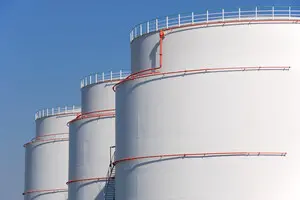

Ukraine is still debating the creation of minimum stocks of oil and petroleum products. The project is part of our commitments to the European Union and a logical step to take before winter. But there is one difference between us and European countries: war. The enemy has been destroying fuel infrastructure since the first days of the full-scale invasion, so an attack on any given tank farm is only a matter of time. Fuel companies are therefore opposed to the idea and insist that stocks be held exclusively in underground storage, which does not yet exist. One of the government’s counterarguments to these obvious security risks is the provision in the relevant law allowing half the mandated volume to be held abroad. The law grants the right both to store fuel physically and to buy supply guarantees from a foreign operator—a so-called ticket agreement. Yet as research into the question shows, storage in neighbouring countries remains purely theoretical, and the reason lies less in flawed legislation than in fast-changing market realities.
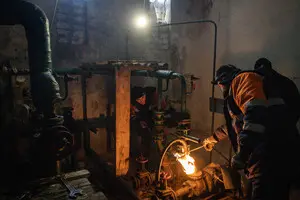
The law on minimum stocks of oil and petroleum products came into force in December 2024. It provides for stocks equivalent to 90 days of consumption, as in the EU, to be built up over eight years. The requirement is 6 percent for this year and 9 percent starting from next year—roughly 600,000 and 900,000 tonnes of light petroleum products respectively. These are enormous volumes, and there is simply nowhere to put them: Ukraine has almost no oil depots left that the Russians have not attacked at least once. On the left bank of the Dnipro, according to experts and market participants, no working depots remain at all.
Oil depots have been easy — and therefore priority — targets for the enemy from the very start of the full-scale invasion
Source: KLO filling station network
Understanding how risky it is to build up minimum oil and fuel reserves (hereafter MOFR), the government effectively blocked the law at the level of secondary legislation almost immediately: formally it is in force, but there is no liability for failing to comply. Which is sensible.
Everything changed when the war in Iran began and, in the spring of this year, almost all our European neighbors halted fuel supplies to us at one point or another. The government defused the situation quickly, but the aftertaste lingered. According to available information, it was the president himself who insisted that stocks be created. Serhii Koretskyy’s government took the matter in hand.
The task was assigned to the Ministry of Energy. It might seem fortunate that the current staff of the relevant department are the direct authors of the law on MOFR now in force. But one fact says all that needs saying about the quality of the document: the package of amendments to it already runs to more than three hundred.
Today we will discuss only one aspect—storage abroad, which was written in for security reasons. As it turns out, however, it has little to do with reality.
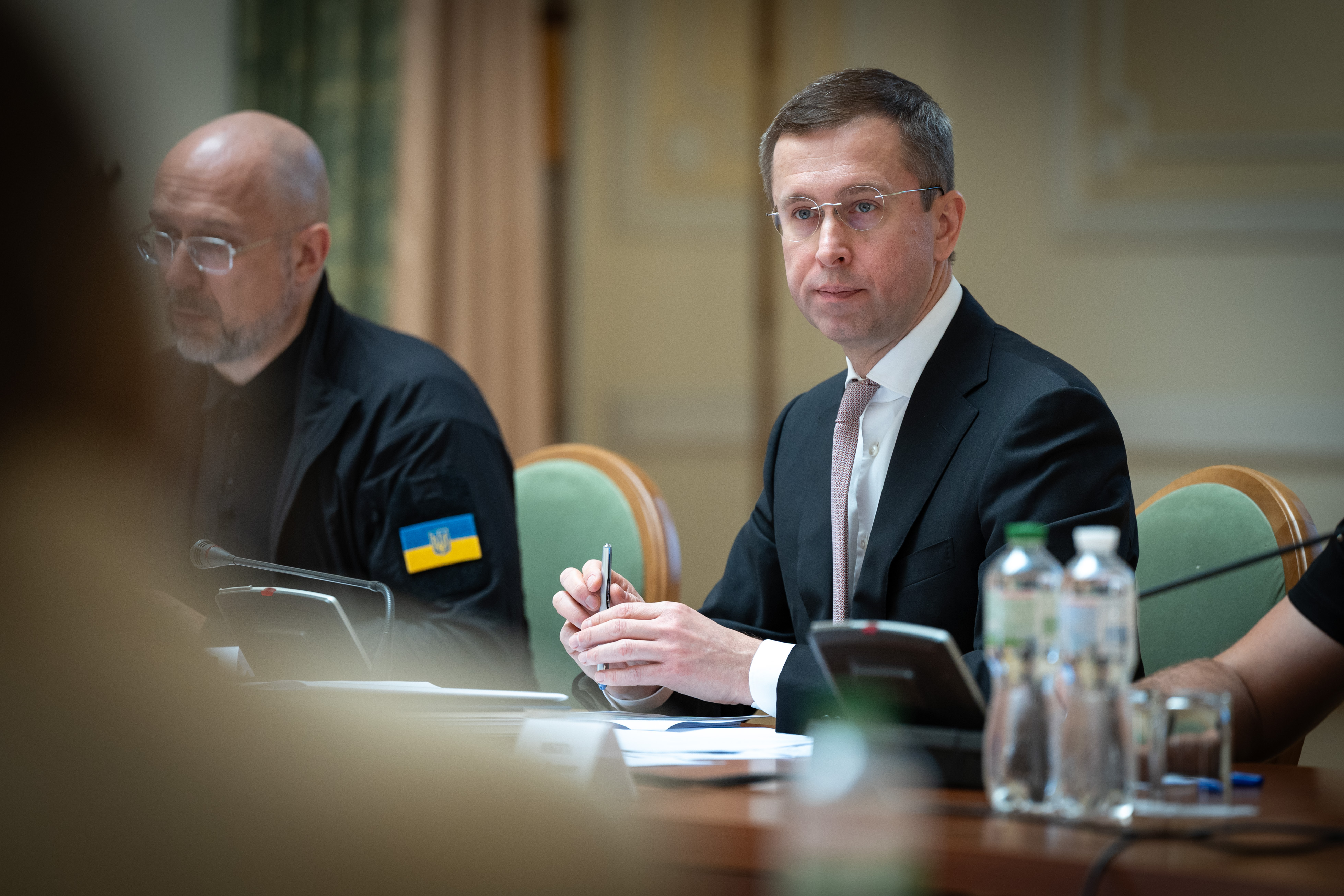
Prime Minister Serhiy Koretsky is in an awkward position: as a former “oil trader” he understands perfectly well the risks of building up fuel stocks, while as prime minister he wants to build them up to make the country more resilient
Tickets for the back row
Let us start with the fact that there is currently no clarity whatsoever about the protocol for communicating with potential fuel custodians or with sellers of ticket agreements in neighboring countries. How is a foreign counterparty’s capacity to store anything at all to be proved? How is the actual quantity and quality of the balance held to be confirmed? In what format is reporting to be submitted? The latest package of amendments even provides for physical inspection by the Ukrainian side, though nothing comes to mind here except a commission from Ukraine’s Energy Ministry turning up with dipsticks.
The main regulatory constraint on working with ticket agreements, however, is the storage period. As things are currently configured, the only regime under which a foreign company could hold someone else’s stock without customs clearance is transit, which in the EU is limited to 60 days. According to the head of a large Polish company, an operator could in theory rotate the volumes, but new wrinkles would almost certainly emerge. A more reliable option is to change the law of the country where the fuel is stored. Which is probably why it can also be considered the most hopeless…
The experience of the first weeks of the Hormuz crisis—it was against that background that MOFR was revived—also shows why these talks need to be raised to intergovernmental level. A number of countries then imposed a moratorium on exports of petroleum products. Volumes of fuel bought by Ukrainian companies and moving through the Moldovan port of Giurgiulești, for example, were left blocked. A delicate situation also arose with Poland for a few days.
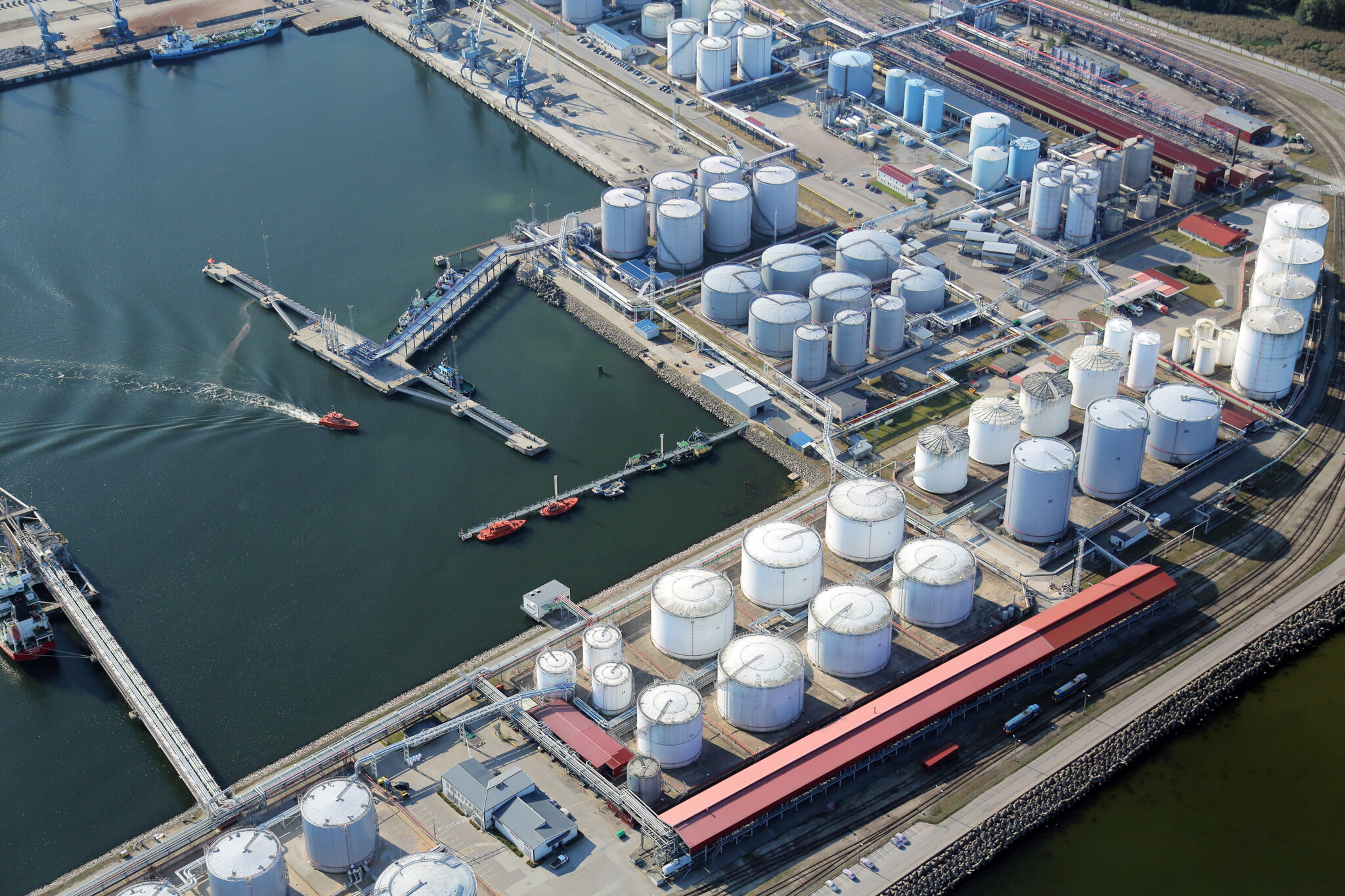
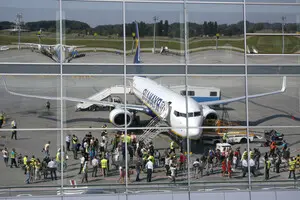
Storing fuel in European countries is no guarantee at all that it can be delivered to Ukraine quickly: delivery times are too long, and in a global crisis the fuel may simply not be released, as happened in the spring of 2026 (pictured: the port of Muuga in Tallinn)
Another important question is the cost of such services. The crisis mentioned above injected enormous uncertainty into energy markets. Over recent weeks the price of diesel on the London exchange has reached $1,450, while a futures contract for delivery in six months’ time costs $900. In other words, the market regards the current price as a panic price, out of line with reality, and expects it to fall. Which means that there is a perfectly real risk of selling up in six months at a loss of $400 a tonne.
“What should a service for buying and storing fuel with shipment a year later actually cost?!” asks the owner of a Polish oil trading company, leaving the question hanging. He would not undertake to put a sensible price on a ticket agreement today.
Physical volumes? Try us after 2030
Turning to the storage of physical volumes, new and harder questions are added to the list above. The main one is the limited tank capacity in neighbouring countries. As long ago as the Petroleum Ukraine. Warsaw’24 conference, senior managers from Poland’s PERN and from Romania’s National Administration of State Reserves, the bodies responsible for fuel reserves in their countries, said it in as many words: we have no spare storage capacity. None whatsoever.
PERN later circulated an offer to Ukrainian companies to build additional tanks at its facilities.
“Construction takes three years at the very least. The cost I will not even mention. They also offered to build at their own expense, but then you have to sign up to push or pay (an obligation to keep the capacity loaded. — A.K.) for ten years. That is a fantasy!” is how a representative of a Ukrainian wholesale and retail company sums up the “attractive” Polish offer.
Ukrainian traders do not believe in building anything abroad themselves.

The existence of spare tanks in neighbouring countries does not, as things stand, allow Ukrainian companies to use them
“First there is an interminable process, that celebrated European bureaucracy. And then come the licences and concessions over there, and the freezing of a pile of currency and currency controls over here… And that is only what is visible on the surface. As of today it looks like a space program,” says a source at one of Ukraine’s largest filling station chains.
He also said he had received an offer from a Romanian operator to lease tanks that would have covered most of his needs. But after the escalation in the Persian Gulf the Romanians withdrew the offer and decided to build up their own stocks instead.
Adam Sikorski, chief executive of the Polish group UNIMOT, says his company is ready to develop terminals in Poland both for storing physical volumes for foreign companies and for working under ticket agreements.
“Yes, there is a pile of questions today, but none of them is unsolvable. We have to try, to build a real case; but because so much of the legislation is unsettled, there are almost no real enquiries,” Mr Sikorski says.
There are more options in countries further afield—Latvia, Estonia, Austria and Germany. Under the law on MOFR, up to 25 percent of the volumes may be held there, but the long and difficult logistics kill the whole point, which is to supply the market fast.
“Estonia has more tanks for petroleum products than you can count, and Germany offers big possibilities too, but bringing the product in from there takes more than two weeks, and more than three,” says the head of a large filling station chain who has been pressing the case for storage abroad.
Ukrainian traders say, in general, that stock held even in neighbouring countries may not be mobile enough.
“The western border is already working at the limit of its capacity. Whether or not there is extra fuel over there, no more of it is going to get here,” the head of a large trading company points out, stating the obvious.
On the question of storage abroad, Ukraine might do better to focus not only on building up stocks but on improving cross-border logistics. Because if there are petroleum products in neighboring countries, Ukraine will have fuel, while at moments of panic buying it is worth counting on our own resources alone.
***
The sticky process of introducing MOFR was, in principle, to be expected.
First, this is the largest market reform in our history and an unrealistically vast amount of work to get through. It was never easy anywhere in Europe. To say nothing of the fact that nowhere else were such stocks created during a war.
Second, the situation is changing very fast and adaptation takes time—but it is happening. We started in 2024 by implementing, in effect, peacetime European requirements that were hopelessly detached from Ukraine’s wartime reality. After a series of revisions the law now looks different, though it is still a long way from run and drive, especially where the foreign dimension is concerned. The sheer variability of the factors involved—the availability of stock abroad, changes to logistics outside and inside the country, the nature and geography of the threats to that stock and the level of military protection against them, and so on—suggests that the current amendments will be far from the last, and that continuous adaptation of the law may itself become a form of stability. The sooner all stakeholders realize this, the more stable the market will be.
The pile of questions set out above shows that the government and market participants need to concentrate on storage inside the country, however difficult that task may look. The main problem is building underground storage. On the other hand, that means investing in our own infrastructure rather than someone else’s, and it means a far shorter route for fuel to reach the market.
Read this article in Ukrainian and russian.
Please select it with the mouse and press Ctrl+Enter or Submit a bug
 Follow on Telegram
 Login with Facebook
 Login with Twitter
 Login with Google