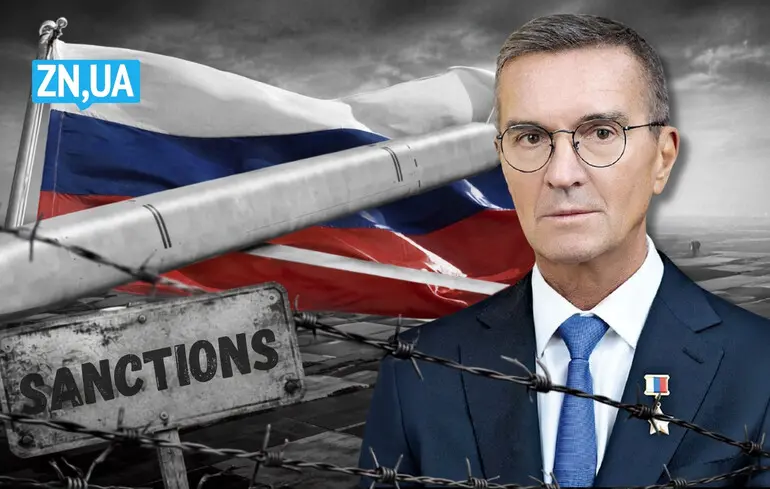
The Tactical Missiles Corporation (KTRV) is the central link in Russia’s campaign of aerial terror: its plants build most of the precision air-launched missiles Moscow uses against Ukraine’s civilian and critical infrastructure. Its range includes the Kh-101 cruise missile, the supersonic anti-ship Kh-22 missile and its upgraded Kh-32 version, the tactical Kh-59MK2 missile, the anti-radar Kh-31 missile and the Kh-69 rocket with a square cross-section, designed for the internal bays of the Su-57 fighter jet.
Besides missiles, KTRV plants are linked to the mass production of the UMPK guidance kit (Universal Planning and Correction Module) that turn Soviet high-explosive bombs into guided munitions. Crudely made as they are, the wings and satellite navigation units have given the Russian army a cheap strike weapon with which to make up for its shortage of expensive missiles.
KTRV was created by presidential decree in January 2002 on the basis of a plant outside Moscow and the Zvezda-Strela design bureau in Korolyov near Moscow. The corporation now brings together some forty sites and factories employing around 60,000 people, among them the Raduga and Vympel design bureaux, NPO Mashinostroyeniya Corporation and the Region Scientific and Production enterprise.
As we have established, KTRV’s production system rests not only on imported technology but on a kleptocratic scheme: its key logistical and financial chains are controlled by the family of the corporation’s long-serving chief, Boris Obnosov.
Monopoly and logistics
The conglomerate’s main supply hub is TRV-Engineering JSC (primary state registration number (OGRN)—5018205784), a textbook case of state flows being privatized. In 2012, Obnosov required every plant in the holding to purchase exclusively through the Zvezda-Strela Trading House LLC, later renamed TRV-Engineering and reorganized as a joint-stock company.
After the full-scale invasion started, TRV-Engineering classified its accounts and its list of founders and stripped every mention of its ties to KTRV from its website. Its revenue nonetheless grew steadily: RUB 2.91 billion in 2020 and RUB 3.39 billion in 2021, while court records show a sharp rise in defense-order funding after 2022. The company has since cornered almost every material need the corporation has—from construction contracts (the refurbishment of building No. 37 at the Smolensk aircraft plant) and special steel for missile warheads at GosNIImash JSC (State Scientific Research Institute of Mechanical Engineering) to critical microelectronics.
With both KTRV and TRV-Engineering under Western sanctions, buying technology directly became impossible. To get round the barriers, TRV-Engineering runs its supplies through a network of front companies and second- and third-tier distributors, which buffer the connection between international markets and Russian plants and long escaped the attention of regulators.
One of the key suppliers is NPP Variant Group LLC (OGRN 9729210267). In June 2024, the two companies signed a $5.71 million contract for the supply of GNI11AY inertial measurement units, which combine accelerometers and gyroscopes and allow missiles and drones to hold a trajectory without GPS or GLONASS—critical under electronic warfare conditions.
The GNI11AY modules are made by the Chinese firm Guanxingnav. In 2024 alone, NPP Variant Group brought $7.3 million worth of components into Russia, $7.2 million of it being Guanxingnav production; the company also declares supplies from Analog Devices, Texas Instruments, Intel and Microchip. Even after restrictions imposed by individual European countries, the firm avoided blocking sanctions from OFAC and kept its access to transactions.
Where specifications rule out substituting Asian equivalents, genuine Western microchips come in through parallel imports. Documents from a counterparty, Microlab-IC LLC (OGRN 7722470777), show that TRV-Engineering was supplied with diodes and transistors from the Dutch company Nexperia and microchips from the American Analog Devices (the OP177GSZ and OP249GSZ series)—more than $2.1 million worth in all, along with products from NXP Semiconductors (the Netherlands), Infineon Technologies (Germany), Harwin (the United Kingdom) and TE Connectivity (US-Ireland).
Integra LLC plays much the same role, with at least 179 consignments worth some $1.8 million to its name: switching equipment, pressure sensors from the Swiss Keller Druckmesstechnik AG, converters from the Japanese Nisshinbo Micro Devices, and instruments and components from the American National Instruments and Qorvo.
Double standards and corruption behind a patriotic mask
A paradox runs through Russia’s defense industry: state money for defense production doubles as a source of private enrichment for people connected to the management of the plants. In KTRV’s case, the financial flows of the state defense order and the business interests of the Obnosov family have proved tightly interwoven.
The key element of the system is the ownership structure of JSC TRV-Engineering: 20 percent of the shares belonged to Boris Obnosov’s daughter, Olga Zorikova.
The company acted as an intermediary in supplying materials to KTRV, taking an agent’s fee of 12% of the value of each deal—a steady income tied directly to the scale of the corporation’s state orders.
TRV-Engineering did not confine itself to brokerage: in 2012–2017, the company took in around RUB 12 billion in revenue, almost half of it on direct contracts with KTRV. It is a textbook conflict of interest: a stake in the company was held by a relative of the corporation’s chief, who was at the same time awarding it substantial orders.
The second tier of the model is the conversion of that money into assets outside Russia. A significant part of the Obnosov family’s property is concentrated in the Czech Republic: Olga Zorikova’s husband, Rostislav Zorikov, built up a property management business there, obtained permanent residence and accumulated a portfolio worth more than €8 million—an apartment block in Prague’s Žižkov district, a penthouse and a number of flats. Income from Russia’s defence sector was thus converted into assets in a NATO and EU state.
The situation changed once the story broke: in 2023, the Czech authorities and the Czech public turned their attention to the Zorikovs’ property and business structures, after which Prague froze their assets—not only the real estate but their corporate rights as well—and imposed migration restrictions on Rostislav Zorikov.
All the Czech properties remain under arrest. There is no automatic confiscation, since EU law requires a crime to be proved separately in court, but the owners have entirely lost the right to dispose of the property: sale, transfer, mortgage and rental are blocked for as long as the sanctions last.
The family’s legal status in Europe has changed too: against a background of street protests outside their Prague home, their residence permits were annulled and their details entered into the Schengen Information System (SIS), which bars them from the entire Schengen area. The Zorikovs themselves are in Russia.
The Czech side has passed the file to the European Commission, moving to have Obnosov’s relatives added to the EU’s general sanctions list, which would close the Union’s financial space to them. Boris Obnosov himself is already under sanctions from the United States, the EU, the United Kingdom, Canada, Japan and Australia.
In lieu of a conclusion
Corruption in Russia’s defense industry is chronic. In the summer of 2024 a long-standing partner of the Obnosov family, Vladimir Maslensky, former general director of the Zvezda-Strela plant in Taganrog, was convicted of misappropriating more than RUB 420 million from the Defense Ministry. His cooperation with investigators led to the arrest of TRV-Engineering’s general director, Mikhail Kolesnikov, for siphoning off RUB 40 million through fictitious contracts for rolled metal and the purchase of a house in Sochi.
These prosecutions, however, reach no higher than middle management. Boris Obnosov himself has run the holding for more than two decades and belongs to the Kremlin’s innermost circle of trust, which is why his abuses are forgiven in return for political loyalty.
The story of the Obnosov family lays bare the double morality of Russia’s ruling class: professing hostility to the West while moving its fortunes into European cities. The frozen assets in Prague are waiting for legal rulings that would allow them to be channelled into rebuilding Ukraine. Tightening sanctions pressure and seizing Russian assets in Europe is a practice worth scaling up.
This material was produced as part of a collaboration between the StateWatch think tank and UNITED24 Media.