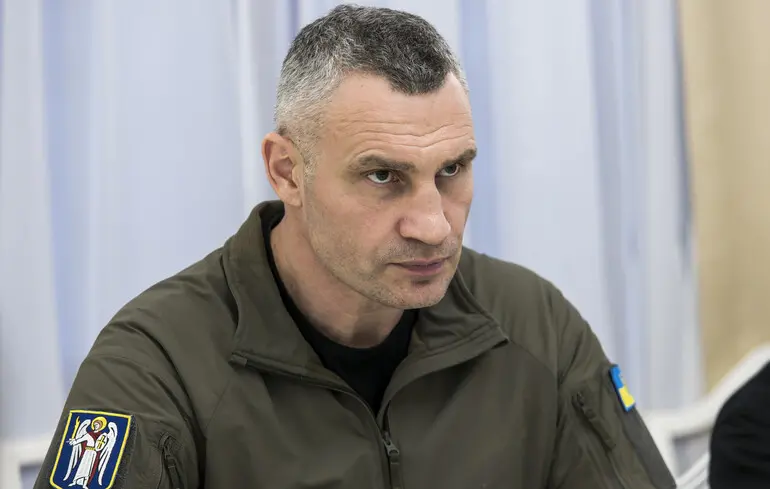
Suspicions by the Security Service (SSU), the Economic Security Bureau (ESB), the State Bureau of Investigation (SBI) and the National Police against local government officials of all stripes—from mayors to minor clerks in municipal departments and administrations—have been popping up at the speed of sound over the past month. The same is true of the prosecutor general’s reports on social media, immediately translated into English and widely promoted in the web. Relevant associations of local self-government, including the largest one—the Association of Ukrainian Cities (AUC)—are reporting pressure, and even, like the All-Ukrainian Association of Communities (AAC), appealing to the president to stop the rampant security forces.
However, the story is much more complicated than it seems at first glance. And not only because there are hardly fewer corrupt mayors than there are in the prosecutor general’s office; not only because the unreformed wing of the law enforcement system has always been, and remains, on a leash in the hands of the Presidential Office, which periodically tightens it in line with its political and business considerations. The whole difficulty lies in the fact that Vitali Klitschko, who today formally leads the fight for the rights of local self-government as mayor of the capital and head of the AUC, has no moral right whatsoever to be the first to repel the attacks of the president’s security forces.
But let’s take it step by step.
Why are the president’s security forces attacking local self-government?
After the new Prosecutor General Ruslan Kravchenko distinguished himself in the failed operation to eliminate the independence of the anti-corruption bodies NABU and SAPO (he was one of the driving forces behind the preparation and beneficiary of the notorious bill—author’s note), the Office of the Prosecutor General launched a demonstrative campaign against local self-government bodies. At one point, it reached epidemic proportions, when the news feeds of local websites were literally flooded with case reports churned out by Prosecutor General Ruslan Kravchenko and Kyiv City Prosecutor Oleksii Kiper’s offices. The Kalush Vikna (Windows) website is a case in point.
There may be several reasons for such an attack.
First, the desire to divert attention from what is happening at the level of central government. After President Zelenskyy’s office stepped back under pressure from the public and international partners, the confrontation between the president’s security forces and the anti-corruption institutions only intensified. In essence, society found itself on the front line of an internal war, the elements of which had always existed in government, but which have now become especially critical. As we have already reported, in addition to NABU reaching key untouchable figures from the president’s inner circle (Timur Mindich, Oleksii Chernyshov, Rostyslav Shurma, Oleksii Reznikov, Serhii Shefir), in February the SSU was dealt a severe blow in the form of searches at the IQ business center, rented by Bohdan Yakymets, the president team’s full-time “problem fixer.” And recently, NABU searched the homes of two senior SSU officials—Ihor Sukhorad and Pavlo Dudar—who, according to investigators, could have leaked information to Ihor Kolomoiskyi’s lawyers in the Ukrnafta and Ukrtatnafta cases for 4 million UAH (around $95,000). This and many other stories will have serious consequences (the SSU responded with “evidence” of the involvement of NABU detective Ruslan Magomedrasulov, arrested on suspicion of treason and who was investigating the cases of Mindich and Yakymets). For this reason, it is imperative for the central government/prosecutor general to demonstrate that corruption exists not only on their turf.
Second, the need to tighten administrative resources before elections. This is an old story with a familiar refrain: once hooked by the security forces, it is harder to refuse when the votes are counted. It is clear that, given the current deadlock in negotiations (Putin clearly guessed Trump’s mental issues long before the latter publicly praised their joint photo in Alaska), the topic of elections, and therefore administrative resources, is not the most urgent issue. But it is like a shadow that always appears at a certain moment.
Third, the desire of new prosecutors to shake down the old representatives of local authorities. An old joke is relevant here: “I’ve opened a case that will make me rich. Are you a businessman? No, I’m a prosecutor.” Nothing has changed, except that it is worth clarifying once again: local authorities, aware of the setup of the Presidential Office, have always known how to resolve issues with the security forces in between the tsunamis of hungry mouths. In the sauna, on a fishing trip, in a restaurant or in crypto currency—it makes no difference.
Therefore, for understandable reasons, local government officials today prefer collective statements, avoiding public detail about criminal proceedings against specific local officials. Just in case. Yet there are examples.
“Today, the prosecutor’s office carried out a large-scale investigation against education workers in the Teofipol community in the Khmelnytskyi region. Nine school principals and six accountants received notices of suspicion in a criminal case involving heating tariffs,” says the Miller law firm. “The essence of the case is as follows: in 2021–2022, gas and energy prices rose sharply. To prevent children from freezing in schools, local authorities approved an annual tariff with monthly payments. Educational institutions signed contracts for heat supply and paid exactly for the amount of heat received. The prosecutor’s office considers this a loss to the state, since no heat was supplied in the summer months (May–July), but payments were still made. What happened today: 15 simultaneous searches, 15 motions for the most lenient preventive measures, 13 empty search reports without the seizure of items or documents.”
And there are many such cases across the country. Including in Kyiv. Here in front of me is a memorandum addressed to the head of the Kyiv City State Administration, Vitali Klitschko. Very interesting reading, you know: “Based on the results of processing the materials, it has been established that between 2019 and the first quarter of 2025, law enforcement agencies initiated 1,404 criminal proceedings against employees of the Kyiv City State Administration and its structural subdivisions: 2019 — 184; 2020 — 167; 2021 — 233; 2022 — 224; 2023 — 309; 2024 — 219; 2025 (first quarter) — 68. Based on the results of preliminary investigations in these criminal proceedings, more than 1,000 searches and seizures of items and documents were conducted; 122 cases are currently being reviewed in courts of various instances; 24 cases have been closed. The total number of convictions that have entered into legal force is 2, which is 0.14 percent of the total number of open criminal proceedings.”
The author of the note immediately sums up mathematically: “Considering the number of criminal proceedings initiated from 2019 to the first quarter of 2025 (1,404) and the usual team of approximately 7 prosecutors and 7 investigators, it is logical to conclude that the work of law enforcement officers—totaling about 17,000 people (although the figure may be lower, as some investigators may be handling several cases), whose salaries are paid by taxpayers—will achieve a result in the form of punishing the guilty person with a fine of 3,400 UAH.”
Well, the main thing is the process. But the problem is that this is not only for the Office of the Prosecutor General.
Vitali Klitschko’s Eternal “Brain Freeze”
Six months have passed since NABU’s Operation Clean City exposed the “nest” of Kyiv’s overseer Denys Komarnytskyi and the heads of the Kyiv City State Administration departments visiting his office in the IQ business center, causing them to lose their posts. So what? Yes, for the first time in his career Klitschko did not accuse a law enforcement agency of political pressure. He even publicly promised to fully cooperate with the investigation, and went to meet NABU director Kryvonos. One of the topics of that conversation, according to our sources in the Kyiv City Council, was the mayor’s request to find new honest staff for the administration. Yes, Klitschko made a bright appearance before the youth on the first day of protests against the elimination of NABU and SAPO’s independence. And so what if he left just as quickly under the whistles of protesters? Dozens of international outlets still approached him for comment. After all, international media do not know what’s going on in the capital’s government today:
First, allies of Denys Komarnytskyi—widely seen as a curator of Kyiv’s construction and real estate sector, whose companies profited from municipal tenders—still run things. The management of departments and municipal enterprises has not been systematically changed. The dismissed suspects were replaced by their deputies, who, in acting capacity, carry out the same tasks as their predecessors. The post of director of the land resources department is still held by Valentyna Pelykh, although all issues concerning land and the “toilet schemes” are tied to her. The department of information and communication technologies is still headed by Viktoriia Itskovych, who served as director of the department under the dismissed former deputy head of the Kyiv City State Administration Petro Olenych—now a NABU suspect responsible for IT. Itskovych not only continues to work but is climbing up the career ladder: Klitschko submitted a draft resolution listing her as his deputy, sparking outrage in some factions during the last conciliation council meeting.
Another example is the lucrative municipal enterprises. Huge sums are spent on the Spetszhytlofond municipal enterprise. It is worth reading the letter by Oleksandr Tsivinskyi, then a NABU detective (he investigated the Komarnytskyi & Co. case), in which he describes the problems tied to this structure. The enterprise accumulated large amounts of land and essentially became a land bank for Kyiv under Komarnytskyi’s control. According to NABU, this land is distributed for development without competitive bidding, through direct contracts. NABU recommended transferring these plots back to the city, which should then sell them at land auctions. But all such recommendations, understandably, stayed on paper.
The Zhytlo-Invest municipal company purchases apartments for social housing under various programs. And they buy premium-class apartments on top floors (made unattractive by war and Russian Shahed drones) for astronomical sums, ranging from 17 to 20 million UAH ($400,000 – 500,000) each. Without tenders, of course.
Second, the main groups of influence— those of Artur Palatnyi and Mykola Povoroznyk—have only grown stronger. After the notorious Kyiv City Council vote (when, despite Klitschko’s personal pleas not to support dismissal, 73 deputies voted to remove his first deputy), Klitschko did not fire Povoroznyk. He merely suspended him for the duration of the investigation. Moreover, he is helping him contest the Kyiv City Council’s decision in court. The influence of Povoroznyk and his group over the mayor has only intensified: these people do not intend to let Klitschko slip away and lose power. Povoroznyk—whose group includes Viacheslav Nepop, Valentyn Mandriievskyi, Maryna Honda, Oleksii Komarov, Oksana Zynovieva and others—has for many years been not only a cornerstone of Kyiv’s governance but, alongside Komarnytskyi (who handled City Council, land and construction), has fed off the old, familiar local schemes (overestimating expected costs and required work, etc.).
Also present, though as always in the shadows, is Klitschko’s UDAR party leader Artur Palatnyi. In the IQ business center, Komarnytskyi used to report to his “neighbor.” Now, according to sources, this “neighbor” is always in touch with Komarnytskyi and very responsive to his requests.
Third, the Kyiv City Council is paralyzed. The reasons are many. Beyond fear for their own necks (the NABU investigation continues) and the complete discrediting of the representative body of power in the capital, there is also a lack of clarity over Klitschko’s future policy and the direction of their own factions and parties. For months now, the Kyiv City Council has not convened. No decisions are being made. An attentive reader will rightly note: in such a situation, whether Klitschko replaced people in the departments or not is not so important—schemes cannot function anyway. The Kyiv City Council currently works neither for the corrupt nor for the city. This, of course, cannot last forever. Everyone wants to eat, and the “servants” also want to rule the capital.
…It is absolutely clear that Klitschko faces a key political choice: break the old system and bring in new people to the administration, which means abandoning the services of Artur Palatnyi, Mykola Povoroznyk and their people—or not break it. And judging by the fact that for six months the mayor has hesitated to step through any door, instead loitering on a bench in the corridor hoping things will somehow resolve themselves, Klitschko has a good chance of being forced into retirement.
Because it will not resolve itself. For the Presidential Office to express no confidence in the mayor, it only needs to make a small extra effort and buy eight more votes (it already demonstrated it had 73 during the vote on Povoroznyk’s dismissal). It is quite likely the Presidential Office will also keep Klitschko’s key partner in the Kyiv City Council—the European Solidarity faction—in its orbit: its 30 deputies have long been held in check not only by Petro Poroshenko’s criminal cases but also by sanctions. Law enforcement agencies are also actively opening cases against European Solidarity members. Klitschko, incidentally, is not communicating this actively, nor publicly defending his political partners (except for his deputy, European Solidarity member Volodymyr Prokopiv). And for European Solidarity, time is money: either they continue to imitate vigorous activity, actively supporting Klitschko and voting for new people in the mayor’s team, rooting out corruption in Kyiv, or (if Klitschko remains paralyzed) they sell him out to the “servants” and their secretary (the Presidential Office is actively gathering votes to elect its own secretary) or with the head of the city’s military administration. They will govern the capital while Klitschko dithers, and his words carry no weight. Unfortunately, the same is true of the entire system of local government, whose position the mayor of Kyiv continues to insistently present.
Of course, we must always remember that local authorities now bear an enormous burden of responsibility. And we must tip our hats to virtually every mayor for their first year of the war. But when even Kharkiv and the Kharkiv region, once offered a kickback, went from saying “Are you crazy? Just do it” to the usual 15 percent, it is not surprising that public trust in local authorities has significantly declined over the past year. (According to a recently published IRI poll, 14 percent of respondents fully approve of local government activities today, compared to 51 percent in April 2022).
It is necessary to clean up local authorities. However, the efficiency with which this is being done (when, it bears repeating, 1,404 cases were opened in Kyiv over six years and only two convictions issued) shows that all the prosecutors’ activity is not about purification. But neither are all the statements about the security forces “attacking” local government.
In the current situation, the chances of making any real change are very slim. But the right to resist pressure on local authorities belongs only to those who have done everything possible to eradicate corruption within their area of responsibility. And until local self-government is represented by someone who has followed this path, its voice will not be heard.