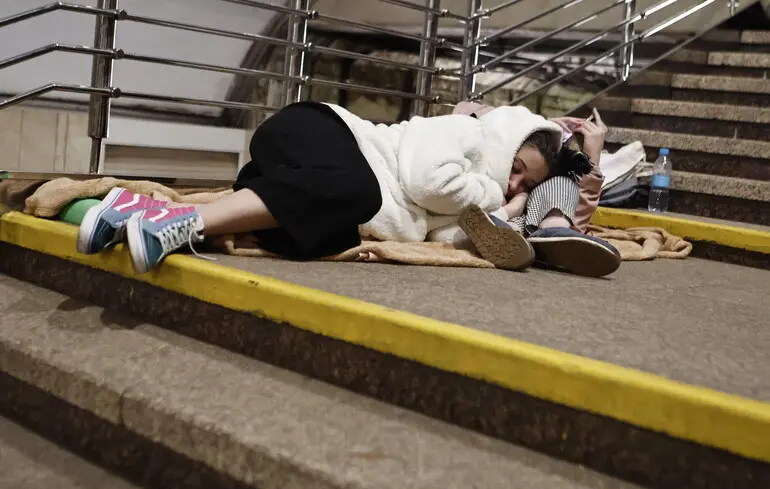
For the fourth year running, Ukrainians have often been deprived of the opportunity to satisfy the most natural human need: sleep. To break us, the enemy most often chooses nighttime for massive shelling—and does so increasingly aggressively. Because of nighttime alarms and time spent in shelters, the body does not have time to recover, and the psyche cannot recuperate. In the morning, we return to work, chores and routine without the resources to do so, feeling exhausted.
What are the dangers of chronic sleep deprivation? Is it possible to make up for lost sleep? How can we at least minimally support ourselves under conditions far from normal? ZN.UA discussed all this with Anastasiia Shkodina, PhD in Medicine, neurologist, somnologist and somnotherapist.
About Anastasiia Shkodina
Anastasiia Shkodina is co-founder of the inPsy sleep and mental health center, a post-graduate student at the Department of Nervous System Diseases of Poltava State Medical University, chair of the committee for scientific research in medicine and sleep neuropsychology at the Institute for Sleep Disorders and Psychotraumatic Disorders NGO and member of the European Sleep Research Society (ESRS), the American Academy of Sleep Medicine (AASM) and the World Sleep Society (WSS).
AK: Ms. Anastasia, what should be done when the reasons for sleeplessness are objective? There is shelling at night, and in the morning you have to go to work. Is it possible to “catch up” on sleep under our conditions, and how?
AS: It is simply impossible to fully compensate for chronic sleep deprivation. You can only partially compensate, that is, try to restore your functionality to a satisfactory level.
We live in difficult times and understand that any night can be restless. Therefore, it all begins with preparation. This means having an action plan if the air raid alert goes off: what I will do, in what situations I will go to the corridor, in what situations I will go to the shelter, etc.
It also means preparing an alert kit. Under our circumstances, we balance and choose the lesser of two evils—between fragmented sleep and no sleep at all. For example, in Kyiv, some people have the opportunity to stay in the metro and occasionally sleep. If it is possible to sleep in a shelter, it is worth thinking ahead about what to take with you. This is also a kind of emergency kit with an eye mask, earplugs, your favorite pillow, a calming book and so on.
Emotional reactions are a separate issue. Any awakening—especially due to air raid sirens or the sounds of explosions—is stressful. After stress, it is very difficult to fall asleep, not to mention how this affects our health and our body.
Therefore, it is necessary to explore your reactions (some people respond with freezing, others with excessive anxiety) and learn to work with them. Nowadays, many psychological self-help techniques exist. Learn the ones that help you specifically. Simply telling someone to use “square breathing” does not work. Everything is highly individual. Do you have difficulty breathing, a racing heart, muscle tension, heavy thoughts? For each of these, there are exercises and techniques that can be performed urgently, right here and now.
AK: What should be done after the air alert is over?
AS: If there is an opportunity to get some sleep, again, you need to explore yourself. A ritual can help with falling asleep. For example, washing your face with warm, then cold water; lying under a warm blanket to warm up a little, then removing it—a sort of temperature-based sleep induction. Even a warm caffeine-free drink or just warm water before bed can help.
After stress, anxious thoughts may arise. The siren stops, a person comes home, lies down, but intrusive thoughts prevent them from sleeping. For this, there are special exercises and techniques depending on what the person is experiencing.
AK: And if it’s morning and time to go to work?
AS: Of course, it’s too late to sleep, so it’s time to start the day. The first and most important rule is to get as much bright light as possible in the first half of the day. Bright light helps the body start and get active. Spending at least half an hour in the sun, on the balcony or outside with a book helps the brain understand it is morning and the new day has begun.
After a sleepless night, self-care is essential—take breaks from work for at least two to five minutes every hour and a half to two hours. Do not demand maximum productivity from yourself on such days. In my opinion, this is a broader problem. If, after a sleepless night, a manager demands maximum productivity from an employee, the likelihood of success is very low. Ultimately, the employer faces a high risk of errors, including economic consequences, and the employee is in a state of stress at best or at worst risks developing various illnesses if such events accumulate. All this should encourage us to remain humane to one another, especially in work relationships. After such nights, we must give ourselves the opportunity to catch our breath as much as possible.
Nutrition. After a sleepless or insufficient night’s sleep, appetite may increase due to the hormone called ghrelin. It is important not to fall into this trap by overeating heavy foods and fast carbohydrates. These may create an illusion of short-term alertness but fatigue will continue to worsen.
Napping. Again, this is a broader issue. Personally, I do not know of any widespread workplace policies allowing employees to take a 20-minute nap after a sleepless night, although such naps can reduce the risk of errors and improve concentration. There is much debate about napping. Biologically, napping can worsen falling asleep at night. If you nap during the day, you may not be able to fall asleep at your usual time. To minimize this effect, naps are recommended before 2–3 pm, usually when we are still working.
If you slept less than seven hours, take a 10–30 minute nap. A short nap in light sleep can help restore some function.
If your night’s sleep lasted less than four hours, it is almost total sleep deprivation. In this case, it is advisable to nap from one to one and a half hours.
AK: There is also the question of how long it typically takes a person to fall asleep…
AS: Yes, some fall asleep in 10 minutes, others in 30. This is also a matter of self-study, knowing your habits and traits.
The same applies to sleep duration. We often say adults aged 18+ need 7–9 hours of sleep. Yet before the war, most adults slept only 5.5–6 hours and considered it normal, although few truly need so little or conversely 9–10+ hours. This is about culture and habits. Some people really need seven hours, others eight. Only by studying themselves can they learn this. But when asked, “How much sleep do you need to feel good?” few can answer specifically. Most say about five hours on weekdays and ten on weekends. This reveals chronic sleep debt people try to repay on weekends, but this is not healthy.
AK: What are the risks of chronic sleep deprivation?
AS: One could lecture for hours on this, but let me try to put it briefly: sleep regulates almost all bodily systems. It is as essential as water, food and oxygen. Sleep consists of phases, each serving a certain function. For example, during REM (rapid eye movement) sleep, emotional processing and long-term memory formation occur. NREM sleep participates in metabolism and immune regulation. Knowing this, we can analyze the threats posed by chronic sleep deprivation.
I usually divide consequences into short- and long-term. The short-term ones are familiar to anyone who has had a sleepless night: drowsiness, fatigue, reduced concentration, possibly microsleeps—brief lapses of awareness lasting seconds. Memory problems occur—not only inability to focus but also difficulty recalling information. There is physical weakness, fatigue and aching. This is our condition after sleep deprivation.
Long-term consequences. It has been scientifically proven that sleep disorders lead to a higher risk of cardiovascular diseases, ranging from hypertension to heart attacks and strokes, as well as endocrine diseases such as obesity and diabetes. Obesity, in turn, can lead to sleep apnea, a separate disorder that further disrupts sleep. In other words, we get a cyclical process that is difficult to break.
Long-term consequences also include neurodegenerative diseases and a higher risk of dementia. Our body has a glymphatic system (discovered just over 10 years ago) that works mainly during sleep. Its main function is to cleanse the nervous system. This means that when it is not working, certain toxic substances accumulate and the risk of developing dementia increases. Today, the ineffective functioning of this system is generally considered one of the key factors in the development of Alzheimer’s disease.
If we globally lack sleep for years (and we can already say that this has been going on for years and affects a significant part of the population), then all of the above is what we can expect in the future. But we will not find out about this tomorrow or in a year, but in 10–20 years, when we will be thinking about what to do about it.
A separate issue is the risk of immune system problems and vulnerability to infectious diseases. And, of course, psychological problems—a higher risk of anxiety, depression, and stress-related disorders because sleep is directly involved in emotional regulation.
In addition to medical problems, there is, once again, a socio-economic component. What can we expect in the future if we don’t get quality sleep? The first and simplest thing that comes to mind is social communication and social well-being. When people don’t sleep, they become more irritable. This affects their interactions and, accordingly, their productivity and functionality.
Next are accidents. Lack of sleep is associated with an increased risk of traffic accidents, which in turn increases mortality. Acute cardiovascular and endocrine diseases, mental and nervous system disorders are again about mortality and the overall morbidity of the population, which is usually considered from a medical point of view, but on a national scale also has a direct economic aspect.
All of this is about wide-ranging consequences that usually remain outside our attention.
AK: Can we still give specific advice that will help people who find it particularly difficult in extreme conditions to relax and fall asleep, at least for a short time?
AS: I will ask you a counter question: what exactly prevents these people from falling asleep?
AK: For example, the subway is quite noisy. There are anxious people who react to any noise or movement.
AS: Your answer basically already contains the answer to the previous question. Our body knows how to fall asleep without our special intervention. The question is what exactly interferes with this process. If it is noise, you can use earplugs, white noise or binaural beats in headphones.
If intrusive anxious thoughts interfere with sleeping, then it is a matter of working with them. If it is muscle tension, then muscle relaxation techniques can help. In the case of physical manifestations of anxiety, such as heart palpitations, other relaxation exercises can help. In other words, it is very individual. Yes, people in shelters are stressed. But everyone experiences it differently. And sometimes specific advice can only make you feel worse.
For example, some of my colleagues talk about a quick method for falling asleep: “breathe like this.” But if the technique is chosen incorrectly, some people may experience headaches during breathing relaxation, while others may feel dizzy. Against the backdrop of stress and anxiety, such a person may feel worse, experience additional stress, and this will certainly not promote sleep. Some people will be frustrated that everyone is writing about a quick method for falling asleep, that everyone falls asleep instantly, but they cannot. And then they will not sleep, not because they are in a shelter and there is an air raid alarm outside, but because they are worried that “something is wrong” with them, that they will not get enough sleep again, and that the day will go downhill. You can tell someone: to fall asleep, listen to the sound of rain or a waterfall, for example. But that person had an unpleasant experience with water in childhood. Will they sleep with this advice? The advice may be suitable for most people, but not for everyone, and that’s okay. People need to choose help depending on what is happening to them. Even meditation.
In general, if a person cannot sleep, the first question is: is it only in the shelter? If so, you need to investigate what exactly is bothering them and think about how to remove it so that the body can sleep. It knows how to do this from birth.
If a person cannot sleep not only in the shelter, that is a different story. It may be a chronic sleep disorder, some kind of sleep disorder that requires treatment. Unfortunately, this usually goes unnoticed.
I am a somnologist and somnotherapist. But in reality, there is still no such qualification officially recognized in Ukraine. Somnologists and somnotherapists are like unicorns. People are looking for us, but no one has seen us in any documents. However, we do exist. These are people who have been trained mainly abroad, brought this knowledge here, some of them have created professional organizations in sleep medicine and psychology, train doctors and psychologists, and most importantly, have their own unique groundwork. But most of this is done on a voluntary basis. There are currently more than 80 types of sleep disorders, and each requires specific treatment. About 70 percent of them can be treated without medication. Medication-based treatments have many limitations. Starting with the fact that some drugs are simply not registered in Ukraine and ending with the peculiarities of metabolism, addiction, tolerance, etc.
AK: When should a person with sleep problems seek professional help?
AS: According to the third edition of the International Classification of Sleep Disorders, most diagnostic criteria have a duration of more than three months. Some scientists say that if a sleep disorder lasts more than a month, it is already a disorder. The question is debatable.
In my opinion, if the problem lasts a month or two, there is still a chance that the person will be able to regulate their sleep on their own. If it lasts more than three months and the person has already tried many things, but nothing works in the long term, then they definitely need to see a specialist. Sleep disorders usually lead to complications, including psychological ones. And then it can be difficult to understand whether a person is not sleeping and therefore has anxiety, or whether they have anxiety and therefore cannot sleep.
AK: You mentioned napping. For example, at the Kyiv Institute of Economics, they made sleeping capsules for students. Would it be possible (and worthwhile) to do something similar on a grander scale? Because, for example, even in the subway, people are immediately kicked out after the air alert ends.
AS: That’s actually a very interesting question. I’ve thought about it before, but I still don’t have a specific answer. Not because there is a lack of ideas on how to act, but because we still don’t have the full picture. There are isolated studies conducted on specific groups in general. But today, we still don’t know what state our population is in, what disorders we really have, and, accordingly, what to do about it.
Another issue is effectiveness. Before saying that a local project is effective and needs to be scaled up, it should be researched.
“We need to be able to sleep everywhere” sounds logical at the moment. But the most logical solution is not always the most economically viable one. Whether to create opportunities for employees to rest, whether to shift the start of the working day, or whether to take a slightly longer lunch break—these are all local initiatives that need to be researched. And all of them, even in government institutions, usually depend on the manager. That is, it is not so much a question of the state as it is of the consciousness of society and the interaction of each of us. The state can organize research, train specialists and give recommendations, but it cannot force them to comply.
AK: That’s true...
AS: When I start working with clients and bring up the topic of sleep hygiene, they usually find it very funny: “What sleep hygiene in wartime? What silence? What regularity?” Over time, I began to notice that people don’t even try. The basis of sleep hygiene is to ensure consistency and conditions that promote sleep. Doing this like a machine every day is definitely impossible, especially in our unstable conditions. But striving to follow these rules is the first step toward improving your sleep in the future. It’s about learning your sleep needs and ensuring regularity, plus or minus an hour or two. It’s about providing an environment for sleep—darkness, silence, humidity, comfort. It is also about evening, night, morning and daytime behavior. It is very difficult to advise a person on how to fall asleep in a shelter if they have drunk 10 cups of coffee during the day, for example. The answer is that it’s probably impossible.
These are basic things. People often laugh at them, saying that it is impossible, difficult. But I remember advising a friend to put away their phone at least 30–60 minutes before bedtime. A phone poses two problems at once. First, the light stimulates a certain structure of the brain, which prevents us from falling asleep. Second, it’s the informational and emotional overload. When we pick up our phones, each of us worries about someone, reads something, finds something and then goes to bed with all the information we’ve just learnt. And do you know what answer I got? “What am I going to do during those 30–60 minutes? Lie down and stare at the ceiling?” That’s a good illustration. And it is during these 30–60 minutes that evening rituals should take place—a hot bath, a book, etc., some time to take care of yourself. That’s where you should start. Try to follow these rules whenever possible.
AK: Some people fall asleep in front of the TV or laptop while watching a movie. Is this normal?
AS: Definitely not. There are several reasons. First, why do people fall asleep like this? Usually because they can’t fall asleep any other way. And then there’s the same question as with shelters. Why can your body sleep, but you can't fall asleep? What do you need to work on? If this is a constant problem, then you definitely need to see a sleep medicine and psychology specialist.
It’s another thing when a person is just watching a movie and falls asleep from exhaustion. This is a sign that they are sleep deprived. Then something needs to be done about it.
It’s also abnormal because rarely does anyone set a timer on the TV to turn it off in 30 minutes. A person falls asleep, and at this time there is a sound stimulus around them. Then there are awakenings, shallow sleep due to the fact that most of us are now overly alert—war, anxiety, explosions somewhere. At the same time, the usual, routine problems (in the family, at work) are not going away either.
AK: Regarding awakenings, one of my colleagues says that he wakes up at the same time every night. He tries not to get up, but nevertheless has difficulty falling asleep afterwards.
AS: Waking up once or twice a night is normal. What is not normal is that he cannot fall asleep again. This may be related to various sleep disorders if it is a constant problem, or it may be related to various medical or psychological issues. Something needs to be done about what is preventing him from falling asleep.
But if he does wake up at night, I can definitely advise, first of all, not to look at the clock, because then you will be nervous that it is late, you are awake, there is little time left, you will not get enough sleep again, and tomorrow will be a disaster. While you are worrying, you will definitely not fall asleep. My second piece of advice is not to force yourself to sleep. Sleep is not something we can force to happen. The more we force ourselves to fall asleep, the less likely we are to succeed.
AK: What should you do during this period? Get up and do something?
AS: This is also a debatable question. For example, in cognitive behavioral therapy, there is indeed a recommendation to get up, do some boring work for 20–30 minutes and then go back to bed and try to fall asleep again.
I am still in favor of staying in bed with the conscious permission to allow yourself to rest. Because when you lie in bed and don’t sleep, you still rest your body more than if you walk around and do something.
I usually allow my clients to read a book in bed, although the general principle is that the bed should only be used for sleep and sex because this is related to the associative connections in our brain. You can read a book, something boring, without excessive emotional tone. You can do relaxation exercises. If you can’t sleep right now, allow yourself to rest, don’t overstimulate yourself. After all, the more stimulated a person is, the less likely they are to fall asleep.
These are two tips that I can definitely give you. But if they don’t work, you need to find out why this is happening and what can be done about it, together with a specialist.