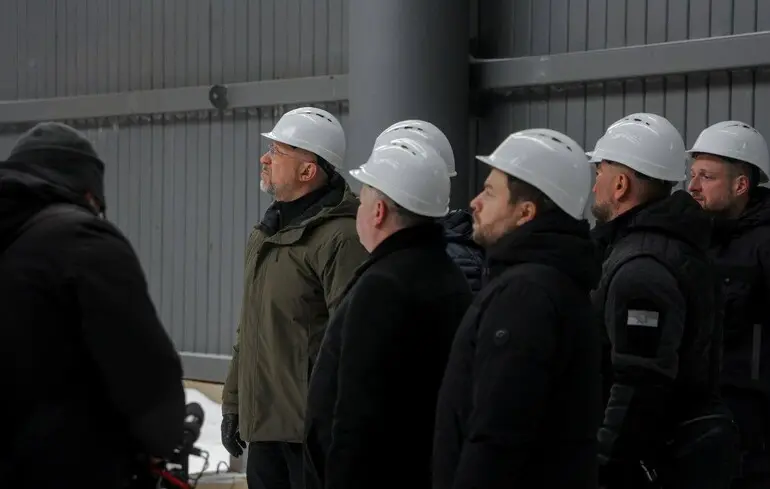
Here is a quote from the Telegram channel of First Deputy Prime Minister and Minister of Energy Denys Shmyhal: “The President of Ukraine has also instructed local authorities to prepare plans for protecting energy infrastructure for the next heating season. We expect relevant plans from the heads of cities and regions to be ready by 1 September.”
In reality, the task is far broader and more complex than such statements suggest. This winter has shown that the existing “protection system” has critical gaps, and that the infrastructure in its current form is poorly suited to wartime conditions. As plumbers like to say, “replacing the gasket” will not help. The real question is different: how do we replace the entire system—and make it capable of withstanding more than a single heavy blow?
“All is well, Madame la Marquise!”
First, the wording about “plans from city heads” reveals legal and managerial confusion. The president can, of course, assign tasks to the heads of regional and district military administrations—that is, the local executive branch. But mayors represent local self-government; they are not part of the direct vertical chain of command. So either the public communication oversimplified matters, or someone decided that in wartime it is acceptable not to distinguish clearly who is responsible for what.
Second, “energy infrastructure protection plans” are neither a single competency nor a single document. There are issues relating to military risks (air defense, electronic warfare, security, classified protocols), where the key role belongs to the armed forces and military administrations. There are issues relating to a city’s resilience (reserves, heating supply, generators, networks, sheltering critical nodes, fuel stocks, repair logistics) that fall within the responsibility of local authorities. A mayor can and must do a great deal, but calling all of this simply “protection” and shifting responsibility in one direction creates a convenient, simplified picture—one that later serves as an alibi.
Third, even if “plans” appear by 1 September, will there be enough time left for implementation? Barely six weeks would remain before the heating season, eight at most. Energy and heating are not sectors where one or two months can accomplish what has not been done for years.
Why make this explicit? Because when failures occur, the search for responsibility often begins—and ends—at the local level. We have noted this repeatedly.
Today, leading government figures compete in praising their contribution to the heroic overcoming of the consequences of attacks. The president announces the creation of a coordination headquarters in Kyiv and the introduction of a state of emergency, a step many might argue comes rather late.
Minister of Energy Denys Shmyhal says the situation in the energy system is the most difficult since the start of the full-scale war, that tens of thousands of specialists are involved, and that the state is strengthening protection of critical infrastructure with air defense and electronic warfare systems—responsibilities that formally lie beyond the remit of the energy ministry.
On the same day, Prime Minister Yuliia Svyrydenko reports partners’ intention to provide new assistance packages, including major energy equipment to stabilize the system—though the process of delivery, installation and grid integration remains ahead.
The Ministry of Foreign Affairs instructs diplomatic missions to initiate urgent fundraising for energy support—an effort that presumably should be ongoing, not activated only in moments of crisis.
The Ministry of Energy reports: “The installation and launch of gas cogeneration units continues according to schedule… the commissioning of 9 MW and 18 MW is expected.” At this point one feels both amused and saddened, since the combined capacity of Kyiv’s CHP-5 and CHP-6 is 1,450 MW, and launching those units “according to schedule” amounts to a glass of warm water poured into the Arctic Ocean. This falls short of a structural solution.
Against this background, the post by Kyiv mayor Vitalii Klitschko regarding the situation at the Darnytska CHP stands out in dissonance: “The facility has sustained critical damage and restoration will take at least two months.” This is an honest and forthright position, without the “everything’s fine” refrain.
How a plan differs from a strategy
So we see that the state met the looming danger unprepared, and that spending on “protection” in many cases did not produce the expected effect. Now, under triumphant messaging, the authorities are feverishly patching the holes through which light and heat are leaking from Ukrainian homes. The only encouraging sign is that planning has finally begun for next winter — though this one is not yet behind us.
The first question that comes to mind is simple: what “protection plans” can we speak of when some key facilities have already been seriously damaged or taken out of normal operation? Clearly, not everything about the extent of the damage can or should be discussed publicly. But one thing is obvious: restored facilities can be hit again and again. No system in the world can guarantee protection against every attack.
That is precisely why it makes more sense to speak not of “protection plans” within the old configuration, but of a new wartime energy strategy—one for electricity generation, transmission and distribution, and another for urban heating systems.
And here lies the fundamental distinction.
A plan is a list of tasks to be completed by a set date, when it is more or less known what to do and how.
A strategy defines goals and principles: where to move, what is a priority, what is acceptable and what is not. The methods may change, but the direction remains the same.
In our case, two models must be defined:
- what system of electricity generation/transmission/distribution would be most resilient in wartime;
- what heating system should serve cities, especially large ones.
Who should do this? Obviously, a single official sitting in an office will not suffice. The strategy must be developed by professional experts—energy specialists, engineers, economists, the security sector—and the state must approve it, provide resources, establish the regulatory framework and implement it. Not as another instruction with a deadline, but as a genuine assumption of responsibility.
Electrifying the country during war
Here is a quote from Wikipedia: “The Unified Energy System (UES) of Ukraine is an integrated network… under the centralized supervisory control of the Ukrenergo national energy company.”
During the war, the UES has demonstrated both its strengths and its weaknesses. On the one hand, it allows electricity to be rerouted between regions. On the other, it has revealed structural vulnerabilities, including dependence on large hubs, the risk of cascading failures in the event of accidents, the need for expensive imports at moments of peak consumption, and transmission and distribution losses.
It therefore seems logical to move towards a model of local resilience loops—“energy islands”—in which critical infrastructure (water supply, hospitals, heating nodes, communications) and parts of a city can operate autonomously, even if the main electricity supply system is under stress. This does not mean dismantling the UES, but ensuring that individual regions can switch to autonomous operation when necessary.
To achieve this, however, the number of generation sources must increase — and not only large ones. The door must be opened to medium and small businesses capable of producing electricity. And here we run up against the entrenched power of monopolies and the informal “gatekeeping” exercised by distribution system operators (DSOs), the former regional energy companies.
For a new player to connect to the grid, it needs not only equipment but also connection terms. On paper, the logic is clear: DSOs must modernize the grid, install transformers, lay lines. In practice, however, this often becomes a zone of opacity: businesses pay, but what exactly has been done—and whether it has been done at all—is weakly or formally verified. On top of that come land constraints, permitting obstacles and administrative inertia.
The Verkhovna Rada has announced simplified procedures (Law No. 4213-IX), but barriers remain high for business. And in the time that has passed, we have not seen a mass entry of small and medium-sized producers into the system.
The first conclusion is clear: to ensure the resilience of the energy system, entry for small and medium-scale generation must be liberalised to the greatest extent possible — but not without oversight. Robust mechanisms are needed to regulate the conduct of DSOs.
Specifically, the following are required:
- transparent digital tracking of grid connection (what was requested, what was done, what was delivered);
- independent technical verification of works completed;
- strict deadlines and penalties for DSOs for non-compliance;
- standardized technical conditions without “creative interpretation” at the local level;
- a separate connection regime for critical infrastructure.
It is also obvious that relatively small generators are easier to hide and protect than giant stations. A network dispersed across territory is harder to destroy with a single strike.
Keeping a city warm
As we wrote in previous materials, large CHPs, nuclear plants and hydropower stations are the most efficient economically: they produce cheaper electricity and heat. But because of their scale, they are also the most vulnerable.
For this reason, the central authorities have increasingly begun speaking about the “decentralization” of heating supply. More precisely, about distributed heat generation. In practice, this often means relying on mobile boiler houses, cogeneration units and heat generators — the equipment we receive from partners (for which sincere thanks are due).
But this requires sober clarification. Unlike conventional electric generators, heat and cogeneration units require complex preparatory work. An electric generator can sometimes indeed be connected to a service entry point. But a heat unit requires integration into the internal heating system: pipes, valves, metering nodes, approvals. Gas-fired cogeneration units also require access to the gas network, technical conditions and safety measures. So when ministers report how many units have arrived, don’t be misled: between “arrived” and “heating the city” lies a long road—one that may stretch well into the summer.
Now imagine the picture: every apartment block has its own cogeneration unit. That would mean constant noise, exhaust gases under windows, servicing, fuel or gas supply, safety issues. There is a reason CHP chimneys are hundreds of metres high: emissions must rise into the atmosphere, not enter a third-floor bedroom.
Thus, the installations delivered from abroad are primarily emergency tools or solutions for facilities located outside dense residential areas. Now to the cost. Even roughly speaking, a 1 MW unit is an expensive undertaking, requiring around €1 million. Replacing megawatt-scale capacity with thousands of small units would mean not only purchasing them, but transporting, installing, supplying gas or fuel and ensuring maintenance—all of which could easily double the total cost.
The second conclusion is this: between a handful of mega-CHPs and thousands of courtyard mini-units, there is, in my view, a golden mean—medium-capacity heat stations and modern boiler houses serving neighbourhoods, residential districts and individual housing complexes. At first glance, this may appear more expensive than restoring Kyiv’s CHPs. But if one factors in how many times they would need to be restored after attacks and destruction, they would certainly lose that advantage. As for the suffering of people left without heat each time, that cannot be measured in money at all.
Kyiv already operates dozens and hundreds of boiler houses, some over 40–50 years old. In that time, substantial new housing has been built and the load on these facilities has grown dramatically. They can and should be modernized, and new ones constructed. If they are linked into an intelligent network with reserves, destroying such a system in one blow would be virtually impossible.
How many such heating systems would be needed is difficult to predict; it depends on many factors. If CHP-6 has a thermal capacity of 2,000 Gcal/hour, then 20 heating systems of 100 Gcal/hour would be required. If systems of 200 Gcal/hour were built, then ten would suffice. This is not a task for 1 September—but it is realistic for the foreseeable future.
What exactly must the state accomplish by 1 September?
By 1 September, therefore, the government together with the Verkhovna Rada should adopt not yet another “action plan”, but a package of decisions that change the rules of the game.
First, introduce a simplified and fully transparent procedure for connecting small and medium-scale generation to the grid, with strict oversight of distribution system operators and liability for missed deadlines.
Second, approve a program to create local resilience energy loops for the critical infrastructure of large cities, with clearly defined funding and timelines.
Third, provide for a separate state programme for the modernisation and construction of medium-capacity heat stations, instead of a declarative “decentralization.”
Fourth, secure guaranteed resources for fuel, backup transformers and mobile repair crews before peak loads begin.
And finally, publicly adopt a wartime energy strategy so that the country understands not only what to do tomorrow, but where it is fundamentally heading.
Post Scriptum
The general weakness of any resilience model is that it is a “defensive game.” But war shows that the best defense is not only concrete and shelters, but active deterrence. The adversary must understand that attacks on energy infrastructure are not free and do not go unanswered—that retaliation will come through military action by the Armed Forces, as well as through sanctions, international pressure and the systematic disruption of its logistics and economy.
And here lies the key point: alongside rebuilding the energy system, Ukraine must construct a configuration of actions in which attacks on our civilian infrastructure cease to be a winning strategy for the enemy and instead become a costly mistake.