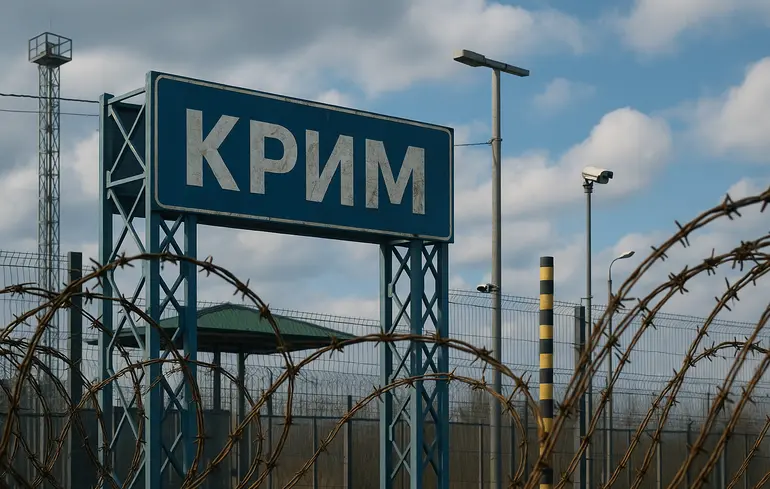
Anastasiia moved from Zaporizhzhia city to the Crimean peninsula long before the annexation, following her doctor’s recommendation for her husband to live in a different climate. Since 2014, her life has been full of turmoil. At first, it was because of the uncertainty caused by the occupation, humiliation and threats against people with pro-Ukrainian views. Then it was because her husband couldn't get medical treatment, and after he died, the local authorities wouldn't let her bury him. After several interrogations by law enforcement officers about her son, who served in the military, she decided to leave Crimea. Once in Zaporizhzhia, she turned to human rights defenders, who helped her file a complaint with the European Court of Human Rights (ECHR) regarding violations of Article 3 of the Convention for the Protection of Human Rights and Fundamental Freedoms (prohibition of torture and other inhuman treatment). As of now, the court has accepted the complaint for consideration.
This woman's story is not unique; it reflects the fate of many pro-Ukrainian residents of Crimea who, since the occupation of the peninsula, have become hostages to circumstances, suffering inhuman treatment and psychological pressure from the Russian occupation forces. According to the Office of the UN High Commissioner for Human Rights, serious human rights violations have been documented in Crimea since 2014, including arbitrary arrests, torture and restrictions on freedom of expression.
Anastasiia had lived in Zaporizhia since birth. She worked as a chief accountant at the railway for 17 years. In 1996, due to the deteriorating health of her husband Viktor, doctors advised the couple to change their climate. So they moved to a village in the Autonomous Republic of Crimea, where Anastasiia's aunt lived.
“My son was doing well in school at the time and stayed in Zaporizhzhia. Viktor and I began living in two cities. We would go to Crimea in spring and return to Zaporizhzhia in winter,” Anastasiia says.
In Crimea, Anastasiia cared for her sick aunt for several years before she died in 2001. When the question of inheritance arose, she deregistered her residence in Zaporizhzhia and registered at a new address in the Crimean village. Viktor also gave up his Zaporizhzhia residence.
In January 2005, Anastasiia's husband suffered a serious health crisis, which led to significant weight loss. Despite this, the couple tried to continue living in two cities as much as possible.
February 27, 2014, marked the beginning of the occupation for Crimea's residents: on that day, Russian troops and armored vehicles appeared on the streets of the peninsula, and the buildings of the Crimean government and parliament were seized. On March 21, Russia passed a law according to which all citizens of Ukraine and stateless persons permanently residing in Crimea were automatically recognized as citizens of the Russian Federation.
Anastasiia recalls that life under occupation became oppressive for them. The couple faced a dilemma: accept Russian citizenship or refuse it. On the one hand, refusal meant uncertainty about the future; on the other, it was necessary to protect their right to live in their own apartment.
“I thought long and hard about what to do. Viktor was ill, and it was better for him to continue living on the peninsula. However, like me, he did not want to change his Ukrainian citizenship. In the end, in order to keep our right to housing and be able to buy at least some medicines, I was forced to accept the imposed Russian citizenship,” the woman says.
Indeed, if they refused Russian citizenship, pro-Ukrainian Crimeans faced a future of uncertainty on the peninsula. Some of them left for mainland Ukraine: according to the Ministry of Social Policy, as of May 7, 2014, more than 7,000 people had left. The UN Refugee Agency estimated the number of internally displaced persons at 10,000, most of whom are Crimean Tatars and a third are children.
Maryna Kiptila, a lawyer with the SICH Human Rights Group, who is currently assisting Anastasiia with legal issues, explains that this was effectively a forced change of citizenship: “Refusal to obtain Russian citizenship automatically changed people’s status into that of foreigners residing in the Russian Federation without the necessary permits. Of course, the lack of a Russian passport affected basic rights and made life on the peninsula harder.”
Anastasiia says that trips to Zaporizhzhia became increasingly difficult at that time because the road was difficult and exhausting: huge queues at checkpoints, lengthy document checks, etc. Her husband was also feeling worse and worse: “In 2017, Viktor was diagnosed with a serious illness that required immediate treatment. However, due to his refusal to take Russian citizenship, he could not receive the necessary medical care on the peninsula. And after contracting COVID-19 in 2020, his health deteriorated significantly and he was laid up.”
On February 24, 2022, the checkpoints between the territory controlled by the Ukrainian authorities and Crimea ceased to function. The continued occupation of part of the Kherson region made it virtually impossible to travel from Ukrainian-controlled territory to Crimea and back. The couple did not dare to leave for fear that the sick man would not survive the 1,200-kilometer journey and continued to live in Crimea.
Anastasiia says that this was the most difficult time: “Our son, who lived in Zaporizhzhia, joined the Armed Forces of Ukraine in March 2022. In June 2022, Viktor died. I lived in a village where everyone knew each other, and Russian law enforcement officers accompanied by unknown (non-local) people began to come to me and ask about my son's whereabouts. I became increasingly frightened.”
The unknown men asked where her son was, what he was doing and whether he was serving in the Armed Forces of Ukraine. “I was scared,” Anastasia recalls. “I said that he worked at a state-owned enterprise and had a deferment. But then I noticed a frightening trend: parents whose children lived in mainland Ukraine and could be in the military were disappearing under unknown circumstances. An elderly man whose sons were fighting for Ukraine also disappeared one day. He returned a month and a half later, saying nothing (and everyone was afraid to talk), but soon after, he had a stroke (probably due to the stress caused by his disappearance).”
After Anastasiia was interrogated for the third time, her son told her to flee the village and hide. So in July 2023, after the last visit from the district inspector, she went into hiding at a friend's house in another village nearby. She took nothing with her, fearing that she would attract attention.
“The heat and anxiety made me feel worse,” she recalls. “My friend suggested calling an ambulance, but I refused, fearing that I would be found. In the end, I decided that in order to save my life and get treatment, I had to leave Crimea.”
In September 2023, Anastasiia's acquaintances advised her to contact a volunteer organization, which helped her leave for Ukraine. She had no belongings, Russian documents or money with her. She says she lost her Russian passport while burying her husband and did not renew it: “I am grateful to the volunteers who not only took me to Kharkiv through the checkpoint in Kolotylivka free of charge but also gave me 2,000 hryvnias for a ticket to Zaporizhzhia.”
When crossing the state border, Anastasiia had only a Ukrainian passport and passed through six checkpoints of Ukraine’s Security Service.
“I arrived in Zaporizhzhia in the same dress I wore when I left home. After everything I had been through, my health deteriorated significantly and I started having heart issues. I underwent lengthy treatment at a clinic in Zaporizhzhia and was then granted a second-degree disability,” she says.
After arriving in Zaporizhzhia, she did not know what to do. A friend advised her to seek help from the SICH human rights group. After reviewing the woman's story, lawyer Maryna Kiptila offered her to prepare documents for submission to the European Court.
“Everything that happened to Anastasiia after 2014 was unjustified and constituted inhuman treatment and psychological torture,” explains the lawyer. “Constant stress, interrogations by law enforcement officers, lack of opportunities to receive inpatient treatment and bury her husband were a painful experience for Anastasiia.”
The lawyer filed a complaint with the ECHR regarding the violation of Article 3 of the Convention for the Protection of Human Rights and Fundamental Freedoms (prohibition of torture and other inhuman treatment): “The de facto impossibility of moving from the Ukrainian-controlled territory to Crimea and back after February 24, 2022, was a prolonged violation of the applicant's right to freedom of movement.”
Usually, when applying to the ECHR, the applicant must comply with the four-month time limit provided for in Article 35 of the Convention. However, in this case, the lawyer explains, the time limits are not considered to have been violated: “While in Crimea, Anastasiia could not apply to the court with a complaint because she was in fear for her life. She only had this opportunity after she left occupied Crimea. That is why the four-month deadline for applying to the European Court is not considered to have been missed.”
Maryna Kiptila adds that the Russian Federation ceased to be a high contracting party to the European Convention on Human Rights on September 16, 2022. It is from this date that the time limit for applying to the European Court of Human Rights begins, even in cases of violations that occurred earlier and continued thereafter. “According to Article 58 of the Convention, a state that withdraws from the Council of Europe loses its status as a party to the Convention six months after the official denunciation. However, this does not exempt it from responsibility for violations committed before the denunciation takes effect,” explains the human rights defender.
While Anastasiia's case is being considered by the ECHR, Maryna Kiptila is helping the woman to restore her legal right to a pension. “I did not betray Ukraine,” Anastasiia says. “It just so happened that it left me in Crimea,s alone with a sick husband and without any help. If only you knew how many people in Crimea are waiting for de-occupation! They are afraid to talk about it, but they are waiting.”
On June 25, 2024, the European Court of Human Rights announced an important decision on the merits in the first inter-state case Ukraine v. Russia (re Crimea). The Court found the Russian Federation guilty of systematic violations of human rights in the temporarily occupied peninsula since February 2014, including the right to life, the prohibition of torture, the right to liberty and security of person, freedom of expression and other fundamental rights.
The name of the heroine has been changed for security reasons.