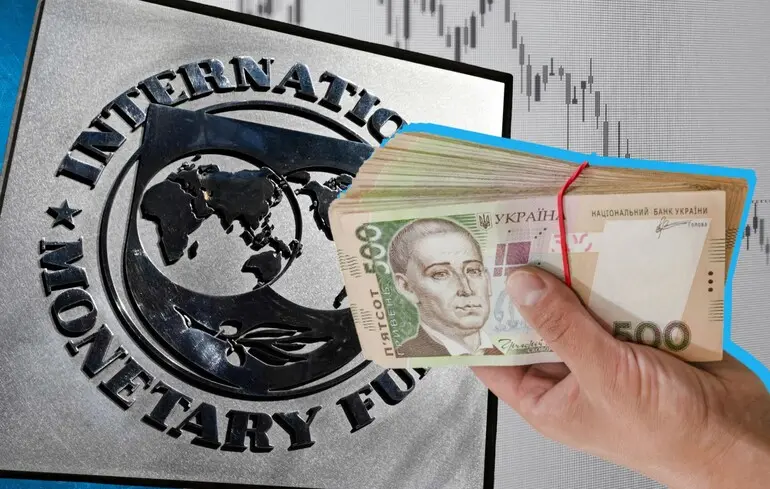
At the end of November, the Ukrainian government proudly announced a new four-year programme with the International Monetary Fund (IMF), which should allow Ukraine to receive around $8.4 billion in budget financing. Yet the news was met without enthusiasm: in its press release, the IMF mentioned the need to increase taxes, including for small and micro-businesses. This immediately triggered debate about whether cooperation with the IMF is beneficial at all.
Let us leave tax disputes to specialists and instead focus on the broader terms of cooperation with the Fund as a creditor. We will try to answer a simple question: are IMF loans actually advantageous for Ukraine? In other words, we will examine the IMF the way a borrower examines a bank and give that bank an honest assessment. Spoiler: the verdict is far from glowing.
An irresponsible creditor
On its website, in the section describing its lending policies, the IMF states that it “offers various types of loans that are tailored to countries’ different needs and their specific circumstances”. In other words, the IMF presents itself as a responsible creditor capable of selecting the programme that best fits a certain country’s requirements.
But what does a “responsible creditor” look like? It is easier to illustrate what an irresponsible one is.
Imagine you want a loan to buy a microwave oven. You go to a bank, but the bank doesn’t have a loan designed for purchasing microwaves. It doesn’t want to lose you as a client, so it tries to “adapt” its car-loan programme to your request. It asks you for a microwave-user certificate, two-year income statements, a family-composition certificate, and requires full CASCO insurance for the oven. Naturally, you would run from such a bank.
At the moment, the IMF resembles exactly that kind of creditor. The EFF programme, which the government has been celebrating, does not match our needs or our challenges. According to the IMF’s own definition, the EFF “provides financial assistance to countries facing serious medium-term balance of payments problems because of structural weaknesses that require time [and profound reforms] to address.” In other words, this programme was designed for states facing crises caused by economic downturns or poorly designed government policies. But officially Ukraine is not in an economic crisis (ask the National Bank). This leaves only one premise for applying for an EFF: the government’s flawed policies, which require urgent correction.
Whatever we think of our government’s policies, Ukraine’s main challenge is entirely different: Russia’s war of aggression. No domestic reform, no matter how ambitious, will stop enemy missiles or troops.
Yet the IMF still prescribes standard remedies: increase revenues (i.e., raise taxes) and reduce public debt. The Fund does help somewhat with debt reduction by backing our negotiations on private-sector restructuring. But the IMF offers no answer to the question of how additional taxation of everyone and everything is supposed to help us in a situation where, in just nine months of 2025, actual government expenditures exceeded domestic revenues twofold.
I see no adaptation of the IMF’s programme to our real needs. And when we examine the financial parameters of the programme (more on that below), the mismatch becomes even clearer.
A cheap creditor no more
For decades, the IMF was a demanding but comparatively cheap source of financing, offering loans with concessional interest rates. This reputation belonged to a bygone, pre-war era, when Ukraine could borrow on international markets at 6–8 percent, making IMF loans at 2–3 percent genuinely attractive.
Today Ukraine cannot borrow on foreign markets at all. Therefore, our only external financing comes from bilateral loans, typically at 0–1.5 percent. Meanwhile the IMF, which pegs its rates to market conditions, now lends at 5–7 percent. Under the new programme, Ukraine will borrow at 6.1 percent. Can Ukraine afford to service such expensive debt? The answer is self-evident.
Domestic banks might also ask why the government is so eager to borrow from the IMF at 6.1 percent in hard currency while borrowing domestically in foreign currency at 3–4 percent—and even that reluctantly (domestic FX borrowing has fallen by 26 percent since 2022). Banks, for their part, have nowhere to put their excess foreign currency: as of early November, they held almost $11 billion abroad.
But that is a question for the government’s debt policy and the National Bank’s FX regulations. Let us return to the IMF.
A greedy creditor
Under the new EFF, the IMF plans to provide Ukraine with up to SDR 5.94 billion (about $8.4 billion) over the next four years. It may look like a considerable amount, but, conveniently enough, it matches what Ukraine is required to pay the IMF between 2026 and 2029 in principal, interest, and related fees. In other words, the IMF is not expanding Ukraine’s fiscal capacity at all. It is merely ensuring that Ukraine has enough money to repay the IMF itself.
And even on this point the math fails to hold: the IMF overlooked the fact that we still won’t have enough. In addition to the $8.4 billion we must repay, we will owe about $1 billion in interest on the new loans.
Put otherwise, over the next four years the IMF will lend us $8.4 billion, leaving us with $9.4 billion to repay.
Can we really afford to divert an extra $1 billion away from defence needs to service debt, even to a highly respected creditor?
What can be done?
Ukraine certainly cannot simply walk away from the IMF, as the protagonist of the film Servant of the People 2(where President Zelenskyy played the lead role) once did. Like it or not, an active IMF programme is a precondition for receiving financing from most of our other partners. Cooperation with the IMF thus acts as a “quality mark”, signalling that the country is moving in the right direction. And indeed, many of the so-called IMF requirements are actually commitments voluntarily undertaken by Ukraine—and they are highly beneficial.
However, this does not mean we must accept any programme the IMF offers. Ukraine has representatives at the Fund whose job is to articulate our needs clearly and insist on what the IMF itself professes: flexibility and adaptation to members’ unique circumstances. The problem, therefore, is not the IMF’s rigidity—it is our own failure to negotiate effectively.
And spare us the claims that the IMF is somehow inflexible. Even heavily bureaucratised structures like the EU have adapted their assistance programmes to Ukraine’s specific needs. And the IMF already has an alternative concessional instrument—the ECF—with interest rates of 0–1.9 percent and grace periods of up to five years. It may not be a perfect fit for Ukraine, as it targets lower-income countries, but its existence proves one thing: the IMF can be flexible and responsible. All that is required is principled, honest negotiation.